Malott's brutal knee knockout ends Buckley's main-event hopes at UFC Edmonton
Mike Malott secured his fifth straight win with a vicious second-round knee knockout of Joaquin Buckley in the UFC Edmonton main event on Saturday. A stunned Buckley later watched the finish back and admitted he had never been knocked out cold before.
1 min read
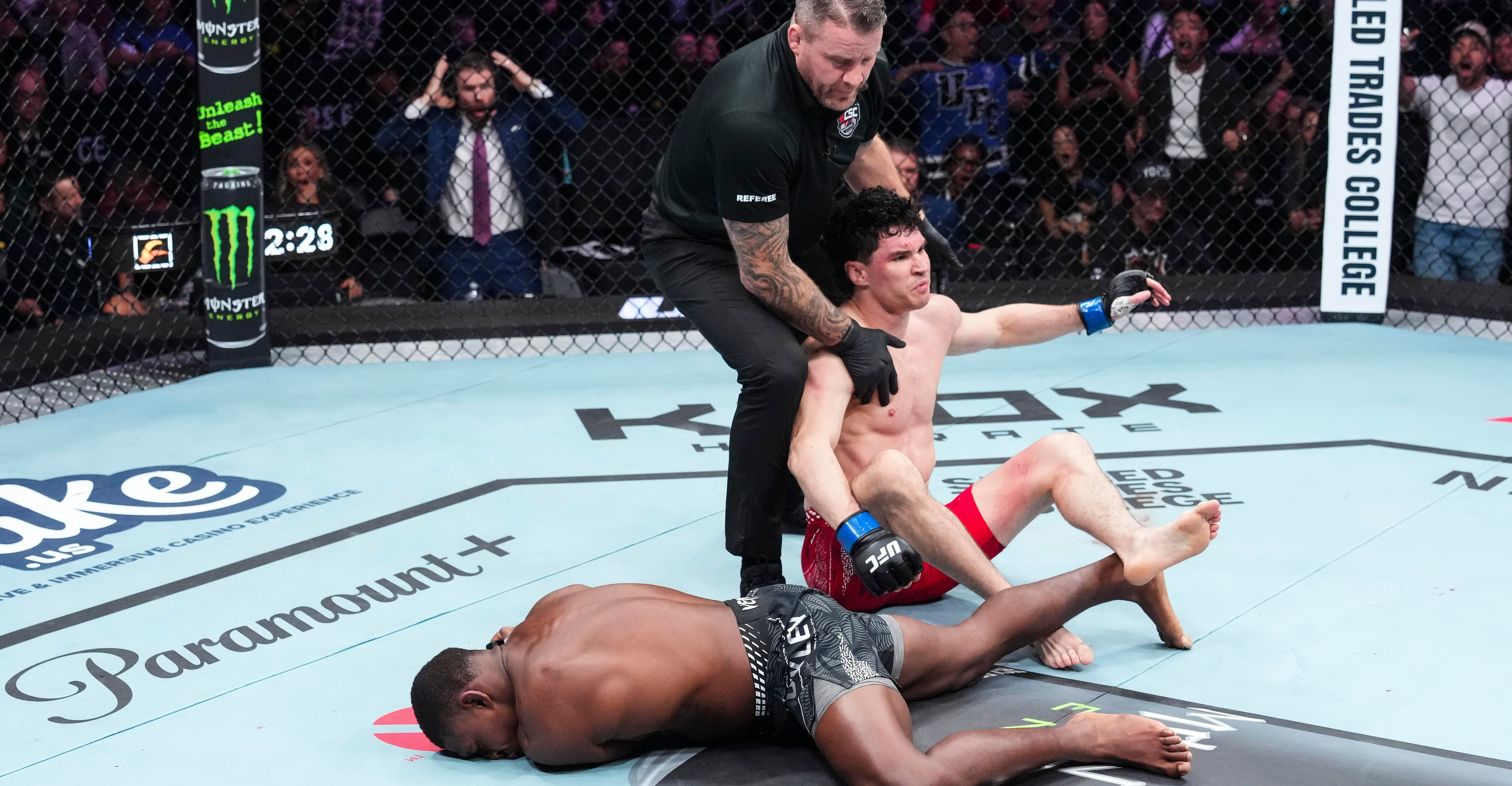
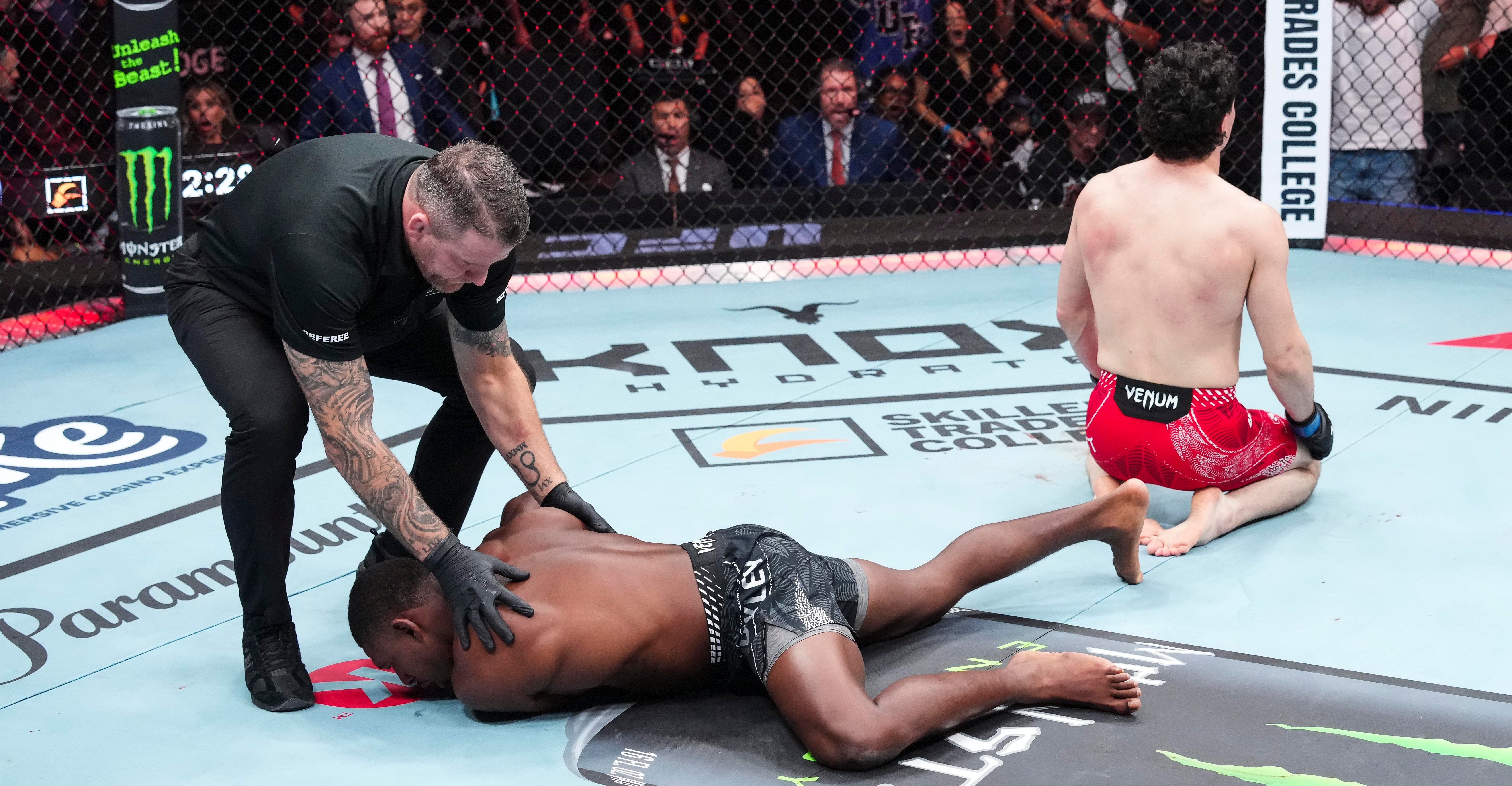
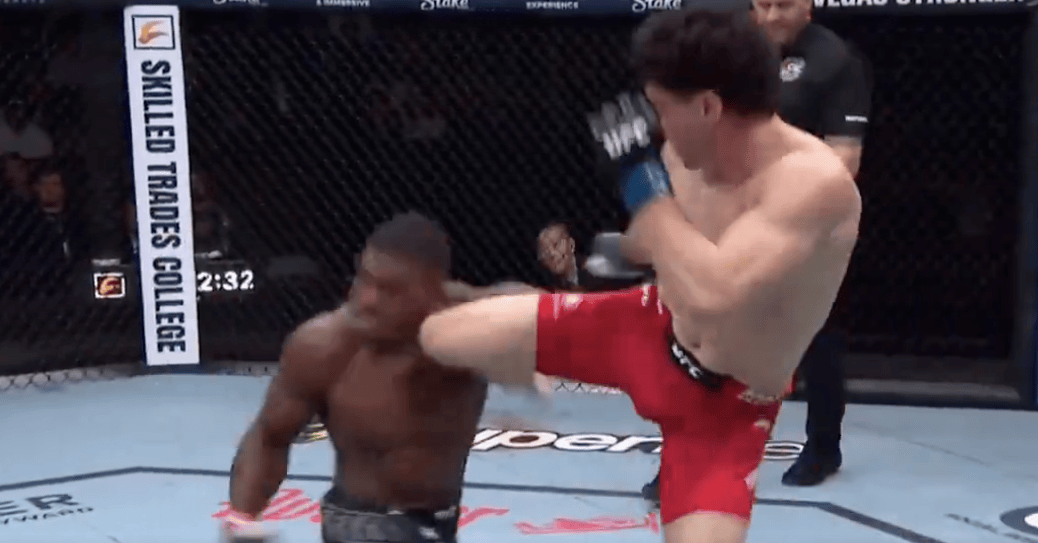
Mike Malott knocked out Joaquin Buckley with a brutal knee to the face in the second round of the UFC Edmonton main event on Saturday, handing Buckley his third consecutive defeat and extending Malott’s winning streak to five fights.
The bout was competitive through the first round, but Malott ended it emphatically in the second. What appeared to be a kick in the closing sequence connected as a knee, sending Buckley crashing face-first to the canvas.
Afterwards, Buckley went on his Kick channel to watch the finish back — and his reaction was candid. “I ain’t ever been out like that, bro,” he said. “Yeah, that shit sucked.”
“I’ve been knocked out before. I used to always say, ‘But I ain’t ever been slept though.’ That motherf*cker slept my ass.”
The loss marks a difficult stretch for Buckley, who entered the fight on the back of back-to-back lopsided decision defeats — first to former welterweight champion Kamaru Usman, then to fellow contender Sean Brady. Saturday’s stoppage was also his first finish loss in nearly four years, since a second-round TKO defeat against Chris Curtis at UFC 282 in December 2022.
For Malott, the performance reinforces his standing as one of the welterweight division’s most dangerous finishers. Five straight victories, capped by a main-event knockout, will make a compelling case for a step up in competition.
Read also
-
 MMA ·
MMA ·Dana White hints at off-cage issues behind undefeated Farid Basharat's UFC exit
-
 MMA ·
MMA ·Unbeaten Evloev targets first UFC finish as he challenges Volkanovski for featherweight title at UFC 333
-
 MMA ·
MMA ·Malott's knockout knee headlines four $100,000 bonuses at UFC Edmonton
-
 MMA ·
MMA ·Malott's second-round knee KO stuns MMA world and extends winning streak to five
-
 MMA ·
MMA ·Malott's freak knee knockout stuns Buckley to seal five straight UFC wins
-
 MMA ·
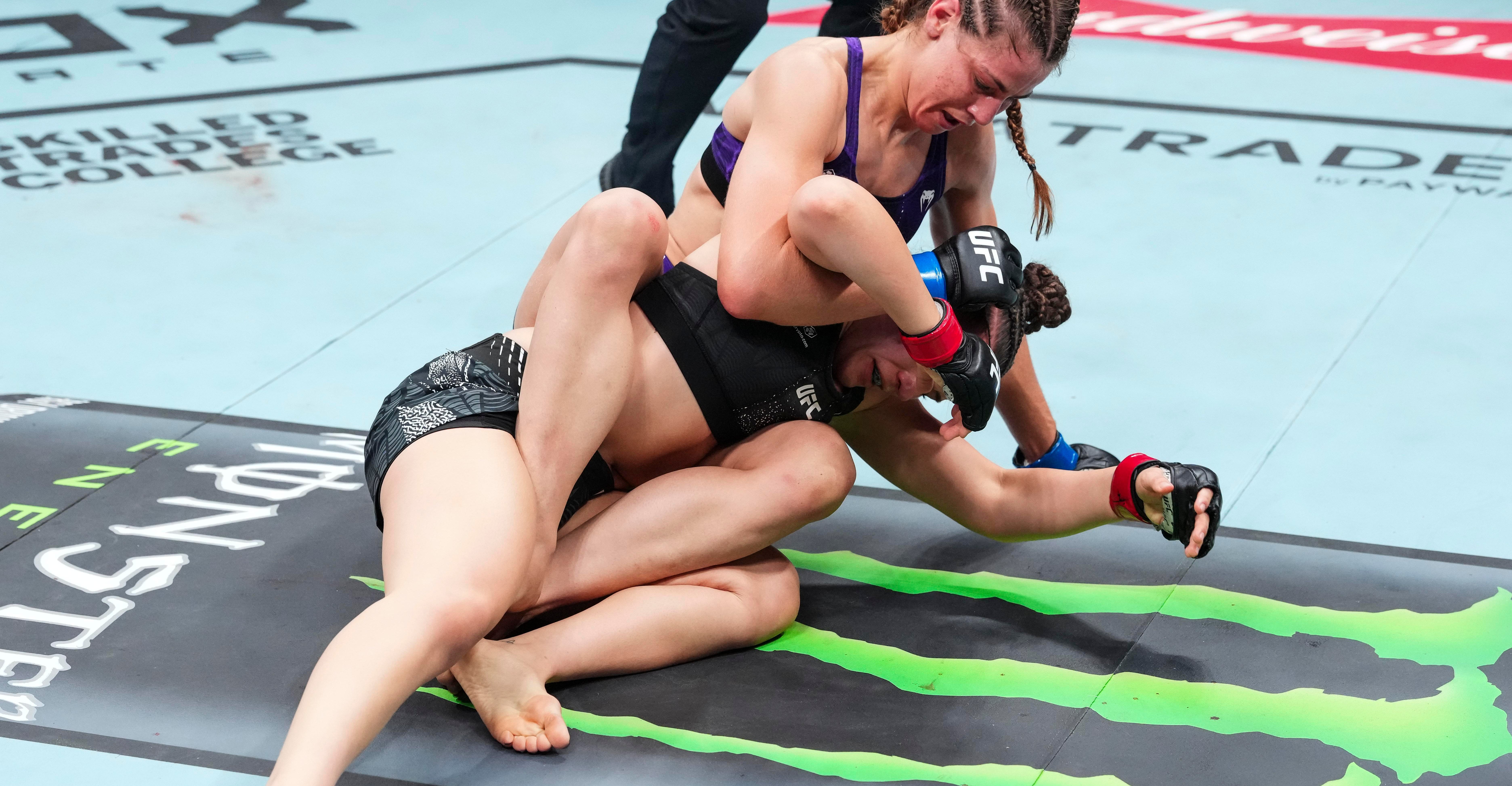
MMA ·Jasudavicius stuns Blanchfield as heavy underdog to demand flyweight title shot
 Norway U17 W