Ballon d'Or and Contract Extension: Kane Becomes Bayern Munich's Highest-Paid Player in History
Just days after winning the Ballon d'Or, Harry Kane has extended his contract with Bayern Munich until 2029. The 33-year-old English striker will earn up to 31 million euros per year, a Bundesliga record.
1 min read
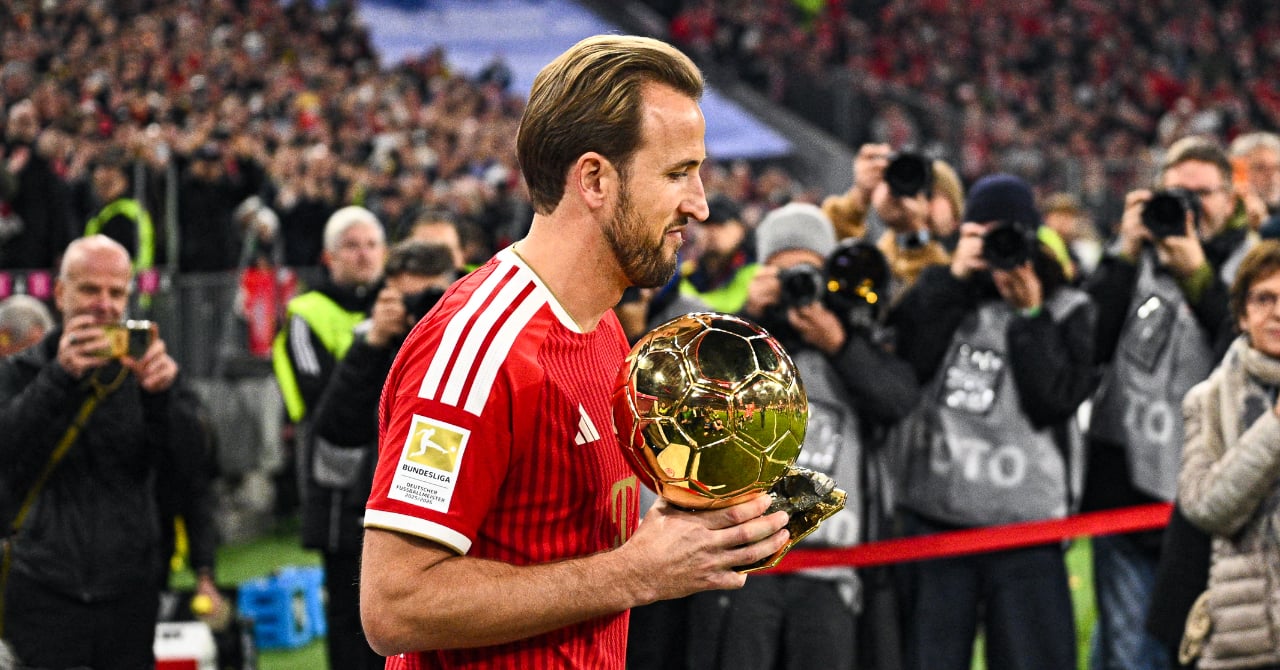
Harry Kane has extended his contract with Bayern Munich until 2029, just days after winning the Ballon d’Or. The 33-year-old English striker has committed to two additional seasons with the Bavarian club.
Financially, Kane retains his base salary of 25 million euros gross per year, inherited from his arrival at Bayern in 2024, but bonuses could bring his total compensation to 31 million euros per year. These new terms make him the highest-paid player in the club’s history and in the Bundesliga, ahead of teammates Jamal Musiala and Joshua Kimmich.
Chairman Jan-Christian Dreesen justified the investment straightforwardly: “For us, this is of course an important contract for a very great player. It is entirely justified. Harry has demonstrated over the past three years that he is worth every cent, and that is how we see things going forward.”
The former Tottenham striker, for his part, expressed unreserved satisfaction: “I am going through the most successful period of my career. I love this club and joining it in 2024 was the best decision possible. Here, my daily life is simply fantastic. I feel very good and I hope it will last a long time.”
The extension comes at a time of exceptional form for the England international, who now combines the supreme individual distinction in world football with a record-breaking new contract at the reigning German champions.
Read also
-
 Football ·
Lens humiliated 9-1 by Como: Cahuzac retained despite 'total fiasco'
-
 Football ·
Carlos Vicens, Guardiola's former assistant at City, targeted by Lyon to succeed Fonseca
-
 Football ·
Kolo Muani strikes again in Europa League as Juventus wins at Alkmaar
-
 Football ·
Tottenham CEO Venkatesham sets Premier League title as club's ultimate aim after turbulent rebuild
-
 Football ·
Real Madrid's verbal deal for JJ Gabriel sparks calls to reform youth transfer rules
-
 Football ·
Dreesen confirms Olise is a Bayern priority, but no rush to extend