Sudan's teenage girls defy civil war to make historic return to international football
Sudan's under-17 women's team made the country's first appearance in international women's football since civil war erupted in 2023, travelling to Casablanca for Olympic qualifying matches despite having trained together for only a matter of weeks.
2 min read
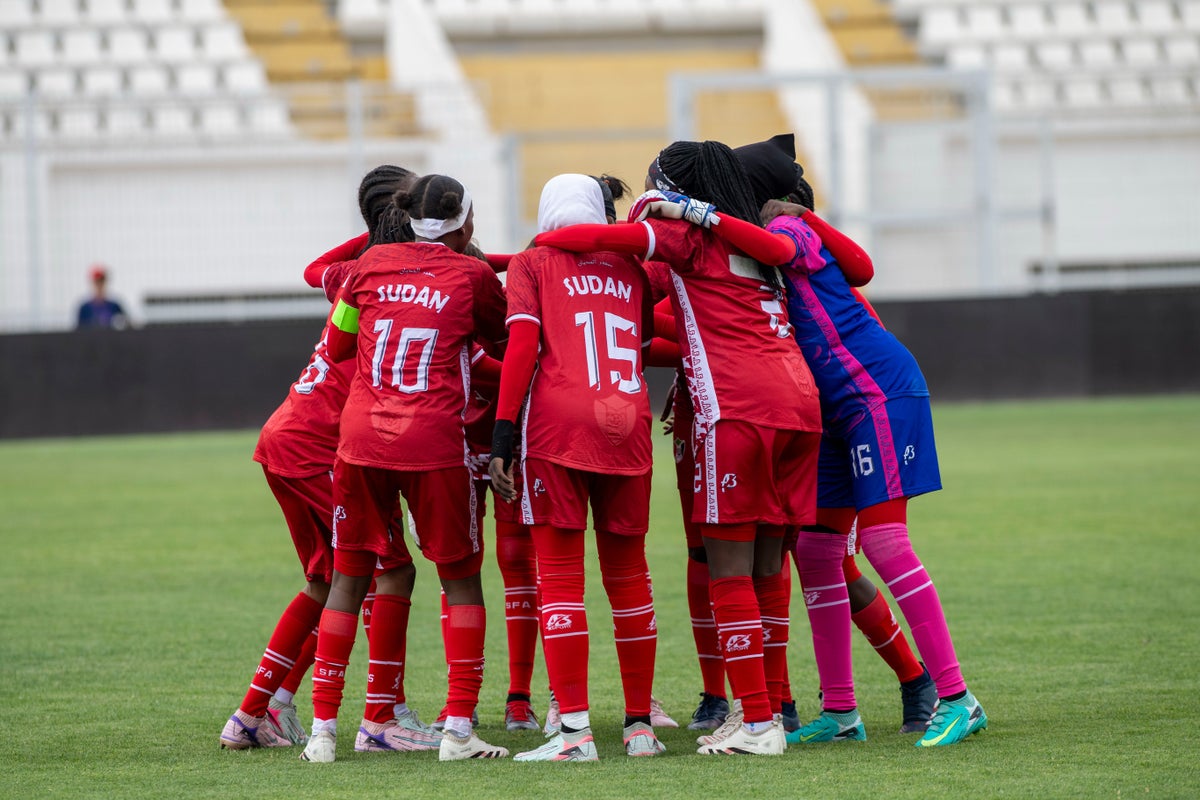
Sudan’s under-17 women’s national team made history at Larbi Zaouli Stadium in Casablanca last week, becoming the first Sudanese women’s side to compete internationally since civil war tore the country apart in 2023. Most of the squad are schoolgirls, some of whom had fled active conflict zones, and several had never played in an organised league or set foot in a major stadium before the trip to Morocco.
The team travelled to compete in qualifying matches for the 2028 Los Angeles Olympics, a mission that exposed the vast gulf between Sudan’s shattered football infrastructure and more established nations. They conceded 30 goals across two matches against Comoros, whose squad features players based in Europe, losing the opening game 17–0. Tears followed the final whistle, though a group of travelling supporters cheered the players throughout.
“The difference between us and the others is huge. We cannot yet compete at the highest level,” said Burhan Tia, the veteran Sudanese coach overseeing all of Sudan’s women’s national teams, after the first defeat. Unable to field a senior women’s squad in time, the federation entered the younger group rather than forfeit their qualifying place — with the girls having begun training together only weeks before departure.
Yet the scorelines tell only part of the story. Sudan’s women’s football infrastructure collapsed when the civil war broke out, and for federation officials, simply getting this team onto a pitch in Casablanca represents a meaningful act of preservation.
“Some traveled long distances just to attend training. Many are separated from their families, yet they continue to work hard and pursue their dream,” said Manal Ali Bushra, the businesswoman who heads Sudan’s women’s football committee. She added that the federation is pursuing infrastructure projects, including a planned sports city and stadium renovations in safer regions of the country.
For 17-year-old captain Nura Mohamed, the significance of the moment was personal as much as political. “My goal is to lift up soccer in my country,” she told the Associated Press. “It’s a beautiful, unique feeling because, at the end of the day, I just love playing.”
Coach Tia described the logistical challenge of rebuilding from nothing. Finding eligible players meant first locating girls who played football at all, then verifying they met the age requirements — a process complicated by displacement and the breakdown of civil records during the conflict.
The red jerseys against the green Casablanca pitch may have marked heavy defeats on the scoreboard, but for a nation where female participation in sport has long faced cultural resistance and where two years of war have displaced millions, the appearance itself is the result.
Read also
-
 Football ·
Mbappé starts against Villarreal despite controversy, Mourinho defends him
-
 Football ·
Manchester City Condemnation: Premier League Clubs Fear Political Interference
-
 Football ·
Foden banned, Semenyo and O'Reilly doubts: Man City's injury concerns ahead of Liverpool
-
 Football ·
Ronaldo faces suspension of up to six months after storming out of Portugal camp
-
 Football ·
Premier League managers react as Man City found guilty of 114 financial breaches
-
 Football ·
Tevez plots Messi and Ronaldo reunion as team-mates at Bombonera farewell match
 Malta W