Morocco considers 3-5-2 formation to unleash Hakimi as wing-back against Niger
Morocco coach Mohamed Ouahbi is studying a switch to a 3-5-2 system for the two upcoming matches against Niger in the 2027 Africa Cup of Nations qualifiers, a formation that would reposition captain Achraf Hakimi as a right wing-back, a role similar to the one that made him shine at Inter Milan.
1 min read
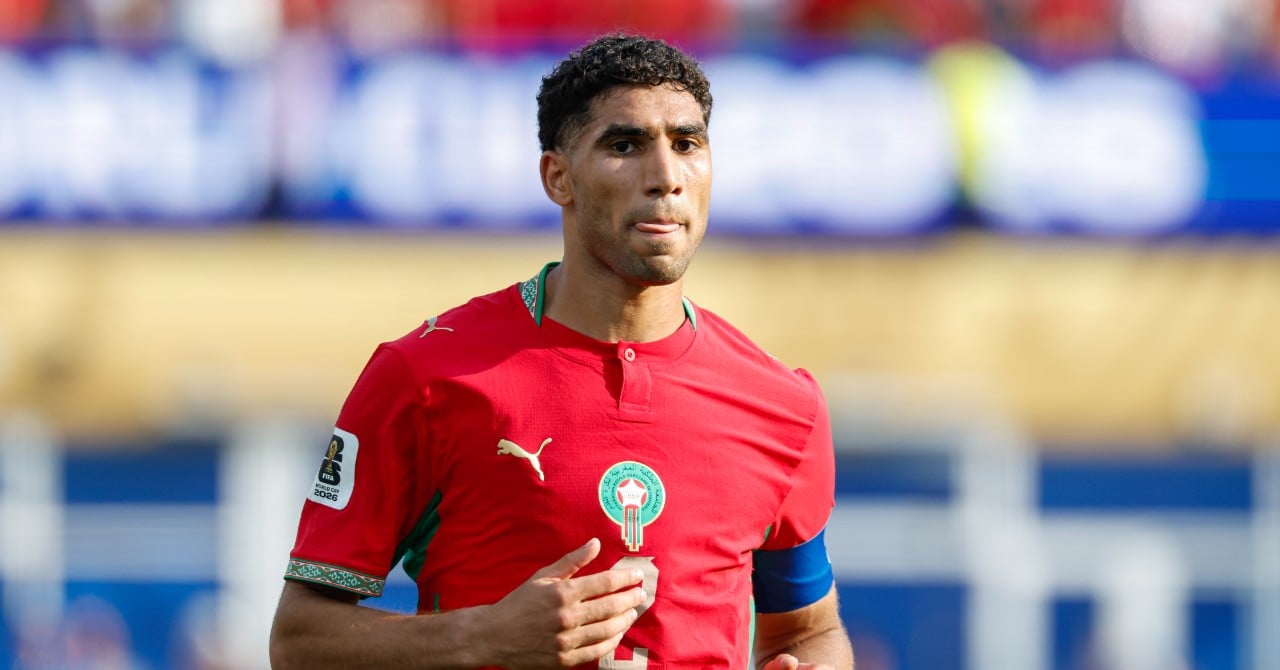
Morocco coach Mohamed Ouahbi is considering changing the team’s tactical system for the next two matches against Niger in the 2027 Africa Cup of Nations qualifiers, according to Moroccan outlet Le360.ma. A switch to a 3-5-2 formation is being studied, with the notable effect of repositioning captain Achraf Hakimi as a right wing-back.
In the current 4-3-3 or 4-2-3-1 setup, Hakimi operates as a conventional right-back with the national team, a position he masters but which forces him to manage his attacking runs. With a three-man defence, he would benefit from the cover of an additional centre-back and could push forward freely down the entire flank, with the attacking midfielder repositioning into a more central lane to give him space.
This wing-back role is not unfamiliar to the Paris Saint-Germain player. It was precisely in this capacity that he had one of his best seasons under Antonio Conte at Inter Milan, before his transfer to PSG. With the Parisian club, Hakimi enjoys even greater freedom of movement, regularly finding himself in different areas of the pitch, something the national team’s tactical framework does not always allow him to replicate.
The system change would therefore respond to a dual logic: optimizing the offensive contribution of the Moroccan captain while strengthening defensive solidity against Niger, whom Morocco must beat to consolidate their position at the top of their qualifying group.
Read also
-
 Football ·
Cunha's double rescues Manchester United from 2-0 down to stun Roma in Champions League
-
 Football ·
PSG crushes Villarreal 6-0 but Luis Enrique fumes over refereeing decision
-
 Football ·
Football mourns Tenerife striker Jesus de Miguel after on-field collision proves fatal
-
 Football ·
Cisse backs Beckham to replace Ineos and install Keane as Manchester United manager
-
 Football ·
Cunha's late double rescues Carrick as 10-man United beat Roma to end nine-game winless run
-
 Football ·
Premier League clubs push for second Man City financial probe as division splits over next steps