Manchester United's £2bn new Old Trafford faces cost pressure as circus tent canopy hangs in doubt
Manchester United must decide whether to retain the controversial canopy design for their planned 100,000-seat new Old Trafford, with the £2bn project already under cost pressure and a key masterplan publication due on 9 July.
2 min read
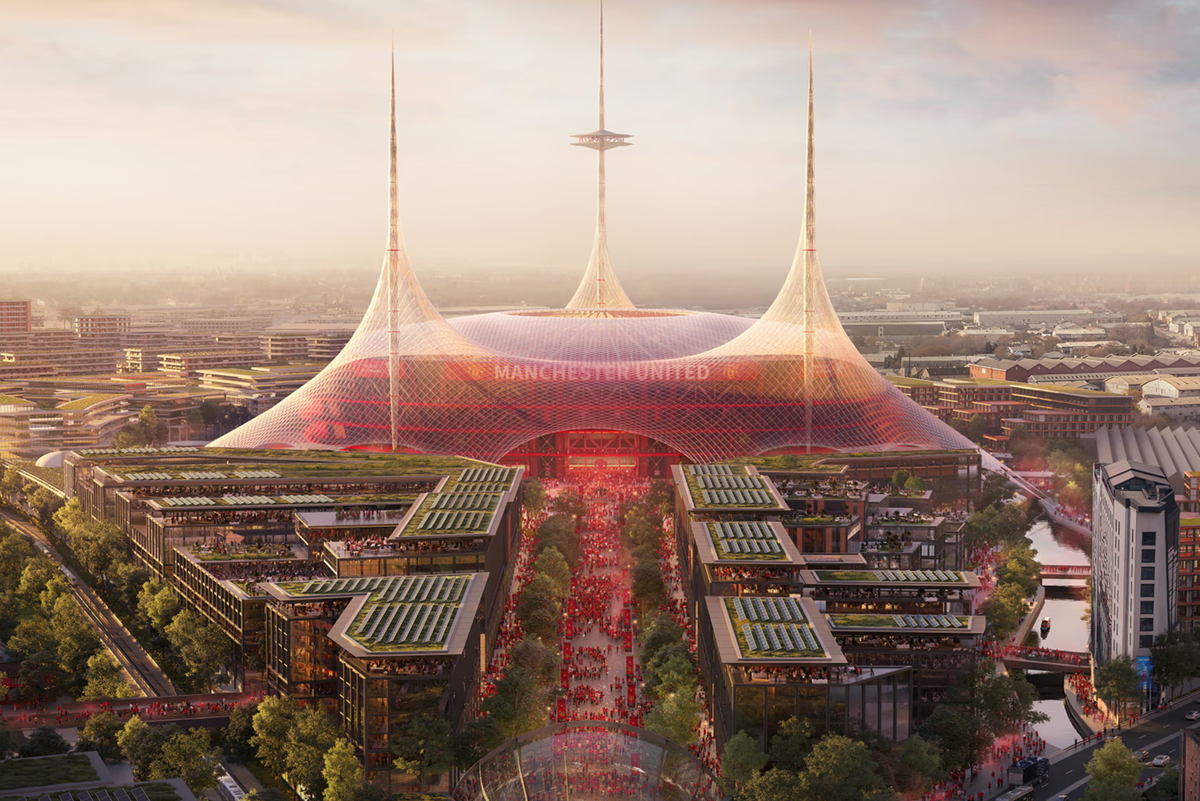
Manchester United are facing critical design and cost decisions over their planned 100,000-seat new Old Trafford, after securing the land needed to advance the project and with a public masterplan due to be published on 9 July.
Sir Jim Ratcliffe described Norman Foster’s initial design as “10 out of 10” when it was unveiled in London last year, but the stadium’s most striking feature — a vast canopy described by Foster as a “vast umbrella” — drew immediate criticism for resembling a circus tent. The structure would be visible from the outskirts of Liverpool and is intended to symbolise the trident from United’s crest, with Foster framing it as a nod to the club’s industrial heritage.
The canopy alone was estimated to cost between £300m and £400m to build. Because it is largely aesthetic — the stadium itself has its own roof — it remains a candidate for removal as the club tries to manage an already expensive undertaking. United’s own estimate of £2bn is widely considered conservative given rising construction costs, meaning the final bill could climb significantly higher.
Work by Foster + Partners had been paused while United attempted to acquire land from Freightliner behind the Stretford End. Those negotiations stalled, and the club has instead secured a different plot 350 metres north-west of Old Trafford. With that acquisition now complete, the architectural firm can resume detailed design work and submit a final vision for the ground.
On 9 July, the Mayoral Development Corporation will publish the wider masterplan for the Old Trafford regeneration area, along with details of the formal consultation period. The document is expected to clarify where the new stadium will sit and provide further specifics on the project’s scope.
Colette Roche, CEO of United’s New Stadium Development, said the land deal “highlights the progress we’re making towards a world-class new home for Manchester United and represents a significant milestone as we move into the next phase of development,” adding that building close to the existing ground would allow the club to “preserve the heritage, traditions and rituals” associated with Old Trafford.
The sketches released last year were explicitly described as conceptual, meaning the final design — canopy included or not — remains subject to change as detailed architectural work now begins in earnest.
Read also
-
 Football ·
United's failure to sign Lewis Hall looks costlier as left-back's value rockets after England breakthrough
-
 Football ·
Georgina Rodriguez deletes fake Ferguson quote amid Ronaldo-Portugal manager row
-
 Football ·
Diomandé criticizes Renard after Ivory Coast's defeat to Cameroon
-
 Football ·
Fernandes hails Ronaldo as Portugal's 'greatest symbol' after Nations League walkout
-
 Football ·
Lizarazu settles Ronaldo debate: « You're heading to the elephant graveyard »
-
 Football ·
Pulisic backs Amorim despite 'strange start' as AC Milan settle into new era

 Morocco