Iran midfielder's 'gun celebration' sparks controversy after World Cup draw with New Zealand
Mohammad Mohebi's goal gesture drew accusations of mimicking a firearm as Iran drew 2-2 with New Zealand in their World Cup opener. The match was already charged with political tension, with Iran's national anthem booed and pre-revolutionary flags displayed in the stands.
1 min read
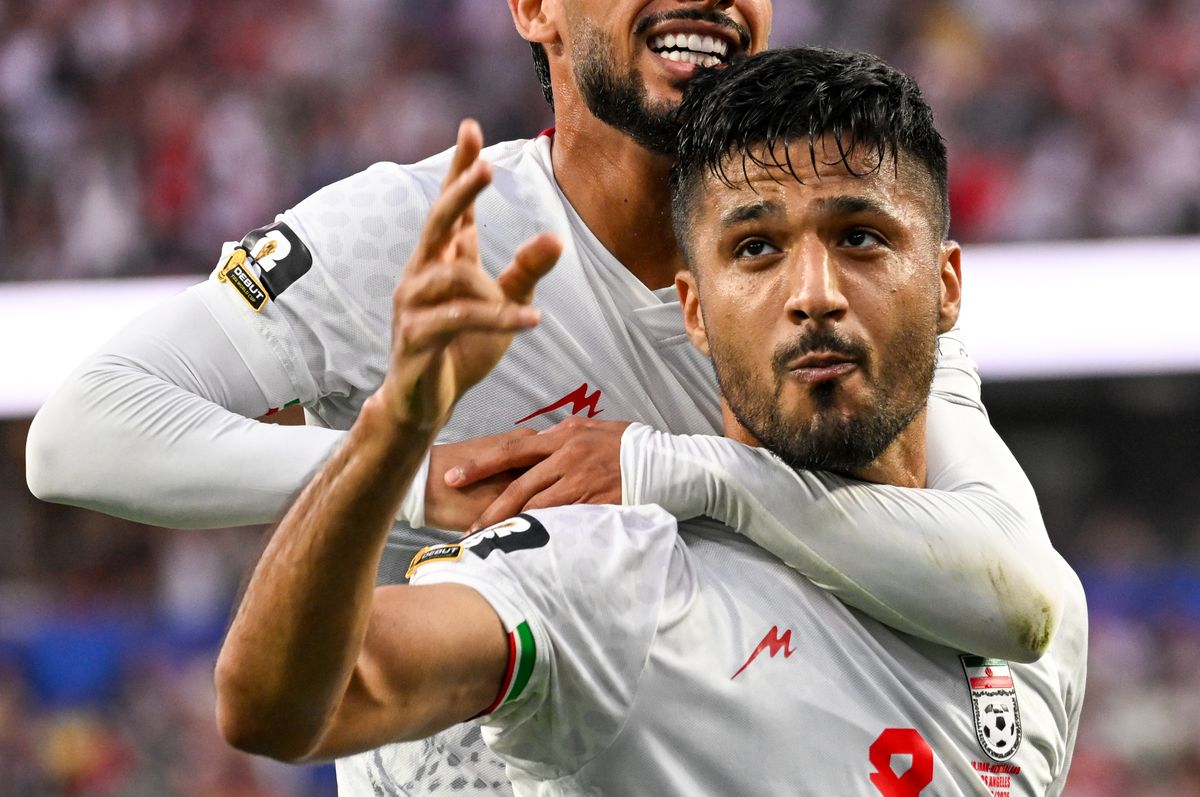
Mohammad Mohebi’s goal celebration has ignited fresh controversy around Iran’s World Cup campaign after the midfielder was accused of producing a ‘gun gesture’ during his side’s 2-2 draw with New Zealand in Los Angeles.
Mohebi, 27, scored in the 64th minute to earn Iran a point in their tournament opener, but his celebration quickly overshadowed the result. He first placed two fingers towards his arm before extending two fingers on his right hand and wagging them in the air — an action that drew widespread criticism on social media, with many accusing him of replicating a firearm. FIFA have been approached for comment, and it remains unclear whether the gesture was intentional.
The match was already politically charged before kick-off. Iran’s national anthem was booed by sections of the crowd, while supporters displayed the Shir o Khorshid — the pre-revolutionary Iranian flag — in opposition to the current regime. FIFA had banned the flag from the tournament, and footage showed at least one being confiscated during the game.
The Los Angeles metropolitan area is home to the largest Iranian diaspora in the world, estimated at between 200,000 and 700,000 people of Iranian descent, many of whom arrived following the Islamic Revolution of 1979.
Iran’s other goalscorer, Ramin Rezaeian, who netted the team’s first equaliser, also drew attention for his celebration — covering his face with his shirt as he ran towards fans. He acknowledged the gesture carried political meaning but declined to elaborate after the final whistle.
“It’s something political,” Rezaeian said. “I don’t want to talk about that. We are here to answer football questions. If there is a problem between us — the Iranian people — it is between us.”
The incidents add to the turbulent backdrop surrounding Iran’s participation in the 2026 World Cup, with political tensions both inside and outside the stadium showing little sign of easing as the tournament progresses.
Read also
-
 Football ·
Carrick demands more 'fire' from United as slow start prompts tactical rethink
-
 Football ·
United offer JJ Gabriel scholarship to block cut-price exit as Carrick breaks silence on City charges
-
 Football ·
Sesko faces second shin injury layoff as United weigh surgery option for £73m striker
-
 Football ·
Arsenal face £85m price tag for Esposito as Balogun clause promises Juventus windfall
-
 Football ·
Ben White cherishes Leeds promotion but needed no persuading to join Arsenal for £50m
-
 Football ·
Man City held secret settlement talks with Premier League before guilty verdict, report claims