Infantino defends World Cup hydration breaks and hints they could become permanent
FIFA president Gianni Infantino has backed the mandatory three-minute hydration breaks at the 2026 World Cup, dismissing financial motives and suggesting the stoppages could be extended to future tournaments despite widespread criticism from players, managers and fans.
2 min read
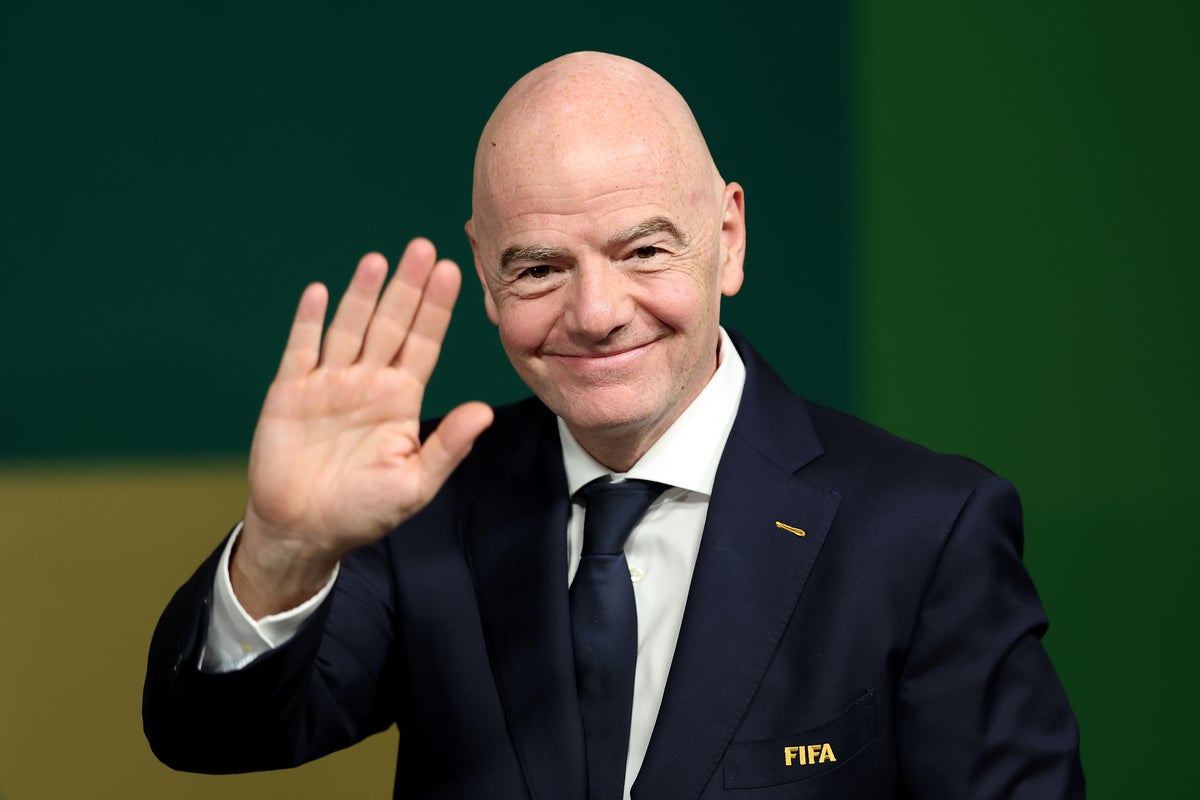
FIFA president Gianni Infantino has defended the mandatory hydration breaks introduced at the 2026 World Cup and said the governing body will consider making them a permanent fixture at future tournaments, despite a backlash from players, managers and fans.
The three-minute stoppages, taken in the middle of every match at the tournament, were initially brought in to help players cope with high temperatures. Critics have argued the breaks disrupt the flow and “identity” of the game, and stadium crowds have begun booing when play is paused. In some broadcast markets, the intervals have been used to show additional advertising.
Infantino pushed back on suggestions that FIFA stands to gain commercially from the arrangement. “There is no additional revenue for FIFA, as all commercial agreements were signed well in advance,” he said. “So, this is not a financial issue for us. For us, it is purely a sporting matter.”
The FIFA president also argued the breaks may actually be improving the quality of matches. “Maybe the coach can reassess certain situations, correct certain mistakes. The players get a little rest and come back in full speed. Well, is that bad necessarily? Maybe it’s good,” Infantino told SNTV. He pointed to the intensity of games at the tournament as possible evidence of their benefit, suggesting the additional recovery time could be allowing players to maintain higher output across 90 minutes.
One of the more contentious aspects of the policy has been its blanket application regardless of temperature. Hydration breaks have taken place inside air-conditioned stadiums, drawing particular frustration from supporters in the stands. Infantino defended the uniform approach, arguing that selective use of the breaks would create a competitive imbalance.
“If we were to use hydration breaks only in those matches where it was too hot and not in the other matches, we would give an advantage or a disadvantage to some of the coaches or some of the teams,” he said. “Why would the coach have the opportunity to influence the game in one match just because it’s hot and in another match where it’s a bit less hot, he wouldn’t have this opportunity?”
Infantino said FIFA would assess the policy “based on this experience” before deciding whether to carry it forward into future competitions.
Read also
-
 Football ·
Ronaldo pays tribute to Messi after final Argentina match: "All my respect"
-
 Football ·
Staveley urges Premier League and Man City to find resolution after guilty verdict
-
 Football ·
Guardiola returns to Etihad to show solidarity after Man City's 115 guilty verdicts
-
 Football ·
Jorge Jesus responds to Cristiano Ronaldo with a single sentence that strikes home in Portugal
-
 Football ·
United set £30m asking price for Zirkzee as Amorim's AC Milan plot reunion
-
 Football ·
Quansah embraces right-back rivalry with Alexander-Arnold as Tuchel's trust grows