How severe weather could revive the 'Disgrace of Gijón' at the 2026 World Cup
FIFA's rule requiring simultaneous kick-offs in the final group-stage round — introduced after West Germany and Austria's infamous 1982 non-aggression pact — could be undermined by the United States' mandatory lightning-suspension laws, leaving one team knowing exactly what result it needs.
2 min read
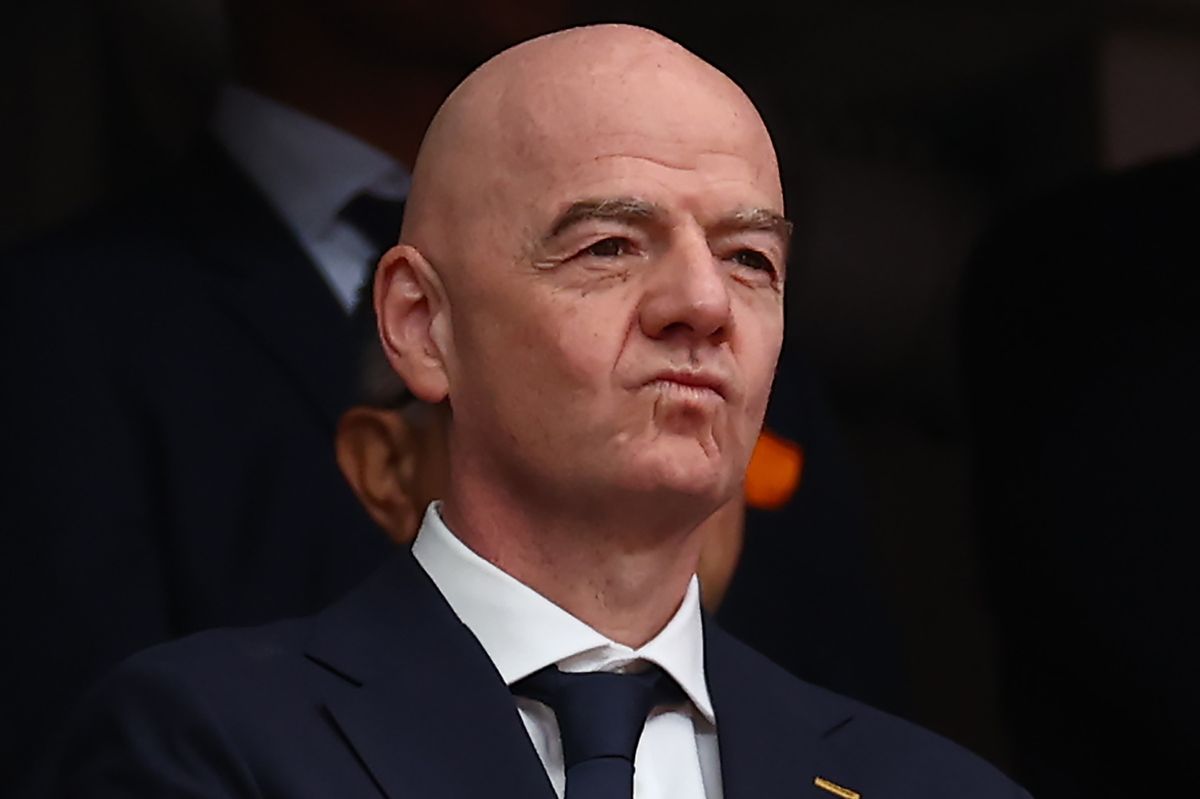
FIFA’s safeguard against collusion in the final round of World Cup group games faces an unlikely but real threat at the 2026 tournament: the weather. The governing body’s rule mandating simultaneous kick-offs across each group — designed to prevent teams from engineering results — could be rendered meaningless if lightning forces one fixture into a lengthy suspension while the other concludes on schedule.
The regulation dates back to the 1982 World Cup in Spain, where West Germany and Austria played out one of football’s most notorious matches. Algeria had already beaten Chile 3-2 to complete their group campaign when West Germany and Austria kicked off knowing that a narrow German victory would send both European sides through at Algeria’s expense. After Horst Hrubesch put West Germany ahead in the 10th minute, an unspoken non-aggression pact took hold. For the remaining 80 minutes, players recycled possession sideways and backwards, barely engaging in tackles or threatening goal. The result stood; both sides advanced. Algeria went home. The scandal became known as the Disgrace of Gijón.
FIFA responded by introducing the simultaneous kick-off rule for all final group-round matches. But in the United States, where much of the 2026 tournament will be played, a separate regulation complicates matters: if lightning is detected within eight miles of a stadium, play must be suspended, and FIFA has no authority to override it.
The vulnerability was already exposed during the current tournament. France’s 3-0 win over Iraq in Philadelphia was delayed by two hours due to torrential rain, thunderstorms and lightning, meaning a match scheduled for 5pm local time did not finish until shortly before 9pm.
Should a similar delay strike one of the group finales, the affected teams could return to the pitch long after the parallel fixture has ended — knowing precisely what scoreline they need to advance. That is the exact scenario the simultaneous kick-off rule was created to prevent.
With the concluding round of group matches getting underway and severe weather already having disrupted the schedule, the prospect of history repeating itself — 44 years on from Gijón — is no longer purely theoretical.
Read also
-
 Football ·
Declan Rice set to match Saka's £350k-a-week wages in Arsenal contract breakthrough
-
 Football ·
Guardiola returns to Etihad to watch PSG clash as City's £900m verdict fallout deepens
-
 Football ·
Ronaldo pays tribute to Messi after final Argentina match: "All my respect"
-
 Football ·
Staveley urges Premier League and Man City to find resolution after guilty verdict
-
 Football ·
Guardiola returns to Etihad to show solidarity after Man City's 115 guilty verdicts
-
 Football ·
Jorge Jesus responds to Cristiano Ronaldo with a single sentence that strikes home in Portugal