Horner urges F1 to raise budget cap as teams quietly spend $500m-plus
Red Bull's Christian Horner has called for a rethink of Formula 1's $215 million budget cap, arguing that teams are actually spending between $500 million and $600 million per season once excluded costs are factored in.
2 min read
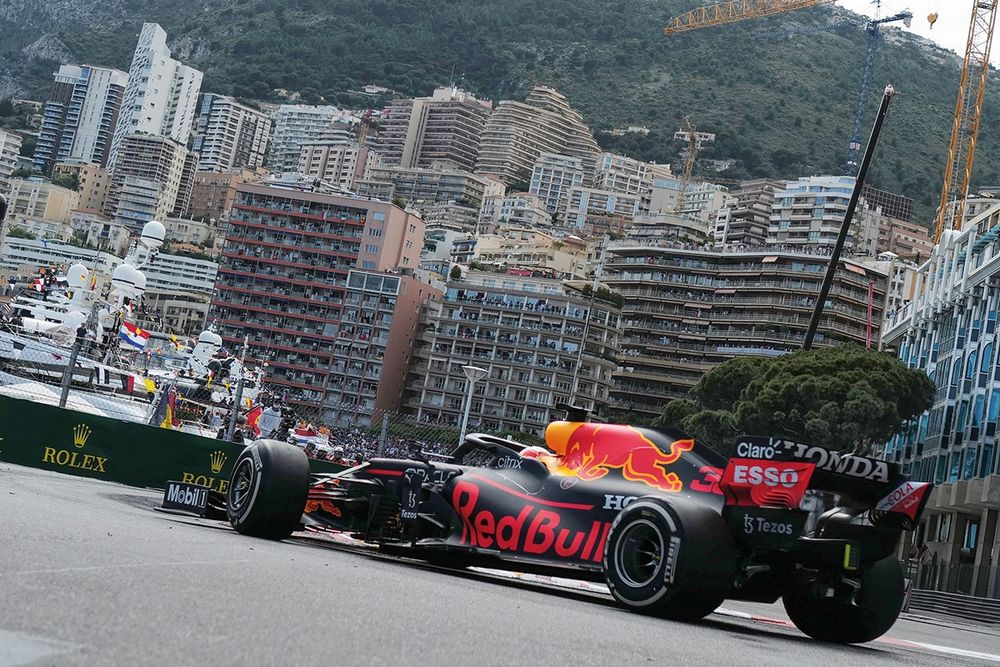
Christian Horner has called on Formula 1 to raise its $215 million budget cap, arguing the current system leaves hundreds of millions of dollars in team spending entirely unregulated.
Speaking to Autosport, the Red Bull team principal said the gap between the official cap and real-world expenditure has grown too wide to ignore. “You’ve got a budget cap of just over $200m but teams are spending $500 or $600m,” Horner said. “More needs to be included within the cap.”
F1 introduced the cost cap in 2021 at $145 million, gradually raising it to its current $215 million level. However, the figure excludes significant outgoings including driver salaries, the pay of the three highest-earning non-driver staff, travel costs, marketing spend, and power unit development — which sits under a separate $190 million cap. The result, Horner argues, is a system that compresses spending in some areas while inflating it in others.
“Formula 1 teams will spend as much money as they have,” he said. “It’s like a balloon with not enough air in it — if you squeeze it one end, the air is going to go somewhere else. So you’ll now see driver retainers far healthier than they were pre-budget cap.”
Horner’s call for reform comes with some personal context. Red Bull were found to have breached the 2021 cap by 5%, resulting in a $7 million fine and a 10% reduction in wind tunnel and CFD testing time. He acknowledged the rules have since been tightened, noting that “the things we got charged with in that first year now would not be an issue.”
Despite his criticism of the cap’s scope, Horner credited the system with transforming the financial health of the paddock. “Even the smallest team on the grid has a multi-billion dollar valuation,” he said. “Five, six, seven years ago, they would have been seen as liabilities. It’s driven real value into these teams — franchises — like Haas or Williams.”
Williams team principal James Vowles has offered a different perspective this month, arguing that the cap disproportionately benefits the established frontrunners. His reasoning: teams like Red Bull, Mercedes, and Ferrari had already invested heavily in world-class infrastructure before the cap was introduced, meaning their $215 million can flow almost entirely into on-track performance. Smaller outfits like Williams, by contrast, must still direct a portion of their capped budget toward capital expenditure on facilities, leaving less for the car itself.
The debate reflects a broader tension within the sport as it heads into the 2026 regulatory cycle — how to maintain the financial stability the cap has delivered while closing the loopholes that allow the biggest spenders to remain the biggest spenders.
Read also
-
 Formula 1 ·
Verstappen brings cowboy-hat lion to Austin with Texas-themed COTA helmet
-
 Formula 1 ·
Brown orders Norris and Piastri never to repeat Singapore sprint collision as Red Bull close in
-
 Formula 1 ·
Mercedes F1 posted £633m revenue and paid £125m in dividends during 2025 season
-
 Formula 1 ·
Hamilton's Singapore snub of Ferrari pitwall signals deepening trust breakdown, says Collins
-
 Formula 1 ·
Hamilton and Leclerc hijack Ferrari's social media in chaotic Singapore GP stunt
-
 Formula 1 ·
Racing Bulls' Lawson unveils custom Taylor guitar ahead of Austin live show