Heat, humidity and storms cast a long shadow over World Cup 2026 host cities
Sports scientists and climate researchers warn that roughly a quarter of World Cup 2026 matches could be played in conditions exceeding recommended safety limits, with extreme heat, high humidity, and severe thunderstorms threatening player welfare and match pace across US, Canadian, and Mexican venues.
2 min read
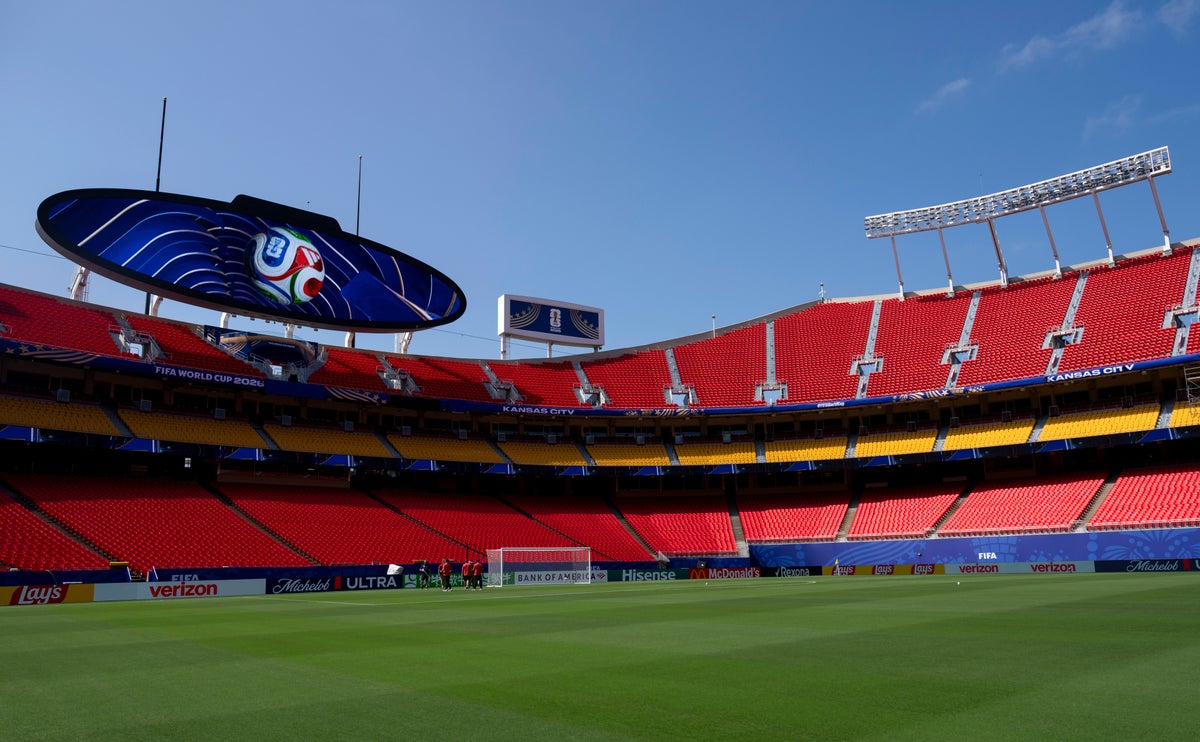
Extreme heat, stifling humidity, and the threat of sudden thunderstorms are shaping up to be among the defining challenges of World Cup 2026, with climate researchers warning that roughly a quarter of matches could be played in conditions that exceed recommended safety limits.
Seasonal forecasts point to above-normal temperatures across large parts of the United States, with moisture flowing north from the Gulf of Mexico expected to fuel severe weather during the tournament’s opening weeks. World Weather Attribution, which issued the safety-limit warning, stressed that the key measure is not air temperature alone but wet-bulb globe temperature — a composite index that incorporates heat, humidity, sunlight, and wind to estimate actual heat stress on the body.
Chris Minson, a physiology professor and co-director of the Exercise and Environmental Physiology Labs at the University of Oregon, explained why the internal demands of elite football compound the external threat. “Seventy-five percent of all the energy that we utilise during exercise gets converted to heat,” Minson told Reuters. “Only about 25% goes to actually doing the exercise.”
Humidity, he added, is a particular concern because sweat cools the body only when it evaporates. “One of the hardest things for us is when the humidity is very high,” he said. High-humidity venues on the tournament schedule include Houston, Miami, Dallas, and Monterrey.
New research from Climate Central found that climate change has increased the likelihood of temperatures high enough to affect player performance at 97 of the 104 tournament matches. The sharpest projected increase is for the 26 June group-stage fixture between Uruguay and Spain in Guadalajara, where researchers estimated a 70% chance of performance-impairing heat — 37 percentage points higher than it would have been without climate change.
Ryan Calsbeek, a biological sciences professor at Dartmouth College who studies how body type affects athletic performance in different climates, warned that the conditions could alter not just player welfare but the character of matches themselves. “Higher temperature, higher humidity is likely to slow games down,” he said. “When athletes have to perform for a very long time, they’re just not going to be able to balance the explosive power of their fast-twitch efforts with the more aerobic long-term efforts of a 90-plus minute game in the heat and humidity.”
Precise forecasts for individual fixtures remain impossible at this stage, but the convergence of scientific warnings suggests tournament organisers, medical teams, and coaches will need robust heat-management protocols well before the opening whistle.
Read also
-
 Football ·
Crystal Palace come from behind to hand Glasner a 3-1 defeat on his Selhurst Park return
-
 Football ·
Liverpool fans greet guilty Man City with boos and 'cheats' banners at Anfield
-
 Football ·
Man City slip into Anfield via back entrance to avoid hostile Liverpool supporters
-
 Football ·
Manchester City found guilty of 115 financial charges as appeal and sanctions loom
-
 Football ·
Man City relegated to 7/4 favourites for drop after guilty verdict on 114 charges
-
 Football ·
Vinicius Junior threatens Clasico: his expulsion report aggravates the sanction