FIFA reverses policy to ban reusable water bottles from World Cup stadiums
FIFA has quietly updated its Stadium Code of Conduct to prohibit reusable water bottles at World Cup venues this summer, reversing guidance issued just three weeks earlier that explicitly permitted them. Fans will now be required to purchase bottled water inside stadiums, where prices reached up to $6 at last year's Club World Cup.
2 min read
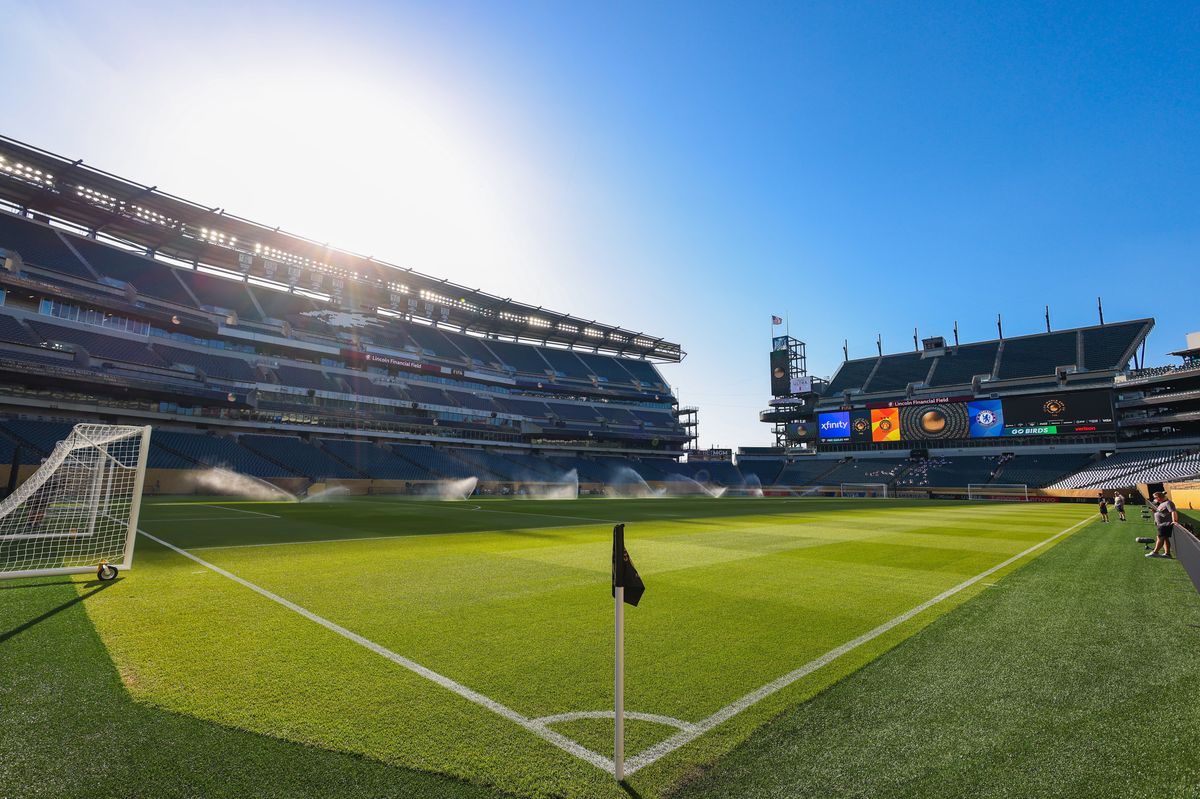
FIFA has banned reusable water bottles from World Cup stadiums this summer, reversing a policy it had published just three weeks earlier — a decision that raises immediate concerns about fan welfare given the extreme heat expected at the tournament.
The governing body’s official Stadium Code of Conduct had previously stated that “empty, transparent, reusable plastic bottles, up to 1 litre in capacity, may be brought into the Stadium.” That language has since been replaced with a blanket prohibition: “reusable water bottles are no longer permitted at the FIFA World Cup stadiums,” as confirmed by The Athletic.
The practical consequences are significant. Fans will not be permitted to refill an empty bottle at water fountains or dispensers inside venues, and other bottle types are also banned on the grounds that they could be used as projectiles. FIFA holds a long-standing commercial partnership with Coca-Cola, whose water brand Dasani will be sold inside World Cup stadiums. At last summer’s Club World Cup, bottled water was sold for up to $6 (£4.47), though FIFA has not confirmed what pricing will apply this time.
The timing of the reversal has drawn criticism, coming as heat and extreme weather are widely expected to affect the tournament. Last summer’s Club World Cup provided a preview of conditions: then-Chelsea manager Enzo Maresca described it as “impossible” to run normal training sessions during code-red heat warnings, while Borussia Dortmund head coach Niko Kovac said he was “sweating like I’ve just come out of a sauna.” Maresca, whose side saw one match delayed by two hours due to extreme weather, questioned whether the host nation was an appropriate venue, saying: “If you suspend seven or eight games, that means that probably this is not the right place to do this competition.”
Scientific analysis adds further weight to those concerns. Researchers from World Weather Attribution estimate that approximately 26 of the tournament’s 104 matches are likely to be played when the host city’s Wet Bulb Global Temperature exceeds 26 degrees Celsius — a threshold used by the military, sports scientists, and safety experts as a marker for serious heat-stress risk. WBGT accounts for temperature, humidity, wind speed, and solar radiation to give a composite measure of conditions.
The ban arrives after supporters have already faced criticism-attracting ticket prices, and the requirement to pay for water inside venues is likely to intensify scrutiny of FIFA’s commercial priorities ahead of the tournament.
Read also
-
 Football ·
Carrick admitted United was the only job he'd take as pressure mounts after winless run
-
 Football ·
Out of contract after Monaco setback, Pogba turns to MLS to revive his career
-
 Football ·
Andy Carroll says well-known footballers have contacted him to share their own sexual assault experiences
-
 Football ·
Manchester United to scout Giuliano Simeone during Champions League trip to Atletico Madrid
-
 Football ·
Celtic eye David Moyes return as Everton ownership uncertainty clouds his future
-
 Football ·
Courtois agrees in principle to extend Real Madrid stay until 2028

 Poland W