FIFA paying rejected Somali referee Artan in full is guilt, not generosity
Omar Artan was turned away at Miami International Airport after 11 hours of interrogation by US immigration officials and sent home to Mogadishu without officiating a single match. FIFA has since confirmed he will receive his full World Cup fee.
2 min read
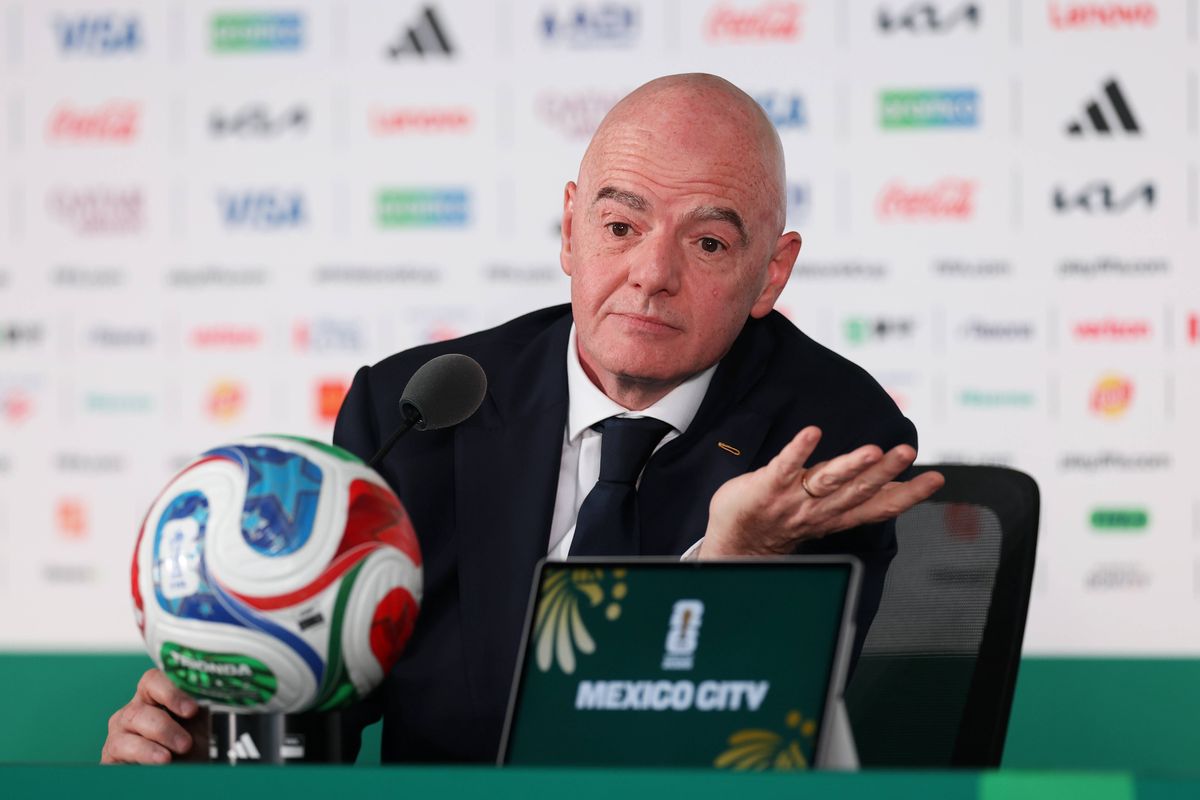
FIFA will pay Somali referee Omar Artan his full World Cup fee despite him never setting foot on a pitch at the tournament — a decision that looks far less like compassion and far more like an acknowledgement that something went badly wrong.
Artan was detained for 11 hours by US immigration authorities at Miami International Airport earlier this week before being denied entry to the United States. Officials cited an alleged “association with suspected members of terror organisations.” Artan stated he had been questioned about links to Somali militant group Al Shabaab and made clear he had no knowledge of the organisation. He was subsequently placed on a flight back to the Somali capital Mogadishu via Istanbul, his World Cup over before it began.
FIFA’s confirmation that Artan will still be paid in full at the tournament’s conclusion is being framed in some quarters as an act of decency. It is more accurately read as an implicit admission that the governing body accepts some responsibility for what happened to him. A man’s professional dream was ended at an airport gate, and no amount of back-pay restores that.
The decision sits awkwardly alongside FIFA’s well-documented appetite for revenue. The governing body charges supporters close to $6 for a packet of crisps, $8 for a Coca-Cola, and $18 for chicken and chips at venues across North America. The willingness to pay thousands of dollars to an official who never worked a minute of the tournament is a notable departure from the organisation’s usual financial instincts.
FIFA has faced scrutiny on several fronts during this World Cup — blaming empty seats on fans congregating in stadium concourses, and quietly dropping the pretence that mid-game drink breaks serve any purpose beyond commercial interests. Against that backdrop, honouring Artan’s contract feels like an unusual concession: an organisation that rarely admits fault quietly settling a debt it knows it owes.
Whether it signals any genuine shift in how FIFA operates remains to be seen. One compensated referee does not rewrite decades of self-serving governance. But for Artan, at least, the long journey home will not go entirely unrewarded.
Read also
-
 Football ·
Lammens tells United defenders to stop passing him the ball during first-half Spurs struggle
-
 Football ·
Neuer blunder gifts Augsburg a Bundesliga-record eight-second goal as Bayern drop points
-
 Football ·
Neville lip-reads Lammens telling Man Utd teammates he did not want the ball
-
 Football ·
Hincapie carried off during warm-down to cast injury doubt over Arsenal defender
-
 Football ·
Ajer's late equaliser keeps Brentford unbeaten as Villa's home wait goes on
-
 Football ·
10-man Brighton hold off Sunderland to stay in Premier League's top four

 USA W
USA W