FIFA confirms VAR offside system failed during Switzerland's controversial penalty against Qatar
FIFA has admitted that the technology generating semi-automatic offside images went down moments before Switzerland were awarded a 14th-minute penalty in their World Cup 2026 group match against Qatar, with Remo Freuler appearing offside in the build-up.
2 min read
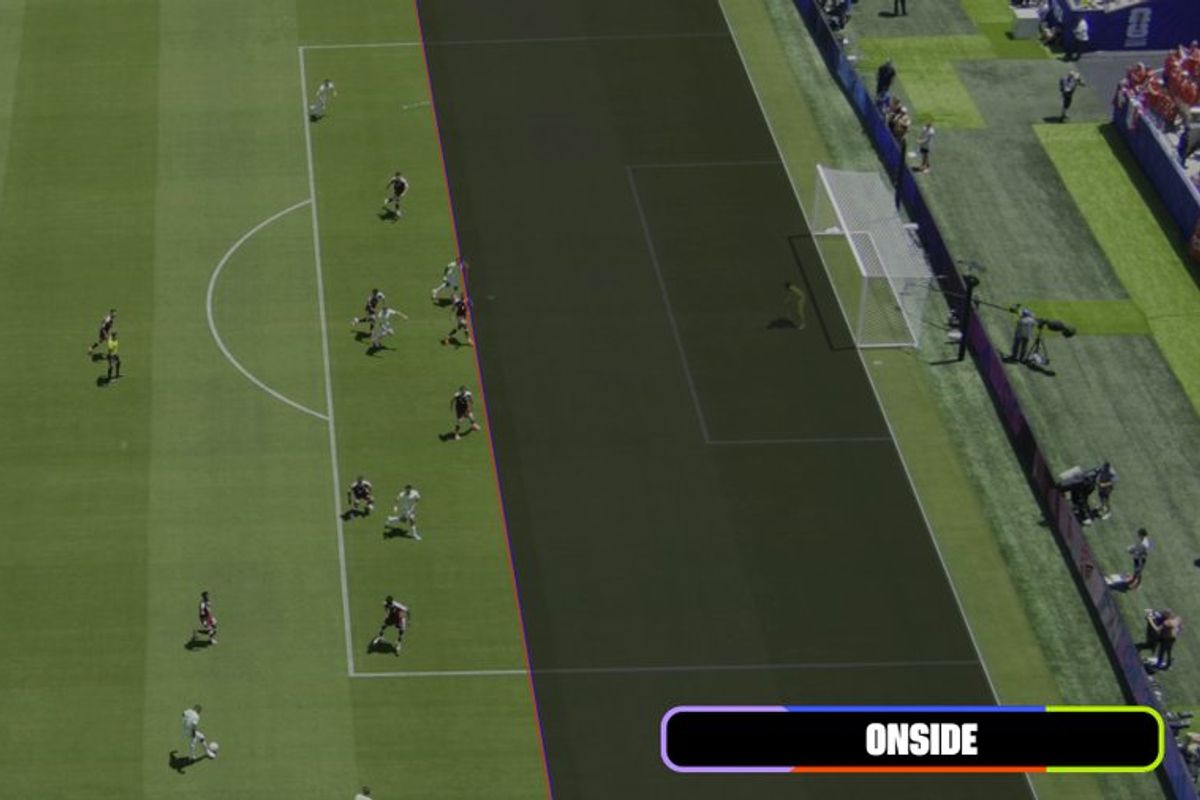
FIFA has confirmed that its semi-automatic offside imaging system suffered a technical outage during Switzerland’s controversial 14th-minute penalty in their 2026 World Cup group match against Qatar at the San Francisco Bay Area.
Breel Embolo converted from the spot after Remo Freuler was fouled in the box, but replays suggested the Swiss midfielder may have been in an offside position before the incident. No onside animation graphic was shown to viewers, and FIFA has now explained why.
In an official statement, FIFA said: “During the Qatar vs. Switzerland match in the San Francisco Bay Area, a brief technical outage prevented the onside animation graphic from being generated ahead of the penalty awarded to Switzerland in the 14th minute. The issue was quickly resolved.”
FIFA was, however, keen to stress that the VAR process itself was not compromised by the system failure. “The workflow of the VAR was not affected by this issue and followed the normal procedure in checking the on-field decision,” the statement continued. “The lines used by the VAR to check the position of the relevant players did not show the attacking player to be in an offside position in either of the two situations immediately before the penalty decision.”
The governing body’s position is that, despite the graphic not being available for broadcast or public display, the VAR officials were still able to conduct their own checks using the underlying line data — and concluded that Freuler was onside.
The incident nonetheless drew immediate scrutiny, with the absence of the visual confirmation that fans and broadcasters have come to expect from the semi-automatic offside tool leaving the decision open to widespread debate. The technology, introduced to speed up and improve the accuracy of offside calls, relies on player-tracking data and skeletal modelling to produce the animated graphics that have become a standard part of major tournament coverage.
The match ended in a draw, meaning both sides shared the points in what became one of the more contentious results of the tournament’s opening stage.
Read also
-
 Football ·
Solanke's injury-time header denies 10-man United a first win in five Premier League games
-
 Football ·
Solanke's stoppage-time equaliser denies Carrick's United victory over ten-man Spurs
-
 Football ·
Aurier Recreates Periscope Controversy with Onion, Ten Years After Insulting Blanc
-
 Football ·
Bentancur sees red for headbutt on Shaw as 10-man Spurs trail United at Old Trafford
-
 Football ·
Lammens tells United defenders to stop passing him the ball during first-half Spurs struggle
-
 Football ·
Neuer blunder gifts Augsburg a Bundesliga-record eight-second goal as Bayern drop points

 Venezuela W