Every new rule at World Cup 2026: VAR corners, offside alerts and the goalkeeper timeout ban explained
World Cup 2026 introduces a significant overhaul of football's Laws of the Game, covering expanded VAR powers, real-time offside notifications for assistant referees, and a crackdown on goalkeeper time-wasting with new countdown rules.
2 min read
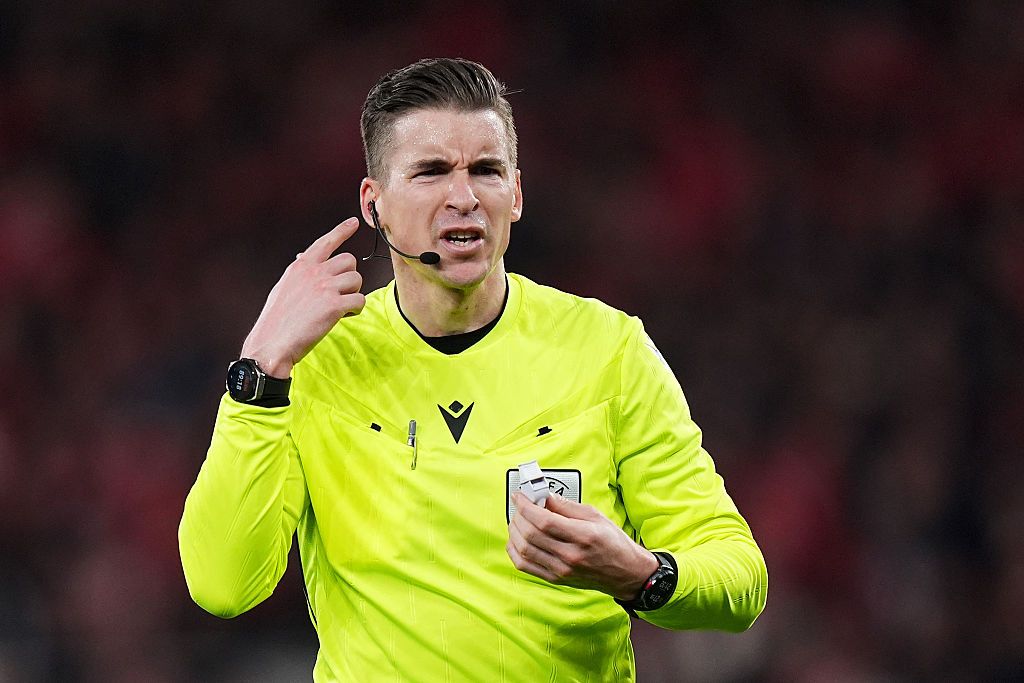
World Cup 2026 arrives with one of the most substantial rulebook overhauls in recent tournament history, with changes spanning VAR jurisdiction, offside technology, and timekeeping enforcement set to affect all 104 matches across the United States, Canada, and Mexico from June 11 to July 19.
VAR gets broader powers
The most expansive change is the extension of VAR’s reach into areas previously off-limits. Video assistant referees can now intervene to correct incorrectly awarded corner kicks and goal kicks — a significant expansion from the system’s original remit of goals and the build-up play preceding them. The intervention is limited to clear and obvious errors and is not supposed to delay restarts.
Second yellow cards are also now reviewable. While VAR has long been able to recommend that straight red cards be overturned, players dismissed for two bookable offences had no avenue for review. That changes at this tournament: the VAR team can now call for a review when a second yellow has been shown, including in cases of mistaken identity.
VAR can also intervene before a set piece is taken. Where violent conduct was already reviewable at dead-ball situations, all disciplinary options are now theoretically on the table prior to the ball being played. Penalties before the whistle, however, are not expected to follow.
Real-time offside notifications for assistants
Semi-automated offside technology, used at the 2022 World Cup to speed up VAR checks, takes on a new function in 2026. Assistant referees will receive audio notifications in real-time when a player is in an offside position, removing the need to hold the flag and wait for the attacking phase to conclude. The flag will be raised when the offside margin is 10 centimetres or greater — meaning clear, unambiguous calls — while tighter decisions will still be referred upstairs.
Goalkeeper timeout ban and five-second countdowns
Some of the most visible changes target time-wasting, particularly by goalkeepers. A formal ban on goalkeeper “timeouts” — the practice of walking to the edge of the penalty area to receive treatment or instructions and effectively pausing the game — forms part of a broader timekeeping clampdown.
Five-second countdown rules are also being introduced in specific situations, placing a stricter limit on how long players can delay restarts. Referees at the tournament — 52 on-field officials supported by 88 assistants and 30 video match officials — will be responsible for enforcing a suite of timekeeping measures that represent some of the most operationally demanding changes the game has seen in years.
Context
The 2026 tournament is the largest World Cup ever staged, featuring 48 teams and 104 matches. FIFA has historically used the World Cup as a testing ground for rule changes before wider adoption, meaning the adjustments introduced this summer are likely to filter down into domestic competitions in the seasons that follow.
Read also
-
 Football ·
Carragher singles out Mbeumo and Baleba for 'unacceptable' role in Spurs' stoppage-time leveller
-
 Football ·
Dijon secures third straight win by crushing Metz 4-2 in Ligue 2
-
 Football ·
Piers Morgan calls Carragher a 'big baby' on live TV to reignite Ronaldo row
-
 Football ·
Isco brace fires Real Betis to 5-2 rout of Osasuna and into third in La Liga
-
 Football ·
Carrick invokes Arteta's early struggles to defend his position as United crisis deepens
-
 Football ·
Carrick backs Fernandes to rediscover best form but warns no United player is undroppable

 Ukraine W