England face 43-degree heat and Saharan dust as Norway quarter-final looms in Miami
Thomas Tuchel's England side face a brutal physical test in Miami's extreme heat and humidity when they meet Norway for a place in the World Cup semi-finals, with players warned they could lose up to eight pints of sweat if the match goes to extra time.
2 min read
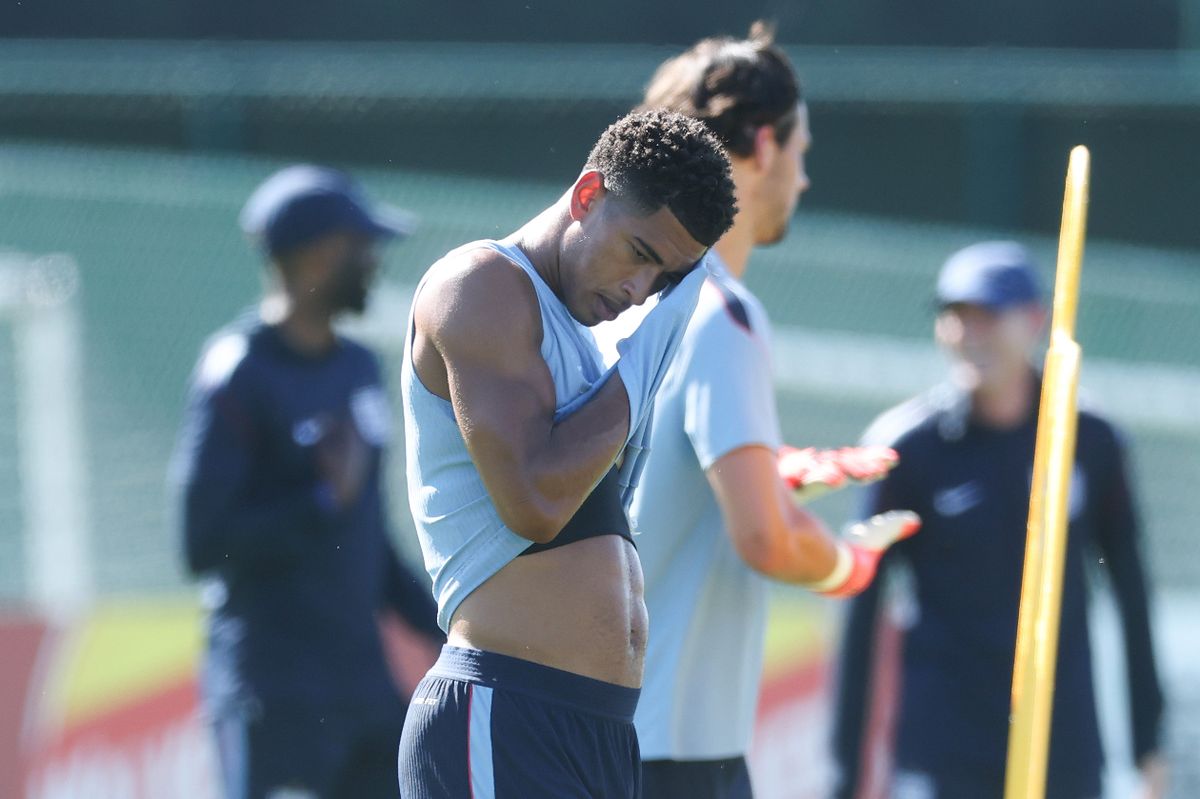
Thomas Tuchel’s England will face one of the most physically demanding environments in international football when they take on Norway in Miami in a World Cup quarter-final, with the real-feel temperature forecast to hit 43 degrees Celsius and players at risk of losing up to four litres of fluid if the match extends to extra time.
The US National Weather Service has issued a heat advisory ahead of the fixture, warning that the combination of temperature and humidity in Miami could push the apparent temperature to a suffocating 43°C. A plume of Saharan dust that drifted across the Atlantic earlier in the week has compounded the challenge, prompting health alerts — particularly for players with allergies or respiratory conditions.
England have already been tested in extreme conditions at this tournament, beating Mexico 3-2 at the Azteca Stadium in boiling heat and at an altitude of 7,350 feet above sea level. Miami sits at sea level, but the humidity there presents its own distinct physiological threat.
Dr Foster, a lecturer in Environmental Physiology at King’s College London, explained the scale of the challenge facing outfield players. “At the kind of workloads expected in elite outfield football players, it is impossible to consume enough fluid to fully prevent the impact of high heat and humidity,” he said. “This will start to manifest in a reduced performance as the match progresses.”
He outlined the likely trajectory of a player’s body temperature across 90 minutes: “At the start of the match, their deep body temperature will be 37.5 to 38°C. Toward the end of the match, this will likely approach 39.5-40°C in those who work the hardest. Getting to such a high temperature rapidly increases the perception of fatigue, as your body is desperately trying to stop you from exercising and therefore producing heat.”
Heart rate, Dr Foster added, could rise by 20 to 40 beats per minute, with sweat loss approaching two litres per hour. Should the quarter-final go to extra time, that would amount to roughly four litres — or around eight and a half pints — over 120 minutes.
“High humidity also accelerates dehydration, which ultimately means your heart has to work much harder to keep blood pressure stable,” Dr Foster continued. “Competing at a higher heart rate makes the exercise feel harder, causing an earlier onset of fatigue and ultimately an impaired performance. Furthermore, we lose electrolytes in sweat, such as sodium, potassium, and chloride. These electrolytes are critical for nerve function, so if we lose them, we also lose muscular performance.”
The winner of the England-Norway tie will advance to the semi-finals, where they would face either Argentina or Switzerland.
Read also
-
 Football ·
Hallgrimsson confirms Ireland will play second Israel Nations League fixture despite widespread boycott
-
 Football ·
Zidane as manager: Koné confirms a change of method that's doing the Blues good
-
 Football ·
National media call for Man City ownership change after guilty verdict on all financial charges
-
 Football ·
Real Madrid eye free transfer for Van Dijk as Liverpool contract talks stall
-
 Football ·
Real Madrid monitoring Club Tijuana teenager Mora alongside Benfica and Dortmund
-
 Football ·
Kane hails Gordon as England's 'difference maker' after Nations League win in Prague

 Mauritius