Curaçao arrive at their first World Cup as the smallest nation ever to qualify
With a population of just 156,000 and a 78-year-old head coach in Dick Advocaat, Curaçao have become the smallest country ever to reach the World Cup, opening their campaign against Germany in Houston this summer.
2 min read
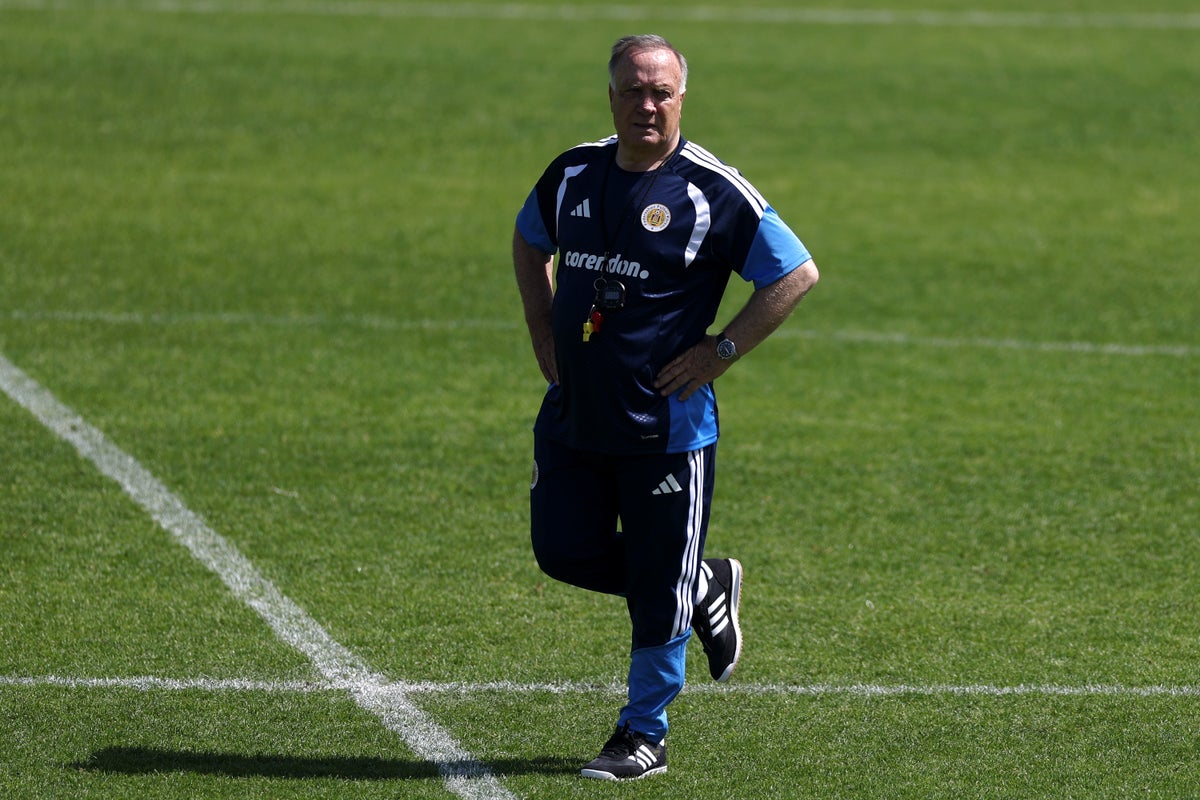
Curaçao, a Caribbean island of 156,000 people, will make their World Cup debut this summer as the smallest nation ever to qualify for football’s biggest tournament, opening against Germany in Houston.
The achievement is all the more striking given the figures surrounding it. Head coach Dick Advocaat, 78, will become the oldest manager in World Cup history when the tournament begins, while the NRG Stadium in Houston — where Curaçao face Germany — could seat roughly half the island’s entire population.
Defender Sherel Floranus captured the mood of a nation when he said: “We have made history. We are writing our own history, for this island.”
The road to qualification was methodical rather than miraculous. Curaçao swept through the opening CONCACAF qualifying round with a perfect 4-0-0 record against Haiti, Saint Lucia, Aruba, and Barbados, before navigating a tougher second stage — finishing 3-0-3 against Jamaica, Bermuda, and Trinidad and Tobago — to claim one of the region’s three available berths.
The expanded 48-team format, combined with the automatic exemption of host nations the United States, Mexico, and Canada from qualifying, created a wider path for smaller footballing nations. Curaçao walked through it.
Remko Bicentini, a former professional player and the country’s previous head coach, was candid about expectations while refusing to diminish what has been accomplished. “We know there is a big chance that we don’t win the World Cup, but that we got there — for Curaçao, a very, very, very good moment. We are proud of that,” he said. “It is a party for the whole of Curaçao. All the players worked years, for years, for years, very hard to become where we now are.”
Curaçao’s relationship with the Netherlands adds another layer to the story. Formerly part of the Netherlands Antilles, the island became an autonomous constituent country of the Kingdom of the Netherlands in October 2010. Its citizens hold Dutch nationality, and when the squad prepared in the Netherlands ahead of the tournament, they were greeted with “welcome home” signs — a gesture that underlined both the connection and the distinct national identity Curaçao is now asserting on the world stage.
For many residents, the shift in allegiance has been instinctive. Local policeman Michael Stokkel, a lifelong Brazil supporter, put it simply: “I will be a fan of my own country. It’s an incredible feeling.”
For a nation that rarely competes explicitly as Curaçao in international sport — with many of its athletes historically representing the Netherlands — this World Cup appearance carries a weight that goes well beyond football.
Read also
-
 Football ·
Alex Scott returns to Tower Hamlets secondary school to honour coaches who shaped her career
-
 Football ·
Neville warns Yoro and Heaven will feel the sting of Martinez's United outburst most
-
 Football ·
Raphinha and De Jong return to group training ahead of Barça-PSG
-
 Football ·
Keane savages Fernandes and Maguire over podcast culture as United crisis deepens
-
 Football ·
United's squad value drops £342m since 2022 — the worst depreciation in Europe
-
 Football ·
Keane brands United a 'circus' as Martinez rant over hierarchy divides dressing room