Bosnian diaspora in St Louis ready to turn US World Cup into a home crowd
An estimated 60,000–70,000 Bosnians settled in St Louis after fleeing the 1990s war are set to create a home-like atmosphere for Bosnia and Herzegovina at the 2026 World Cup, with group matches against Canada, Switzerland, and Qatar spread across North American venues.
2 min read
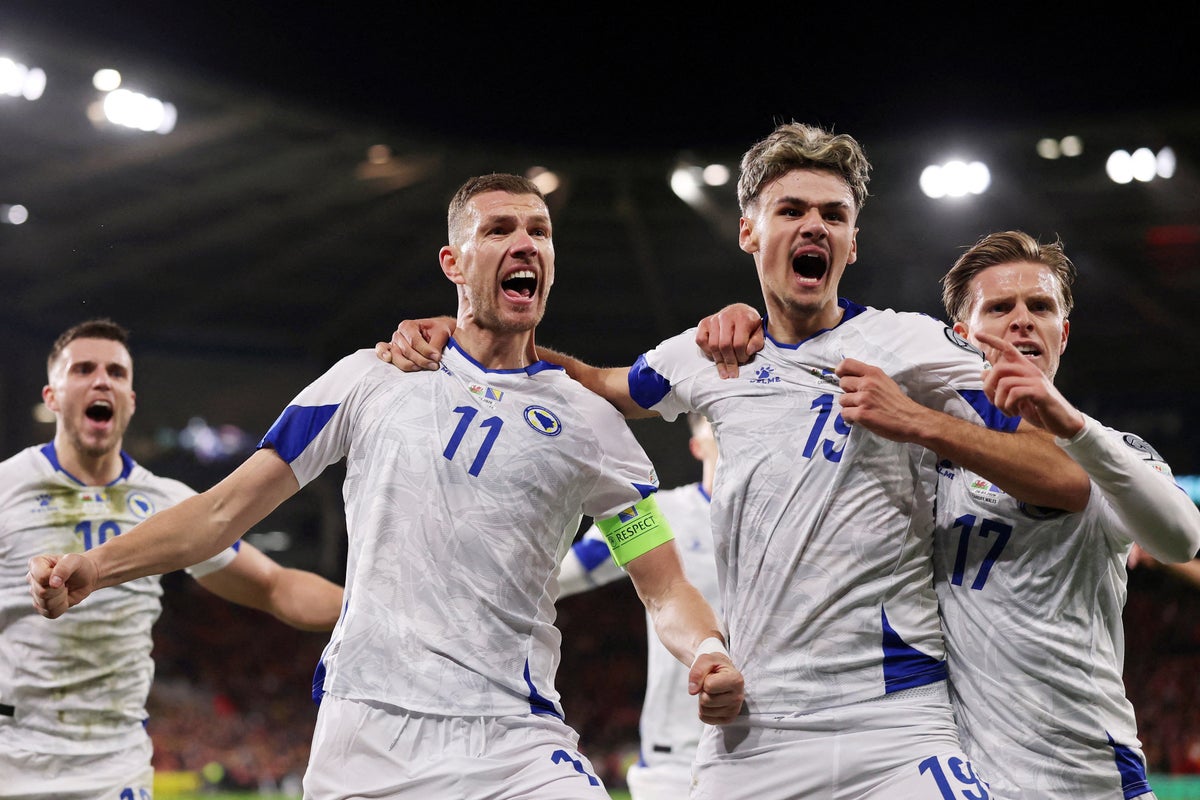
Bosnia and Herzegovina will carry an unlikely home support into the 2026 World Cup, drawn from the tens of thousands of Bosnian refugees who rebuilt their lives in St Louis, Missouri, after fleeing the Bosnian War three decades ago. The city, home to an estimated 60,000–70,000 Bosnians, is already preparing to become a focal point of national pride as the tournament approaches.
The team will face Panama in an international friendly this Saturday at St Louis’ Energizer Park before beginning their World Cup campaign against Canada in Toronto, Switzerland in Los Angeles, and Qatar in Seattle. “We should be able to create an atmosphere like a home match,” said Elvir Kafedžić, a Bosnia-born St Louisan who serves as assistant coach for MLS side St Louis City SC.
Kafedžić’s story is representative of much of the community. He was nine-and-a-half years old when he fled Bosnia in 1992 with his mother and brothers, travelling through Montenegro, the Czech Republic, Sweden, and Germany before arriving in St Louis in 1999 when their temporary protection in Germany expired. “We didn’t have anywhere to go back to in Bosnia,” he said.
Bosnia secured their World Cup place two months ago with a dramatic 4-1 penalty shootout victory over four-time champions Italy following a 1-1 draw. The decisive spot-kick was converted by Esmir Bajraktarević, a Bosnian-American from Appleton, Wisconsin — a detail that resonated deeply with the diaspora. The qualification triggered celebrations across St Louis. “That day you could see cars flying Bosnian flags in the streets,” Kafedžić recalled. “All the restaurants, all the coffee shops were packed wall-to-wall with strangers hugging each other. For me, this goes beyond soccer. This shows who we are, the pride, where we come from and how deeply we’re connected to our roots.”
The squad is led by 40-year-old captain Edin Džeko, who has scored more than 50 goals across the Premier League, Serie A, and Bundesliga, and includes 18-year-old winger Kerim Alajbegović. Bosnia’s only previous World Cup appearance came at Brazil 2014, where they were eliminated in the group stage. Their first-ever World Cup goal was scored by Vedad Ibišević — a player who developed his game in St Louis high school football and at Saint Louis University before a professional career centred largely on the Bundesliga.
St Louis became a hub for Bosnian refugees in the 1990s because of its job opportunities, affordable housing, and an existing, if small, Bosnian community. “We all came looking for a better life because everything was taken away from us at home,” Kafedžić said. “You can’t put in words how thankful we are.”
Read also
-
 Football ·
Carragher singles out Mbeumo and Baleba for 'unacceptable' role in Spurs' stoppage-time leveller
-
 Football ·
Dijon secures third straight win by crushing Metz 4-2 in Ligue 2
-
 Football ·
Piers Morgan calls Carragher a 'big baby' on live TV to reignite Ronaldo row
-
 Football ·
Isco brace fires Real Betis to 5-2 rout of Osasuna and into third in La Liga
-
 Football ·
Carrick invokes Arteta's early struggles to defend his position as United crisis deepens
-
 Football ·
Carrick backs Fernandes to rediscover best form but warns no United player is undroppable
 Switzerland W