Drivers slam 'dangerous' yo-yo chaos at Silverstone sprint as energy rules expose F1's limits
Multiple Formula 1 drivers criticised erratic speed differentials caused by battery deployment strategies during Saturday's British GP sprint race at Silverstone, with McLaren's Oscar Piastri warning of near-crashes on the opening lap and predicting similar chaos in Sunday's grand prix.
2 min read
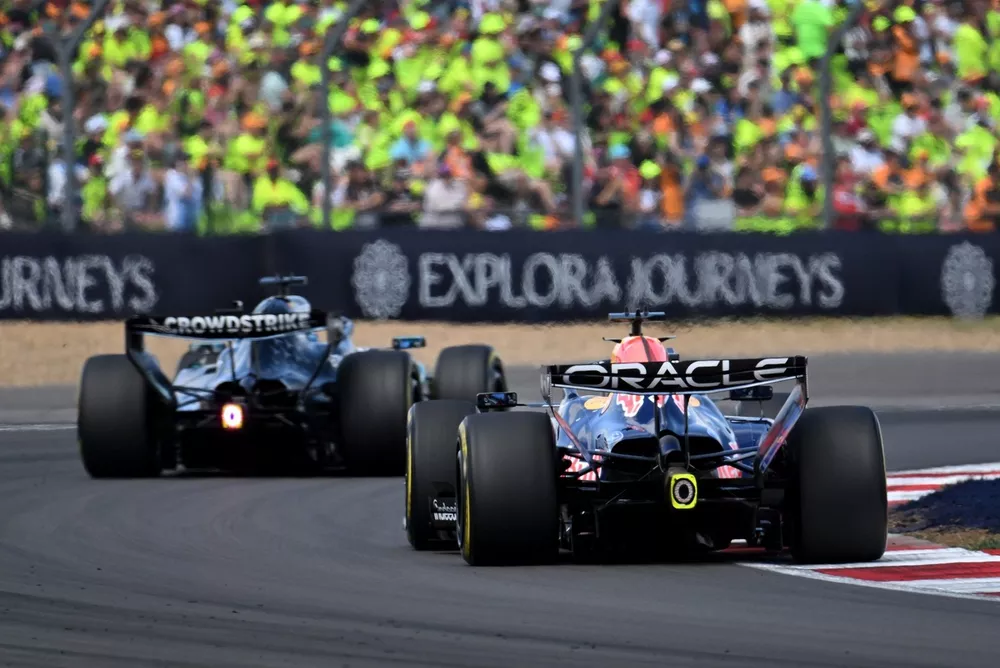
Formula 1 drivers raised serious safety concerns after Saturday’s British Grand Prix sprint race at Silverstone, where large differences in electrical energy deployment produced unpredictable speed swings that several competitors described as dangerous.
“Lap one was just chaos with the energy usage,” said McLaren’s Oscar Piastri, who finished seventh. “Pretty dangerous at some points, to be honest, but that’s what we’ve got. Then after that the following [other cars] was just very, very difficult in terms of staying on top of the car. Some things to look at, for sure, but at least we know what to expect tomorrow — which is chaos.”
Piastri said he spent much of the opening lap “trying to avoid crashing into the back of people” as cars running different harvest-and-deploy strategies accelerated and braked at sharply different rates through the same corners.
The issue is not new. A similar problem surfaced at the season-opening Australian Grand Prix in March, and the FIA had already attempted to address it following Oliver Bearman’s heavy crash at Suzuka, where the Haas driver hit Franco Colapinto’s Alpine after the Williams was deploying significantly less electrical boost. Regulatory amendments covering boost levels and energy harvesting limits were introduced, but drivers and teams had long anticipated that Silverstone — with its long straights and high-speed corners that demand more energy than the cars can recoup in a single lap — would expose the fundamental ceiling of those fixes.
Ferrari’s Charles Leclerc, who started fourth, lost positions at the start before recovering to fifth after getting the better of Max Verstappen and Piastri in the yo-yo battle. “The pace wasn’t too bad,” Leclerc said. “The tricky thing is that when you were in a fight, we were very vulnerable.”
The problem has been largely absent from the previous four race weekends — Canada, Monaco, Barcelona, and Austria — because those circuits have track layouts that naturally push teams toward similar energy strategies, reducing the speed differentials between cars. Silverstone’s geometry offers no such equaliser.
With the hardware rules fixed for the season, no structural solution is available before Sunday’s grand prix, meaning drivers are heading into the full race distance already braced for a repeat of the sprint’s opening-lap disorder.
Read also
-
 Formula 1 ·
Coulthard praises Russell for admitting Antonelli is outperforming him as title slips away
-
 Formula 1 ·
Racing Bulls rookie Lindblad nearly flips Guinness-record Fiat Panda in off-season YouTube stunt
-
 Formula 1 ·
Rosberg brands Williams 2026 campaign 'a shocker' as Vowles faces uphill recovery
-
 Formula 1 ·
Ferrari unveils all-black race suit for Leclerc ahead of Singapore Grand Prix
-
 Formula 1 ·
Szafnauer backs Wolff's Antonelli gamble as teenager leads standings by 81 points
-
 Formula 1 ·
Smedley credits Bonnington as the force steadying Antonelli's 81-point F1 title lead

 Scotland U17 W