Doping at Juventus: the accusations that have followed Zidane for twenty years
Twenty years after his retirement, Zinedine Zidane remains confronted with doping suspicions linked to his time at Juventus Turin. Between admissions of intravenous infusions before Italian courts and a suspicious testosterone test in 1997, shadows persist.
2 min read
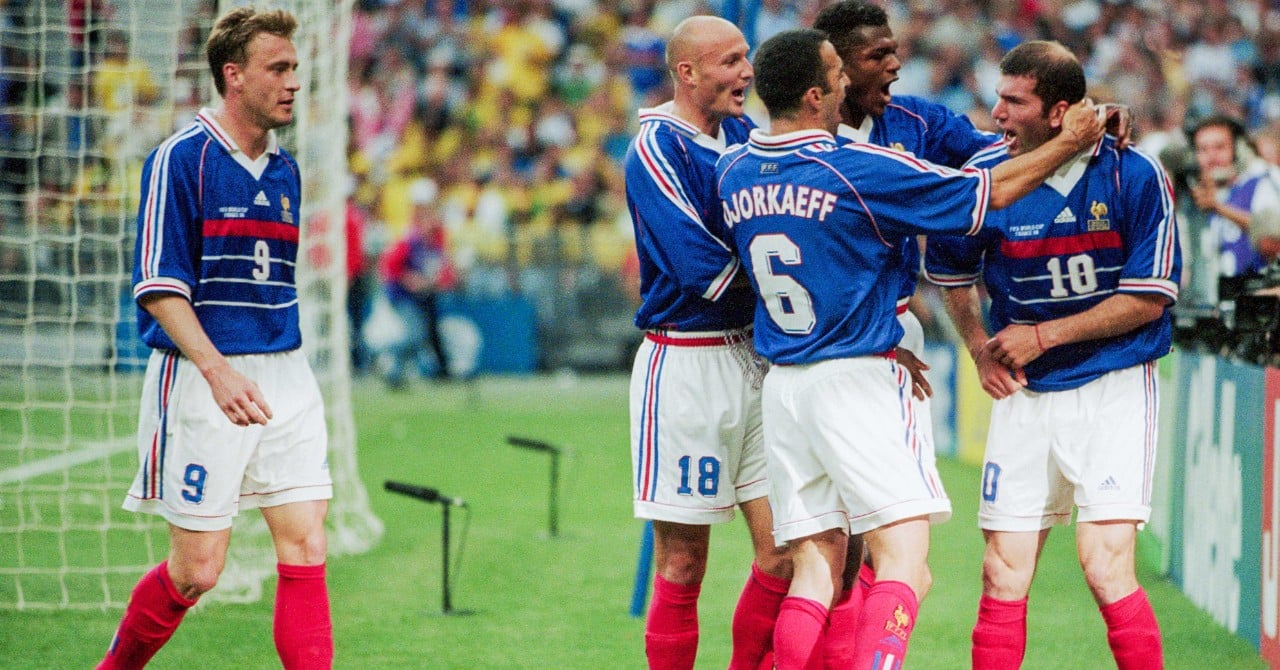
Twenty years after the end of his career, Zinedine Zidane has never fully escaped the doping suspicions born from his time at Juventus Turin. Revelations from an Italian trial and a biographical book continue to fuel the debate.
In January 2004, heard as a witness at the Turin court in the context of a trial for “sports fraud” targeting two Juventus executives, Zidane admitted to having received creatine and vitamins by infusion during his stay at the club. “This had never happened to me before in France, nor now in Spain,” he had specified on the stand. He also cited two specific products: Esafosfina and Neoton, which he justified taking due to a genetic disease, thalassemia, causing him an iron deficiency according to him.
This explanation was however questioned by Besma Lahouri, author of Zidane, une vie secrète (2008). According to her, medical examinations carried out throughout the player’s career never revealed an iron deficit. While creatine was not listed on the International Olympic Committee’s banned substances list, its use by intravenous infusion raised questions. A pharmacology professor, interviewed in a report broadcast in September 2016, described these practices as “legal doping”: “There is absolutely no difference between doping and taking these products at high doses or over long periods.”
Besma Lahouri’s book also raises an earlier episode. During a winter training camp for the French national team in Tignes in late December 1997, a surprise test conducted by Alain Garnier, then director of the European office of the World Anti-Doping Agency, had provoked the anger of coach Aimé Jacquet. Marie-Florence Grenier-Loustalot, a specialist in detecting doping products who collaborated with the IOC, claims that “one of the tests carried out at first instance showed a suspicious testosterone level”. The matter had no legal follow-up.
These elements, never formally sanctioned, did not damage Zidane’s popularity, confirmed by his brace in the World Cup final on July 12, 1998. They nevertheless constitute an open file that the years have not closed.
Read also
-
 Football ·
Liverpool eye internal candidates to replace Hughes as Gakpo handed new role under Iraola
-
 Football ·
Genesio slams Marseille players after second straight defeat
-
 Football ·
Mikel tips Manchester United to win £80m Adam Wharton race as Alaba move ruled out
-
 Football ·
Convicted of rape and torture, former PSG defender Godwin Okpara released from prison after six years
-
 Football ·
Ndiaye reveals he snubbed Tottenham for City to chase Champions League glory
-
 Football ·
Carrick hails Shaw-Rashford axis as 'particularly dangerous' after Everton draw
 Korea DPR U20 W