Red Bull's new wind tunnel won't be ready until early 2027, Wache confirms
Red Bull technical director Pierre Wache has confirmed the team's new Milton Keynes wind tunnel is unlikely to be operational until early 2027, leaving the squad reliant on what Christian Horner once called a "Cold War relic" throughout the 2026 season and into 2027 car development.
2 min read
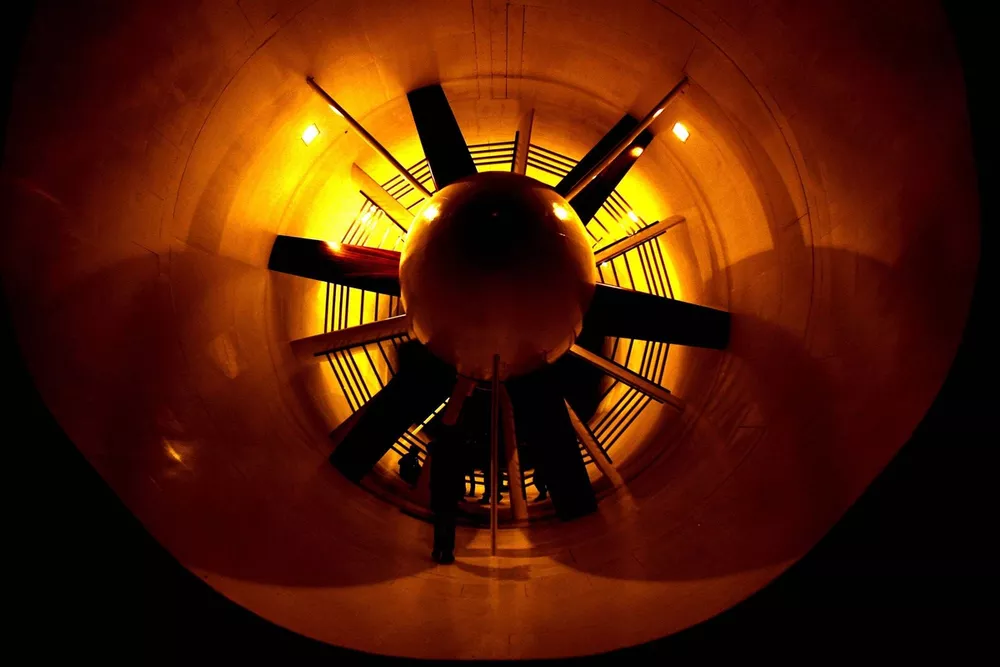
Red Bull will not have its new wind tunnel operational until early 2027, technical director Pierre Wache has confirmed, meaning the team must develop both its 2026 and 2027 cars using the oldest aerodynamic testing facility in Formula 1.
The admission comes after a difficult start to the 2026 season for the Milton Keynes outfit, led by Laurent Mekies. While Red Bull’s all-new power unit has drawn quiet admiration from rivals in the paddock, the chassis package was underwhelming across the first three race weekends. A significant upgrade introduced at the Japanese Grand Prix failed to impress even Max Verstappen, who said he could not feel the difference on track — reigniting concerns about the team’s correlation between wind tunnel data and real-world performance.
A follow-up package at the Miami Grand Prix performed more encouragingly, behaving exactly as Red Bull had predicted. But Wache is careful not to overstate what that means given the limitations of the current facility.
“Yes, it’s going in the right direction, but still we have the same tool and the same issues,” Wache told Autosport. “We are limited by… Well, we are trying to maximise what we have and we’ll see for the rest. But we have a new tool coming soon and I hope it will bring us another step.”
Wache confirmed the new wind tunnel, currently under construction on Red Bull’s Milton Keynes campus, is the “new tool” he is referencing. Last year he indicated construction was running three months ahead of schedule, but the revised timeline now points to the start of 2027 at the earliest. “We hope that we will have it running at the beginning of next year,” he said.
The urgency is well understood inside the team. Former team principal Christian Horner repeatedly described the existing facility — located near Bedford and approximately 70 years old — as “a Cold War relic”, and likened working with it to reading “two different watches” when comparing tunnel data to on-track results.
The broader F1 grid has made wind tunnel infrastructure a priority investment. McLaren, which used Toyota’s facility in Cologne from 2010, has operated its own tunnel since the summer of 2023 — a period that closely tracks the team’s rise to championship contention. Aston Martin’s state-of-the-art wind tunnel on its Silverstone campus has been described by Adrian Newey as the best in the business, though the on-track benefits have yet to fully materialise due to other limiting factors.
For Red Bull, the wait continues. The team will rely on its ageing facility for the remainder of the 2026 campaign and for the critical early development stages of its 2027 challenger — a car that will need to be competitive from the outset of what promises to be another heavily regulated era.
Read also
-
 Formula 1 ·
Steiner slams FIA president's offer to help Aston Martin keep Alonso competitive
-
 Formula 1 ·
Verstappen rules out comeback as Antonelli closes in on youngest-ever F1 title
-
 Formula 1 ·
Vowles admits Williams upgrades won't rescue team from 2026 F1 struggles
-
 Formula 1 ·
Mercedes' secret weekly codes helped Antonelli nail his race-winning VSC pitstop in Madrid
-
 Formula 1 ·
Rosberg warns Antonelli could grow 'panicked' if McLaren and Ferrari close the gap
-
 Formula 1 ·
Class-action lawsuit targets Cadillac F1 backer Mark Walter over alleged $17bn fraud scheme