Piastri says Monaco pitlane chaos "shouldn't be happening in F1" after timing system fault exposed
A Right of Review hearing into Pierre Gasly's Monaco Grand Prix penalties has confirmed that an official Formula One Management timing error caused five drivers to be wrongly penalised for pitlane speeding, with Gasly demoted from third to seventh as a result.
2 min read
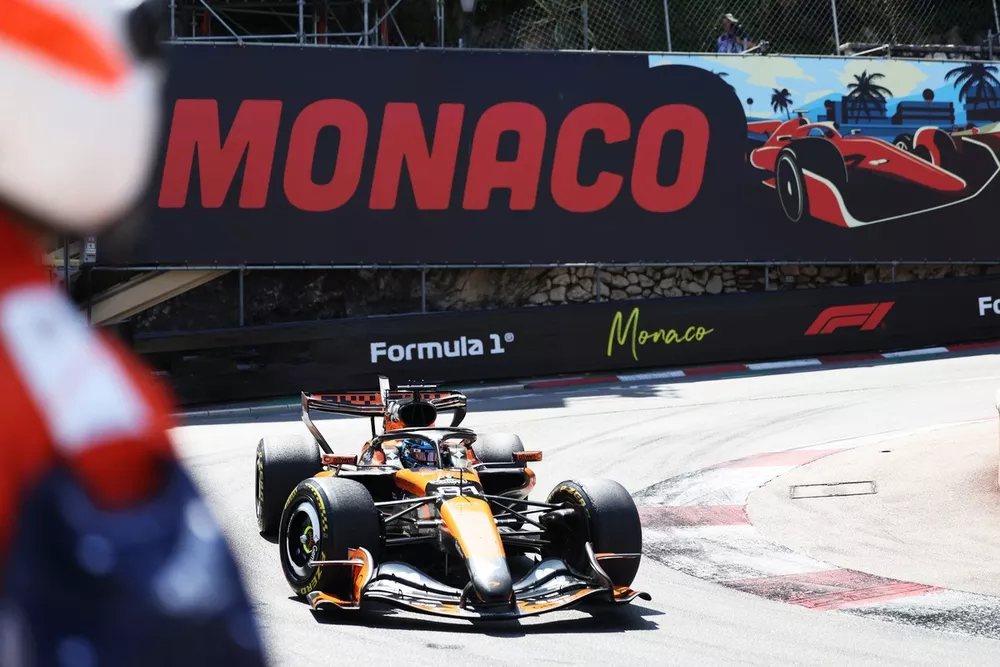
A fault in Formula One Management’s official timing system caused the wave of pitlane speeding penalties that disrupted the Monaco Grand Prix, stewards confirmed on Thursday during the first stage of Alpine’s Right of Review hearing — a revelation that McLaren’s Oscar Piastri says he suspected even before the chequered flag.
Five drivers were penalised for pitlane speeding during the race. The most damaging outcome fell on Alpine’s Pierre Gasly, who received two separate five-second penalties and was demoted from third to seventh in the final classification. Alpine subsequently filed a Right of Review request, and the stewards’ initial ruling on Thursday made the cause explicit: “FOM, as Official Timekeeping Supplier to the Competition, provided evidence that the distance used in calculating the F1 Official Timing (and hence the pit lane speed) was inaccurate.”
That finding was enough for the stewards to admit Alpine’s case, on the grounds that the information was both significant and unavailable when the original penalties were issued. The stewards must now decide whether Gasly’s two penalties should be revoked. However, it is considered unlikely that the result will be revisited for the other affected drivers.
Among those caught up in the fallout was George Russell, whose difficult Monaco weekend worsened when he was penalised for pitlane speeding and then received a second, more severe penalty after failing to serve the first one correctly. Race winner Kimi Antonelli and second-place finisher Lewis Hamilton were also penalised, though with less impact on their final positions.
Piastri, who was penalised during the race but still classified fourth after Gasly’s penalties were applied, said the sheer volume of incidents made the problem obvious in real time. “I think in the race it was reasonably obvious, I thought, that there was something weird going on, because maybe you have one or maybe two cars in the same race to have a pitlane speeding penalty, but not seven or eight or however many it was,” he said.
The Australian acknowledged that even a successful outcome for Alpine would not undo the broader damage. “It’s a shame, because it’s obviously impacted the result of the race one way or another,” he added, noting that his own penalty had affected his race despite his eventual fourth-place finish.
The case raises pointed questions about the reliability of the systems used to police on-track conduct at the sport’s highest level — a point Piastri did not shy away from. “Shouldn’t be happening in Formula 1,” he said.
Read also
-
 Formula 1 ·
F1 Academy champion Doriane Pin urges young girls to 'dare to believe' in motorsport dreams
-
 Formula 1 ·
Formula 1 brings full 2026 grid to Hot Wheels Infinite Rush in first-ever F1 gaming crossover
-
Formula 1 ·
F1 Commission cuts 2027 race distances by 15km to manage new power unit fuel demands
-
 Formula 1 ·
Sainz urges Williams karting prodigy Will Green to embrace risk in single-seater step
-
 Formula 1 ·
Steiner predicts Verstappen will go winless in 2026 as Red Bull struggles persist
-
 Formula 1 ·
F1 Academy champion Doriane Pin targets Mercedes race seat within five years