One year on, England's World Cup triumph reshapes the women's rugby landscape
A year after England's Red Roses beat Canada in front of a world-record crowd of 81,885 at Allianz Stadium, women's rugby has expanded its global competition structure, grown grassroots participation and drawn 68 unions into a pledge to double player numbers by 2029.
2 min read
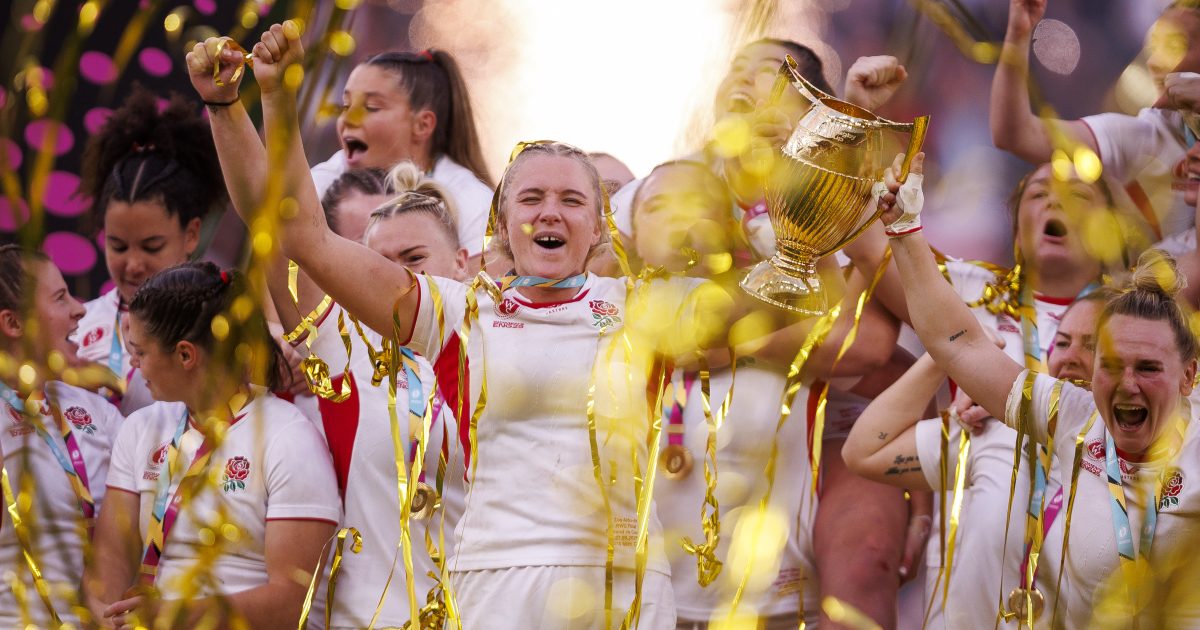
England’s Red Roses lifted the Women’s Rugby World Cup one year ago today, defeating Canada at Allianz Stadium in front of a world-record crowd of 81,885 — and the sport has been building on that moment ever since. John Mitchell’s side ended an 11-year wait for the title through tries from Ellie Kildunne, Amy Cokayne, Abbie Ward and an Alex Matthews brace.
The most visible structural change since that final is the WXV Global Series, which has expanded into an annual competition featuring the world’s top 18 nations across more than 100 international fixtures scheduled between 2026 and 2028. The top 12 nations compete in a home-and-away touring format, while a further six participate in the WXV Global Series Challenger.
At grassroots level, World Rugby’s Rugby Rising Play programme — now in its second year — has directly reached 25,162 girls aged between 11 and 18 through a 10-session course delivered by 975 trained coaches and volunteers. A further 32 member unions joined the initiative in 2026, bringing the total supported globally to 63.
The ambitions are considerable. Sixty-eight unions have committed to growing women’s and girls’ participation by 50 per cent, a target that would put 3.4 million players on the pitch by the time Australia hosts the Women’s Rugby World Cup in 2029. In England, the Rugby Football Union’s Impact ‘25 report found that the number of girls playing age-grade rugby had risen by 49 per cent over four years.
World Rugby has also expanded its welfare and career infrastructure. The Women’s Health Webinar Series has drawn 780 attendees across its first two instalments, and the 2026 Women in Rugby Careers Programme is currently supporting more than 250 women across 91 countries.
World Rugby Chair Brett Robinson said the tournament had been a catalyst rather than a conclusion. “Women’s Rugby World Cup 2025 was a defining moment for the game, but its lasting impact is enduring. Core commitments in our 2026-31 Strategic Plan provide unions with greater competition certainty, commercial growth, and clear pathways.”
World Rugby Chief of Women’s Rugby Sally Horrox echoed that framing. “One year ago, Women’s RWC 2025 set a new benchmark for women’s sport, proving the passion and potential that exists within our game. Momentum behind the women’s game has never been stronger as we set a clear course for the next three years.”
Read also
-
 Rugby ·
Rees-Zammit and Randall each score twice as Bristol edge Sale in Prem opener
-
 Rugby ·
Snubbed by Wales this summer, Cracknell channels his frustration into Leicester's new season
-
 Rugby ·
Willemse warns Springboks are the team everyone wants to beat at Rugby World Cup 2027
-
 Rugby ·
Counties Manukau snatch Ranfurly Shield with late sideline penalty to end 12-year wait
-
 Rugby ·
Springbok Women survive Italy fightback to seal 41-29 comeback win in Pordenone
-
 Rugby ·
Harrison's intercept try seals England's 26-19 win over New Zealand seconds after missed penalty

 Seychelles