Olise, Koné and Barcola freed from suspension risk ahead of France-Spain
Thanks to a yellow card reset introduced by FIFA after the quarter-finals, Michael Olise, Manu Koné and Bradley Barcola can approach the semi-final against Spain without fear of automatic suspension.
1 min read
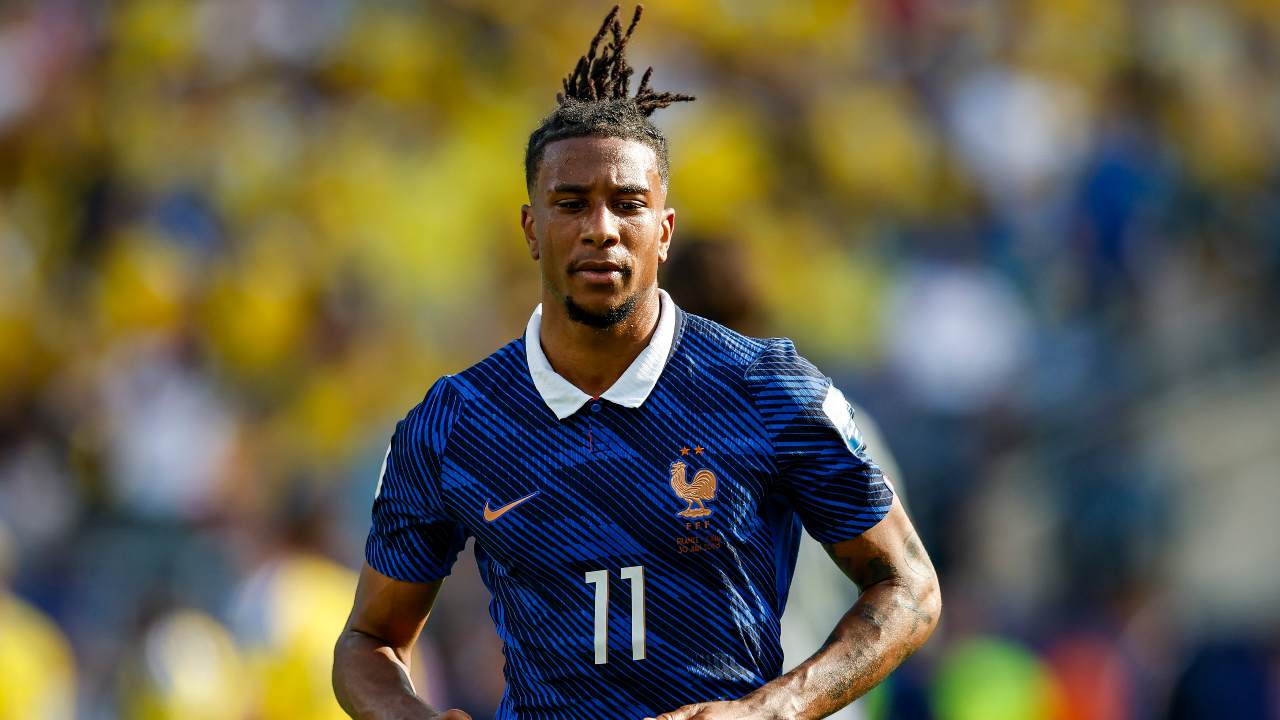
Michael Olise will indeed start in the France-Spain semi-final on Tuesday at AT&T Stadium in Dallas. The France winger, cautioned in the round of 16 against Paraguay, could have faced the threat of suspension for this decisive clash — but a rule change decided by FIFA in spring protects him from it.
With the expansion to 48 teams, the 2026 World Cup format now includes an additional round of 16, extending the path to the final by one match. To prevent a player from accumulating two cautions over four consecutive matches and facing suspension for a semi-final or final, FIFA chose to reset the counters twice: at the end of the group stage, then after the quarter-finals.
Previously, this reset occurred only once, before the round of 16. The most famous precedent of the old system remains Michael Ballack, suspended for the 2002 final after receiving a yellow card in the semi-final against South Korea. Only a direct red card can now deprive a player of a final — as was the case for Laurent Blanc, sent off against Croatia in 1998.
Olise is not the only France player to benefit from this measure. Manu Koné and Bradley Barcola, also cautioned before the quarter-finals, approach the semi-final without a sword of Damocles hanging over them. On the Spanish side, Ferran Torres, Pau Cubarsí and Aymeric Laporte find themselves in the same situation.
Read also
-
 Football ·
Kane unaware of Man City guilty verdict until after England's win over Czechia
-
 Football ·
Gibbs-White calls viral England call-up clip with fiancée 'just banter' after Tuchel dig
-
 Football ·
Kane brushes off Man City guilty verdict as England focus shifts to Croatia
-
 Football ·
Bellamy backs Haaland to stay focused as Man City guilty verdict looms over Norway camp
-
 Football ·
CAS designates panel to rule on Senegal-Morocco CAN 2025 dispute on October 8
-
 Football ·
Laporta and Gil Marín embrace in Copenhagen as Julián Álvarez dispute fades
 Panama