Microchip ball technology denies Croatia late equaliser and sends Portugal past to face Spain
A microchip embedded in the Adidas 'Trionda' match ball allowed VAR to use Snickometer technology to disallow Josko Gvardiol's 113th-minute equaliser, confirming Igor Matanovic had touched the ball before an offside position came into play. Portugal advance to the last 16 to face Spain.
2 min read
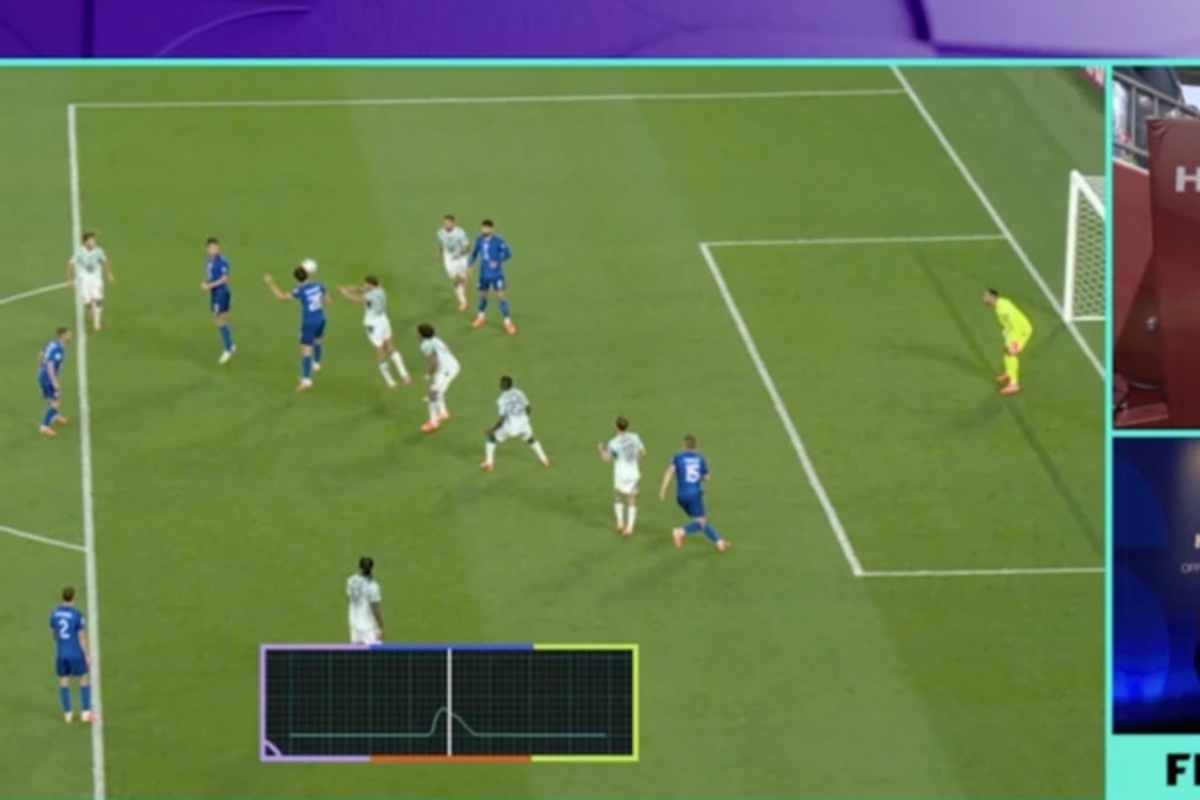
Cristiano Ronaldo’s Portugal survived a chaotic finale to their 2026 World Cup group-stage clash with Croatia, advancing to the last 16 after VAR used Snickometer technology to disallow Josko Gvardiol’s 113th-minute equaliser at what would have been 1-1.
The decisive moment hinged on the Adidas ‘Trionda’, the official 2026 World Cup match ball, which contains a microchip capable of detecting any contact from a player. VAR officials used the Snickometer — a system that analyses the sound waves produced by the ball’s microchip — to determine that Croatian striker Igor Matanovic had brushed the ball before it deflected off Portuguese defender Renato Veiga. Because Mario Pasalic, who received the rebound and played Gvardiol through, was in an offside position from the original cross at the moment of Matanovic’s touch, referee Espen Eskas chalked off the goal after consulting the monitor.
Croatian players and supporters had erupted in celebration before Eskas was alerted by VAR to review the incident. The ruling ended Croatia’s hopes of forcing extra time and sent Portugal through to a Round of 16 meeting with Spain.
The goal had come shortly after Ronaldo scored his first ever World Cup knockout-stage strike, though the Portuguese captain was substituted before the dramatic conclusion, leaving the pitch visibly unhappy.
BBC host Mark Chapman relayed a message from veteran official Darren Cann that supported the decision. “He was offside when the ball was last played by a teammate, and the ball was deflected by the defender and not deliberately played, so the offside stands,” Chapman read. “Snicko, that 100% proves that he touched it with the flick-on.”
Snickometer technology has been a fixture in cricket since it was developed by an English inventor in the 1990s, and a comparable version was first deployed at football’s international level during the 2022 World Cup. Its role in this fixture marks one of its most high-profile interventions in the tournament so far.
The 2026 edition is not the first time Ronaldo has found himself on the wrong side of ball-tracking technology at a World Cup. In Qatar in 2022, a strike was credited to Bruno Fernandes after sensors determined the ball had not made contact with Ronaldo’s head, despite the forward repeatedly gesturing to suggest otherwise.
Read also
-
 Football ·
Arsenal's £100m Kroupi pursuit blocked as Bournemouth reject January move
-
 Football ·
Donnarumma names Dembélé as favourite for 2026 Ballon d'Or after holding France to draw
-
 Football ·
Ronaldo's Portugal walkout echoes the Manchester United fallout that ended his Old Trafford career
-
 Football ·
Pochettino's young USMNT face hostile crowd in Mexico rivalry test ahead of 2026 World Cup
-
 Football ·
Olise lights up France-Italy with stunning free-kick, historic double at Stade de France
-
 Football ·
No-case ruling for harassment: PSG definitively settles dispute with Mbappé

 Denmark U19