Marko brands F1's Malaysia software meltdown 'shameful' after grid-wide power failure
Helmut Marko has condemned Formula 1 after a catastrophic energy management software bug stranded drivers including Max Verstappen and Lewis Hamilton on the formation lap at the Bahrain Grand Prix in Sepang, forcing the FIA to issue an emergency patch under red-flag conditions.
2 min read

Helmut Marko has labelled Formula 1’s handling of a grid-wide software failure at the Bahrain Grand Prix in Sepang, Malaysia, as “shameful”, after a bug in the 2026 energy management code left drivers including Max Verstappen and Lewis Hamilton stranded on the formation lap.
The failure stemmed from the complexity of F1’s new 2026 technical regulations, which mandate a 50/50 power split between the internal combustion engine and an electrical battery producing up to 350kW — three times the output of previous generations. During the formation lap, a fault in the automated wet-weather energy management system triggered a sudden, massive loss of power across the entire field, bringing the start to a halt.
The situation was severe enough that the FIA was forced to distribute an emergency software patch to all competitors under red-flag conditions simply to remove the energy limit constraints and allow the race to get underway. Reigning 2025 champion Lando Norris described the electronic interference as “horrible”.
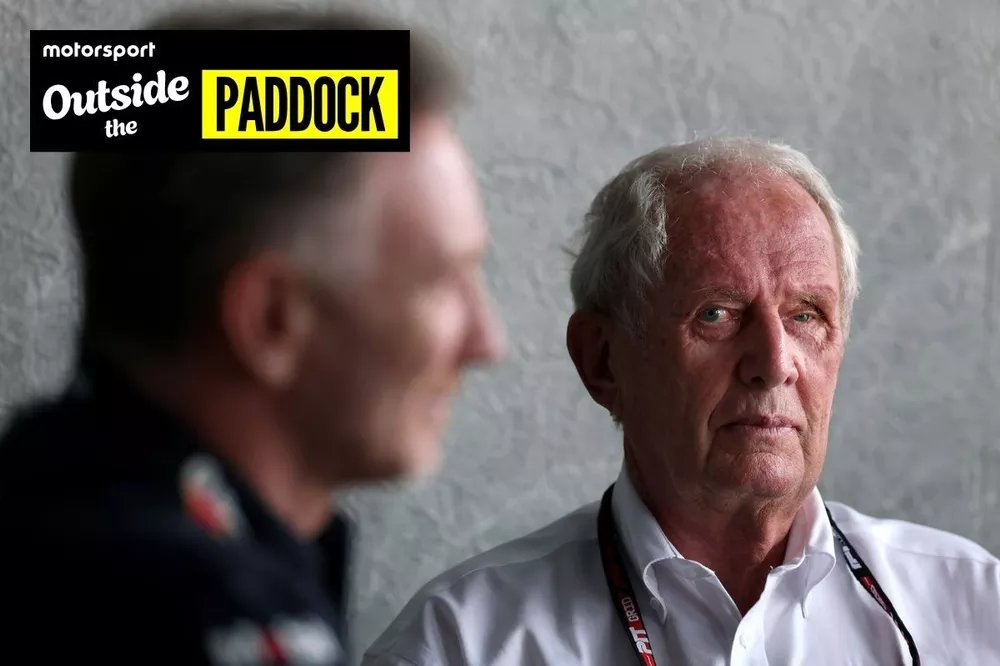
Marko, the former Red Bull Racing adviser, watched the chaos unfold from home and made no attempt to hide his frustration. Speaking to Austrian publication oe24, he said he had been watching “completely relaxed in front of the television, like a normal Formula 1 consumer,” having dismantled the additional screens he used earlier in the season. “What I see on television is enough for me now,” he added, “although the waiting was really boring because of the long rain delay.”
While Marko accepted the weather delays as an unavoidable part of racing, he was far less forgiving about a multi-million-dollar motorsport series being paralysed by faulty code. His use of the word “shameful” reflects a broader unease in the paddock about whether the 2026 regulations — which also introduce active aerodynamics with distinct straight-line and cornering modes — have introduced a level of technical fragility that undermines the spectacle of the sport.
The 2026 season has already been marked by persistent technical headaches as teams and manufacturers wrestle with the demands of the new power unit architecture. The Sepang incident, broadcast to a global audience, has intensified scrutiny on the FIA and the sport’s governing bodies to ensure the software infrastructure underpinning the new era is robust enough to withstand race conditions.
Read also
-
 Formula 1 ·
Stella refuses to panic after Sepang struggles, eyes Singapore for McLaren's true 2026 pace
-
 Formula 1 ·
Marko declares F1's return to turbo V8 engines in 2030 a 'done deal' after Sepang chaos
-
 Formula 1 ·
Mercedes skipped FIA cooling aid to chase performance — then Russell retired with a power unit failure
-
 Formula 1 ·
Alonso to return to Dakar Rally in 2027 with Aston Martin backing his F1 stay
-
 Formula 1 ·
Marko fires back at Horner autobiography claim: 'I had to beat him in Barcelona'
-
 Formula 1 ·
Mercedes and adidas release viral silver jacket worn by Russell and Antonelli, priced up to $750