Lisboa reveals depression battle as she defends husband's fiery corner at UFC Vegas 123
Tainara Lisboa has spoken out in defence of coach and husband Bruno Polengo after his aggressive corner work drew widespread criticism during her TKO loss to Lucia Szabova at UFC Vegas 123 on 31 October. The Brazilian fighter revealed she has long struggled with depression and mental health issues that affect her performance.
2 min read
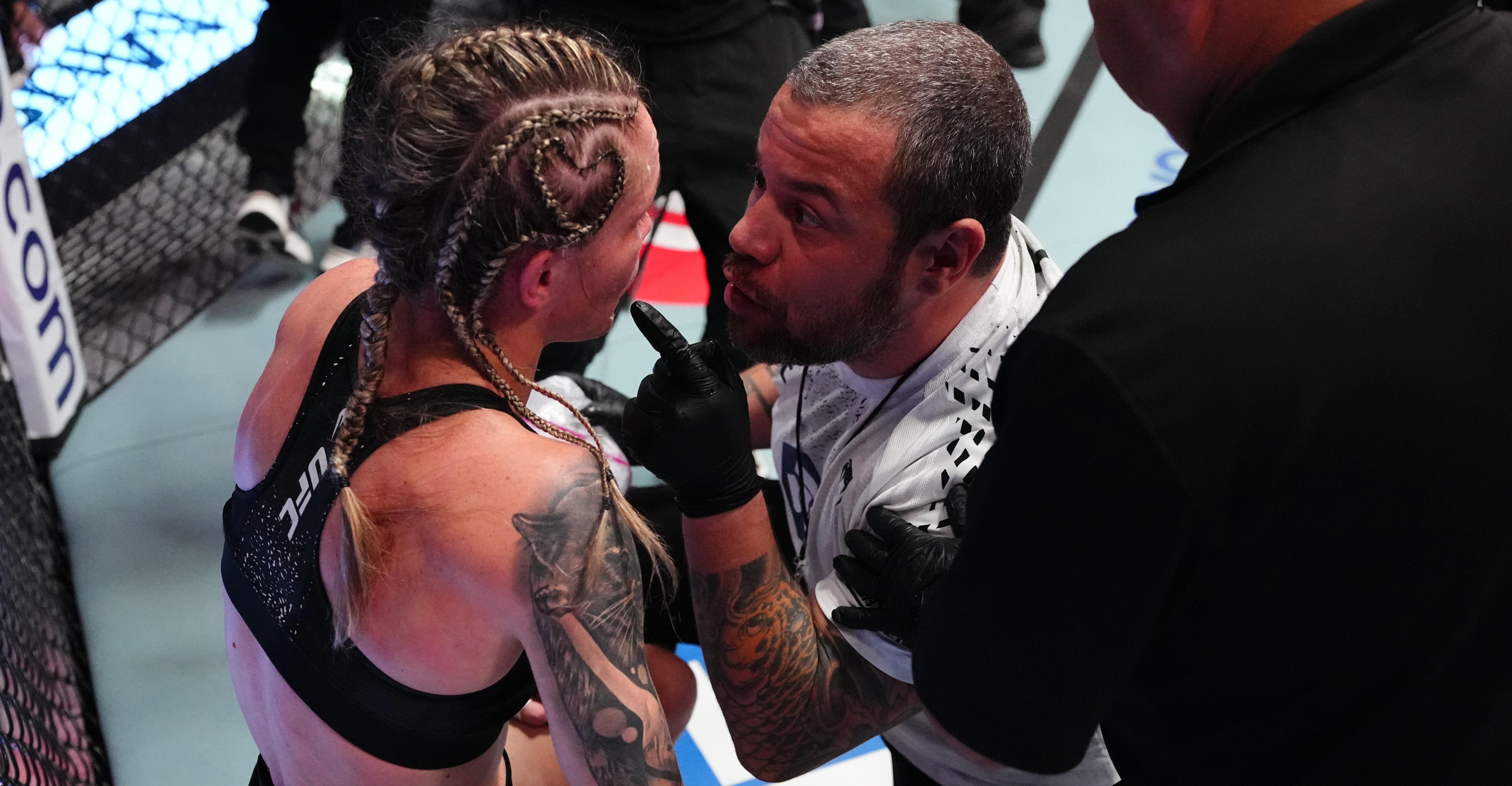
Tainara Lisboa has publicly defended her husband and head coach Bruno Polengo following a wave of online criticism directed at his corner work during her third-round TKO defeat to Lucia Szabova at UFC Vegas 123 in Las Vegas on 31 October.
Lisboa was stopped via ground and pound in the final round, suffering her third consecutive loss inside the UFC. The defeat itself was painful enough, but it was footage of Polengo’s between-rounds address that ignited a separate controversy. With Lisboa trailing on the scorecards and needing a finish, Polengo launched into a profanity-laden tirade in Portuguese, telling her she was “f*cking embarrassing” herself and demanding she “kill” her opponent in the final five minutes.
UFC commentators Daniel Cormier and Laura Sanko were openly critical during the broadcast, with Cormier arguing that Lisboa needed technical instruction rather than an emotional jolt. “It’s not an emotional problem,” Cormier said. “She’s fighting the best that she can.”
Szabova ultimately took Lisboa down in the third, reached a dominant position, and landed 31 strikes to force the stoppage. The newcomer, a three-time Oktagon champion, earned the finish and handed Lisboa a difficult night.
Three days after the fight, Lisboa said she was “surprised” by the scale of the backlash and pushed back firmly against the criticism of Polengo’s approach. Her explanation was deeply personal: she revealed that she has battled depression and psychological difficulties for years, and that her mental state genuinely does affect her inside the cage.
“The coach knows the athlete he has and the problems I have,” Lisboa told MMA Fighting. “Unfortunately, I don’t think it’s good, but the reality is that I have psychological problems. I’ve been in sports since I was 13, I went through a lot during my muay Thai days, so unfortunately, my weak point is my mental game.”
Lisboa also disclosed that her road back to the UFC had been physically gruelling. Following her second fight in the promotion, she underwent what she described as a “super complex surgery” and had to relearn how to walk, an experience she said caused significant mental health struggles.
“I had to deal with depression, I took medication,” she said. “We’ve dealt with depression a few times, with him alongside me, wanting to give up everything, wanting to end my life. We’ve been through that, with my insecurities, with my fears, which are things we athletes don’t talk about, don’t bring up, but they happen to many high-performance athletes.”
For Lisboa, Polengo’s aggressive corner style is not cruelty but context — the product of nine years together navigating mental health challenges that outsiders watching a 60-second corner break could not have known about. Whether that context changes the broader debate around how coaches should communicate under pressure is a question the MMA community is still working through.
Read also
-
 MMA ·
Makhachev's UFC 336 withdrawal leaves UFC 'upset' and Prates chasing interim gold instead
-
 MMA ·
Dana White confirms Ilia Topuria will return to UFC action in early 2027
-
 MMA ·
McGregor plans bare-knuckle move after final UFC fight: 'Teeth come and go'
-
 MMA ·
Walker steps up to headline UFC Vegas 124 on nine days' notice after Brady withdraws
-
MMA ·
Fury FC featherweight champion Calderon steps in on four days' notice for UFC debut against Bashi
-
MMA ·
McGregor denies laughing at Covington's 40-second submission loss in Rome