Honda admits Spec 2 engine upgrade pushed Aston Martin driveability back to early-season lows
Honda Racing Corporation president Koji Watanabe has conceded that the manufacturer's latest F1 power unit upgrade inadvertently regressed driveability toward the troubled levels seen at the start of the 2025 season, even as the update delivered the targeted power gains.
2 min read
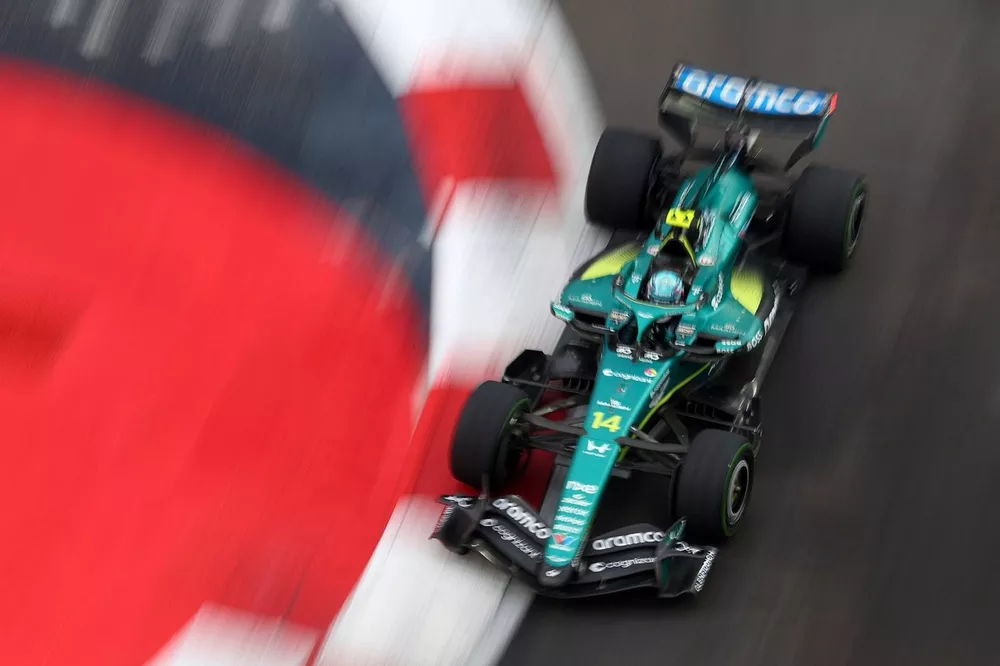
Honda Racing Corporation president Koji Watanabe has acknowledged that the Japanese manufacturer’s Spec 2 power unit upgrade, introduced under the Additional Development and Upgrade Opportunities (ADUO) system, brought driveability back close to the problematic levels experienced with its original specification — despite hitting its power output targets.
The admission adds a layer of complexity to what had appeared to be a positive step forward for Aston Martin, whose AMR26 has been scoring points more consistently since a package of chassis and engine upgrades arrived in the second half of the season. The team has accumulated six points across the latest six rounds, a marked improvement after a campaign blighted by turbo lag and what Fernando Alonso described as “random downshifts”.
“With Spec 2, our aim was to close that gap progressively by increasing the power output,” Watanabe said. “We achieved the power target we had set for Spec 2, but we also made some changes to the combustion process and other areas. As a result, driveability regressed to something closer to what we experienced with Spec 1 in its early stages.”
Watanabe was candid that raw power remains the more pressing concern. “We are still short on power, and that is something we need to address,” he said, adding that driveability improvements can be pursued through both hardware changes and control-system refinements.
Honda’s difficulties stem in part from a structural disadvantage at the start of the new regulatory era. The brand officially ended its Red Bull partnership in 2021, and while development work continued at a fundamental research level under the newly established HRC structure, rebuilding a fully operational F1 engineering organisation took considerable time.
“We made the decision to return a year later than our competitors, and it also took time to put the development structure in place,” Watanabe explained. “As a result, we effectively lost almost two years.”
That compressed timeline meant Honda initially prioritised the battery and electric motor — components that require the longest development cycles under the 2026-style power unit regulations featuring close to 50% electrical energy contribution — at the expense of other areas that have since proven problematic on track.
The Aston Martin AMR26 itself has not been without fault; Adrian Newey’s first design for the Silverstone-based team carried its own aerodynamic shortcomings. But the combination of a difficult chassis and an underpowered, unpredictable power unit left the team well adrift of the midfield for much of the year. Watanabe’s comments suggest that while the trajectory is improving, Honda does not expect to close the gap to its rivals quickly.
Read also
-
 Formula 1 ·
Hamilton and Verstappen unite in call to redesign Singapore's Marina Bay circuit
-
 Formula 1 ·
Albon praises Williams' cooling vest as best on the grid after Singapore endurance
-
 Formula 1 ·
McLaren retains Fornaroli as F1 reserve and hands him WEC Hypercar seat for 2027
-
 Formula 1 ·
Verstappen targets Spa 24 Hours in 2027 as GT racing ambitions grow after Portimao
-
 Formula 1 ·
Verstappen jokes he needs a 'new spine' as bumpy COTA poses fresh challenge
-
 Formula 1 ·
Russell reveals personal off-track struggles made 2025 Singapore GP win extra special

 Australia U17 W
