Hamilton reveals Red Bull holds F1's top engine as Ferrari and Mercedes earn upgrade tokens
Red Bull Ford Powertrains has been confirmed as Formula 1's benchmark V6 combustion engine, triggering the ADUO system and granting Mercedes one upgrade token and Ferrari two, as both manufacturers trail the pace-setting unit by more than 2% and 4% respectively.
2 min read
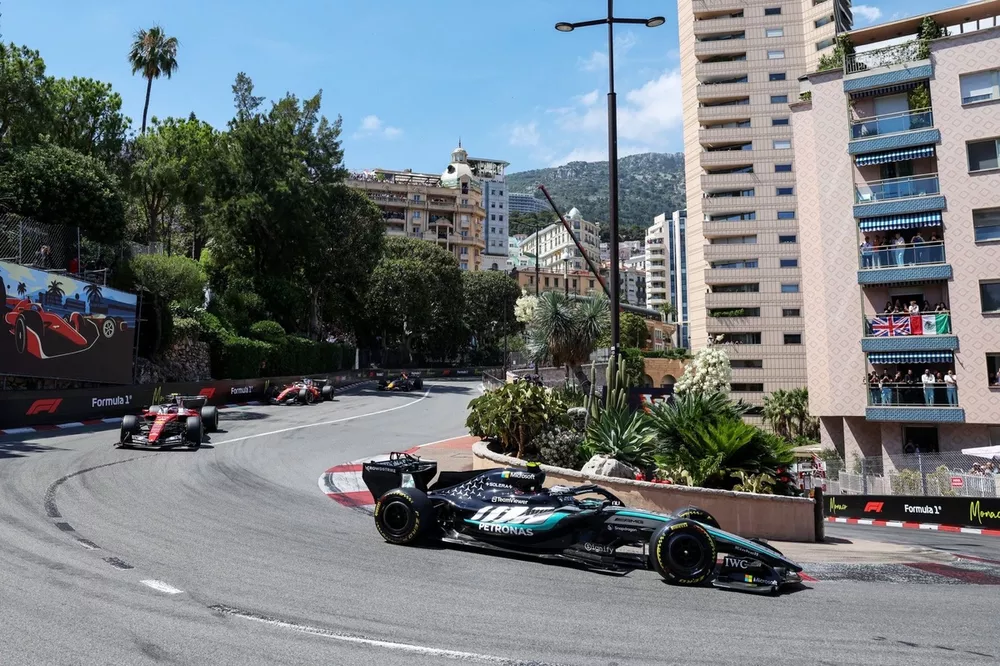
Red Bull Ford Powertrains holds the most powerful V6 combustion engine in Formula 1, with Mercedes second and Ferrari third — a pecking order confirmed after Lewis Hamilton inadvertently revealed the findings of an FIA performance assessment conducted following the Canadian Grand Prix.
Under Formula 1’s Accelerated Development for Underperforming Operations (ADUO) system, manufacturers that fall more than 2% behind the benchmark engine on a sliding scale are awarded additional homologation tokens — including extra dyno hours and cost cap allowance — to develop their power units outside standard regulatory windows. Motorsport.com has confirmed that Mercedes’ deficit clears the 2% threshold, earning it one token, while Ferrari’s gap exceeds 4%, entitling it to two tokens.
Audi and Honda are understood to be even further behind the Red Bull benchmark, though the precise number of tokens they will receive had not been confirmed at the time of writing. An official FIA announcement is expected as early as Monday, 14 days after the Canadian Grand Prix as required by the regulations.
Hamilton, speaking after the Monaco Grand Prix, was the first to publicly disclose the order. “I think the news came out either yesterday or today that Red Bull have the most powerful engine, Mercedes second, and then we’re behind,” the Ferrari driver told Sky Sports F1. “So, we’ve now got these tokens to try and develop and close the gap.”
The seven-time world champion was careful to temper expectations, however. “That’s like an eight-to-10-month project, so it’s not something we can just do next week,” Hamilton added. “We’ll be pushing as hard as we can to see how we can close it out.”
ADUO was originally conceived to prevent a repeat of Honda’s 2017 situation, when one manufacturer found itself severely adrift of the competition with limited regulatory room to catch up. The sliding-scale structure was intended as a safeguard, but the system has since become politically charged — with manufacturers acutely aware that the benchmark designation carries both technical and strategic consequences for the rest of the season and beyond.
Read also
-
 Formula 1 ·
F1 Academy champion Doriane Pin urges young girls to 'dare to believe' in motorsport dreams
-
 Formula 1 ·
Formula 1 brings full 2026 grid to Hot Wheels Infinite Rush in first-ever F1 gaming crossover
-
Formula 1 ·
F1 Commission cuts 2027 race distances by 15km to manage new power unit fuel demands
-
 Formula 1 ·
Sainz urges Williams karting prodigy Will Green to embrace risk in single-seater step
-
 Formula 1 ·
Steiner predicts Verstappen will go winless in 2026 as Red Bull struggles persist
-
 Formula 1 ·
F1 Academy champion Doriane Pin targets Mercedes race seat within five years