Hamilton outqualifies Leclerc in Montreal after ditching Ferrari simulator
Lewis Hamilton beat Charles Leclerc in all six qualifying segments at the Canadian Grand Prix, edging him by 0.084 seconds in the sprint session and 0.108 seconds in the main qualifying. Hamilton skipped Ferrari's simulator in his preparation, mirroring the approach he took before a strong showing in Shanghai.
2 min read
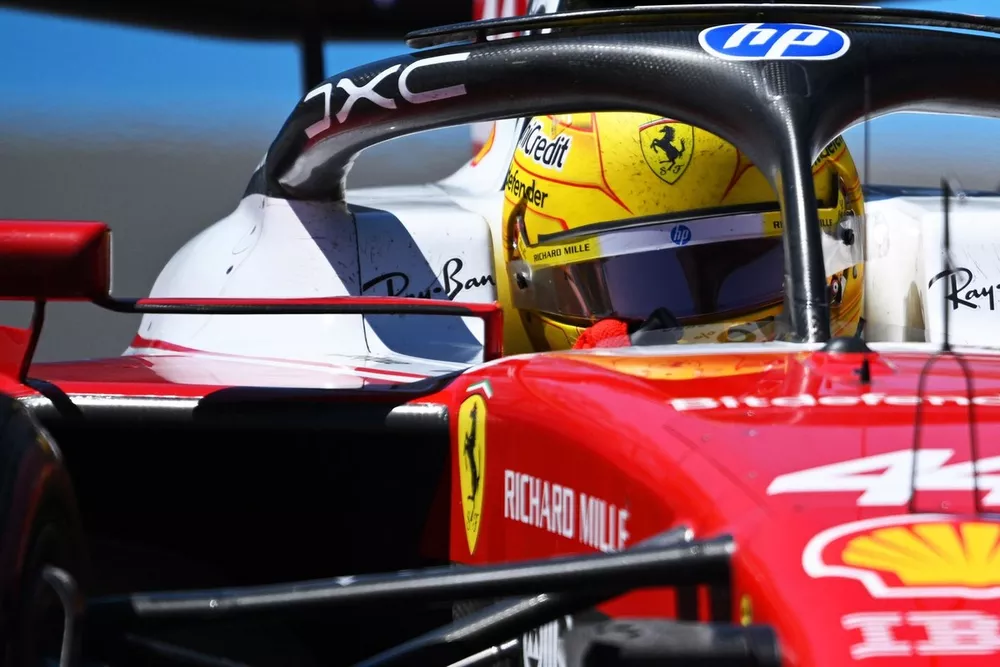
Lewis Hamilton outqualified Ferrari team-mate Charles Leclerc across both qualifying sessions at the Canadian Grand Prix in Montreal, beating him by 0.084 seconds in the sprint shootout and 0.108 seconds in the main session — faster in all six segments across the weekend.
The result carries added weight given the pair’s head-to-head record since Hamilton joined Ferrari. Before this weekend, Leclerc led that tally 27-9, with four of Hamilton’s nine victories coming at a single venue: Shanghai. That detail is significant, because Montreal marks the second 2025 race where Hamilton chose not to use Ferrari’s Maranello simulator in his preparation — the first being China.
Hamilton was candid about what the car change has unlocked for him. “It felt great,” he said after qualifying. “We made some good changes in qualifying. Oh, man, I was hopeful for a better result, but I didn’t get my last lap. The car was feeling like we were improving. I think honestly if I got that last lap I probably could have been third.”
Asked where the car was giving him more confidence, he pointed to specific technical areas: “It’s brakes, corner entry stability, and just with the set-up that I’ve migrated to, I’m much, much happier with being able to attack the corners.”
On Thursday, Hamilton explained his decision to step away from the simulator, a tool he said he “barely used” at Mercedes. He was careful to praise Ferrari’s facility while acknowledging its limitations for him personally. “The sim is amazing,” he said. “It’s the best sim I’ve ever seen and best group of people that I’ve known. A day at the sim is actually pretty incredible. It is a very powerful tool and something that as a team we continue to evolve.”
He traced his simulator history back to 1997, when he first used McLaren’s early setup as a junior driver — a cockpit without motion but with force-feedback steering at the team’s old Woking factory. His view, developed over nearly three decades, is that there is a point of diminishing returns. “There’s a point at which you stop learning when you’re doing so many laps,” he said.
The double top-five result in Montreal suggests the no-simulator approach is producing tangible results, and it raises questions about how Hamilton will structure his preparation for the remaining rounds of the season.
Read also
-
 Formula 1 ·
F1 Academy champion Doriane Pin urges young girls to 'dare to believe' in motorsport dreams
-
 Formula 1 ·
Formula 1 brings full 2026 grid to Hot Wheels Infinite Rush in first-ever F1 gaming crossover
-
Formula 1 ·
F1 Commission cuts 2027 race distances by 15km to manage new power unit fuel demands
-
 Formula 1 ·
Sainz urges Williams karting prodigy Will Green to embrace risk in single-seater step
-
 Formula 1 ·
Steiner predicts Verstappen will go winless in 2026 as Red Bull struggles persist
-
 Formula 1 ·
F1 Academy champion Doriane Pin targets Mercedes race seat within five years

 Gibraltar