Haas chief Komatsu opposes cost cap rise to solve F1's 2026 power unit problems
Haas team principal Ayao Komatsu has pushed back against proposals to raise Formula 1's budget cap as part of efforts to fix the energy-management problems plaguing the 2026 power unit regulations, warning that incremental cap increases undermine the entire purpose of cost controls.
2 min read
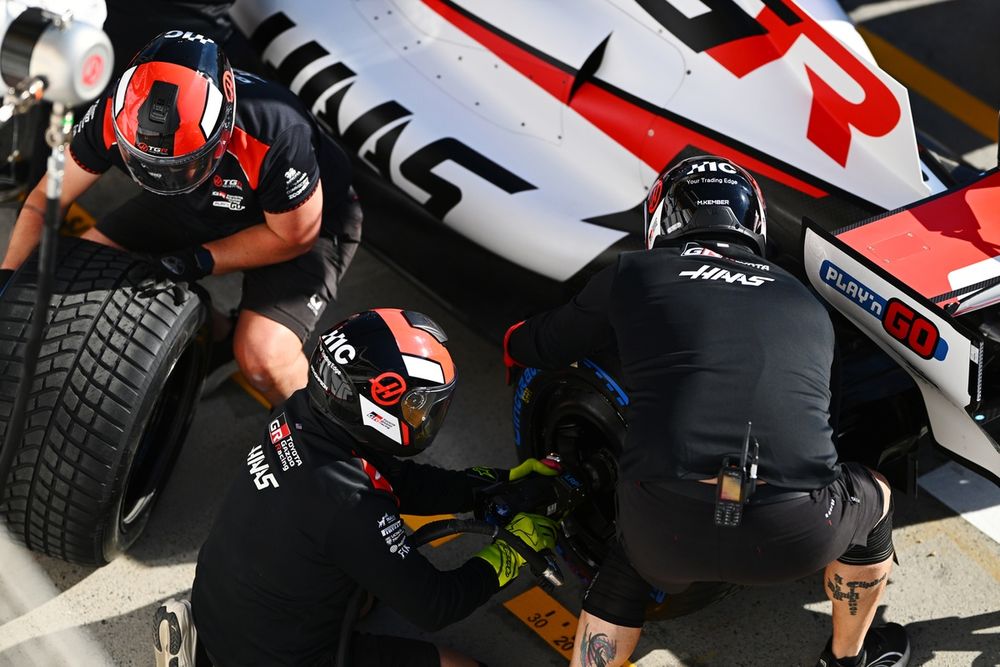
Haas team principal Ayao Komatsu has warned that raising Formula 1’s cost cap to fund fixes for the 2026 power unit regulations would be a step in the wrong direction, even as the sport’s stakeholders discuss significant technical changes ahead of 2027.
F1’s new-era cars have struggled since the 2026 regulations came into force, with the heavy reliance on electric energy forcing drivers into counter-intuitive techniques to manage battery recharging across a single lap. High closing speeds on straights as cars exhaust their electrical deployment have also raised safety concerns, prompting calls for a regulatory intervention.
Among the proposals under discussion is a shift to an approximate 60-40 split between internal combustion and electrical power, achieved by raising the fuel flow limit, reducing energy deployment thresholds, and increasing battery capacity to prevent cars running dry of electric power as frequently as they currently do. The catch is that higher fuel flow would require teams to redesign fuel tanks and potentially alter their chassis — a significant expense for outfits that had planned to carry over their 2026 designs to save money.
To offset those costs, there are discussions about a one-off increase to the budget cap allowance. Komatsu is firmly against that approach. “The thing I’d like the FIA and F1 management to hear about the team’s point is about the cost,” he said. “It’s ridiculously expensive. These PU regulations are already so expensive, so to then do certain things for next year’s regulations — if this is going to cost every team an extra five million, ten million, that’s certainly not the right direction for us. I think from the team’s side, we need to simplify, reduce the cost in every area.”
Komatsu also rejected the logic of treating the cap as a flexible ceiling. “I don’t want to increase the budget cap,” he said. “Already this year’s budget cap is a lot higher. And then to have another reason to again increase another two million, another five million — then it’s not a budget cap anymore.”
Asked whether meaningful on-track improvements were still achievable for 2027 given that teams have already begun work on next year’s cars, Komatsu suggested the answer lies in the scope of any changes. Smaller parameter adjustments that do not force a chassis redesign could, in his view, still deliver a better racing product without triggering the cost spiral he fears.
The debate reflects a broader tension inside F1 as the sport tries to correct a regulation set that was years in the making but has produced a compromised on-track spectacle from the outset. For smaller teams like Haas, the financial stakes of any mid-cycle hardware revision are considerably higher than for the works outfits, making Komatsu one of the most vocal voices for fiscal restraint in the ongoing discussions.
Read also
-
 Formula 1 ·
Vowles hails Madrid's debut F1 race as 'one to watch' despite overtaking concerns
-
 Formula 1 ·
Mercedes shifts focus to 2027 as 145-point F1 lead gives Wolff room to plan ahead
-
 Formula 1 ·
Rosberg calls for VSC pitlane overhaul after Norris loses Spanish GP victory
-
 Formula 1 ·
Vasseur dismisses claims Ferrari split Spanish GP strategy to keep Leclerc and Hamilton apart
-
 Formula 1 ·
Verstappen clears all 100 rivals in 14 laps at Silverstone karting challenge
-
 Formula 1 ·
Wolff backs ADUO rethink as Honda's struggles push Alonso closer to F1 exit