FIFA suspends Balogun's red-card ban under Article 27 after Trump calls Infantino
Folarin Balogun has been cleared to face Belgium in the World Cup last 16 after FIFA invoked Article 27 of its Disciplinary Code to suspend his automatic ban — a decision that followed a personal call from US President Donald Trump to FIFA President Gianni Infantino.
2 min read
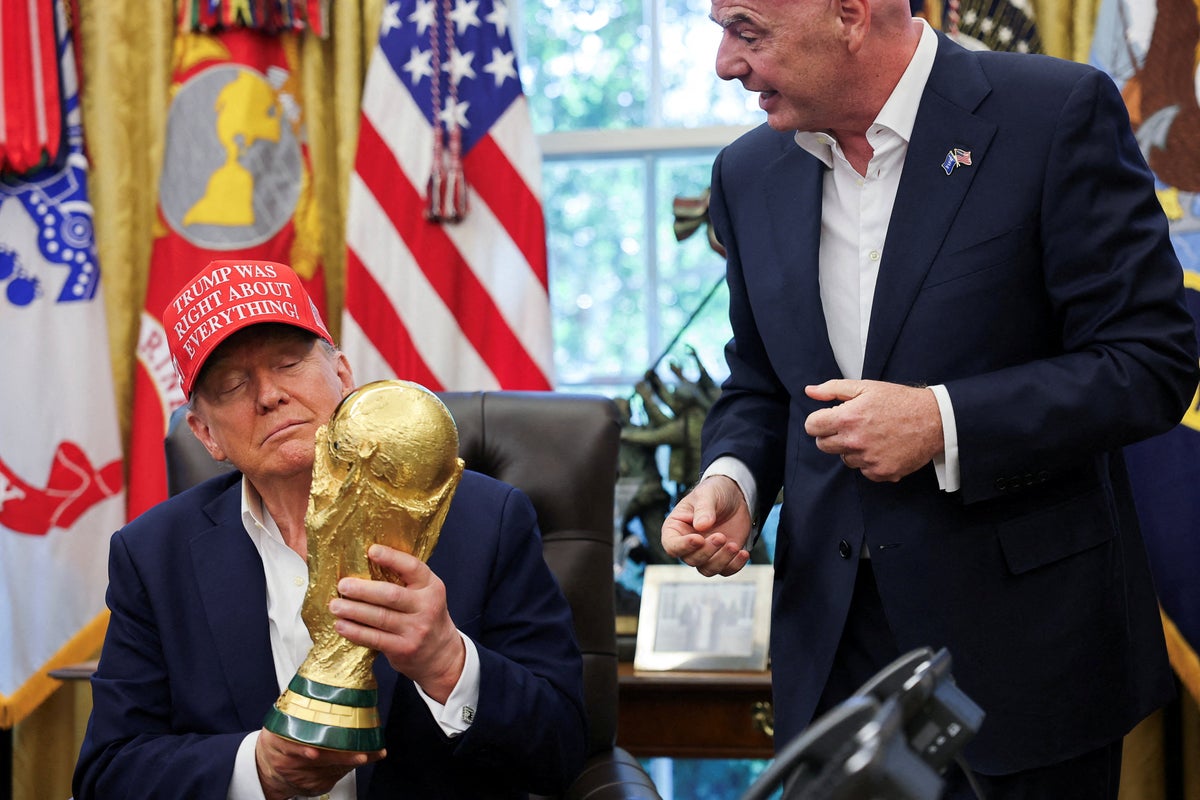
Folarin Balogun will face Belgium in Monday’s World Cup last-16 tie after FIFA took the unprecedented step of suspending the striker’s automatic one-match ban, invoking Article 27 of its Disciplinary Code following a personal call from US President Donald Trump to FIFA President Gianni Infantino urging a review of the case.
Balogun was sent off in the second half of the United States’ 2-0 victory over Bosnia and Herzegovina — a match in which he scored his third goal of the tournament — after a VAR review determined he had planted his boot into the ankle of Tarik Muharemovic. US coach Mauricio Pochettino argued the challenge did not warrant a red card. Trump subsequently contacted Infantino to request that FIFA examine the decision, according to a source briefed on the call.
FIFA did not rescind the red card but instead suspended its implementation. “In line with article 27 of the FIFA Disciplinary Code, the implementation of the match suspension is suspended for a probationary period of one year,” the governing body said in a statement. FIFA did not respond to multiple requests for comment on the circumstances surrounding the decision or on Trump’s call with Infantino.
What is Article 27?
Article 27 of the FIFA Disciplinary Code grants FIFA’s judicial bodies — which include the Disciplinary Committee and the Appeal Committee — the power to suspend the implementation of all or part of a disciplinary sanction. The sanction itself remains on the player’s record; it simply does not have to be served immediately unless the suspension is later revoked.
Critically, the code does not specify the circumstances under which a judicial body may decide to exercise this power, leaving the criteria effectively undefined. The sanctioned player is placed on a probationary period of between one and four years — in Balogun’s case, one year. Should he commit another infringement of a similar nature within that window, the suspended ban is automatically reactivated on top of any new disciplinary sanction imposed.
The decision drew an angry response from Belgium and triggered an immediate media storm, with pundits and former players debating whether FIFA had applied a legitimate but obscure rule or had allowed political pressure to compromise the integrity of its own disciplinary process. The episode has placed the relationship between football’s governing body and political power at the centre of the 2026 World Cup’s narrative ahead of one of its most anticipated knockout ties.
Read also
-
 Football ·
FC Nantes takeover: Saint-Étienne precedent raises doubts over Paulo Tavares
-
 Football ·
Thierry Henry backs Mbappé and Olise as top Ballon d'Or contenders
-
 Football ·
Free from Al-Ahli, Mahrez expected at Al-Shamal to revive his career in Qatar
-
 Football ·
Rooney pinpoints Rashford's positional problem as Ferdinand urges Benzema free transfer
-
 Football ·
2030 World Cup Final: Senegal backs Morocco against Spain
-
 Football ·
Lost Ferguson tapes spanning 400 hours reshape the story of his Manchester United reign
 Congo DR