FIFA reveals World Cup 2026 prize money in full, with champions set to earn $50 million
FIFA has confirmed the prize fund for World Cup 2026, with the tournament winners earning $50 million — $8 million more than in 2022. Group-stage exits still net $9 million, while all 48 nations received $2.5 million in preparation money.
1 min read
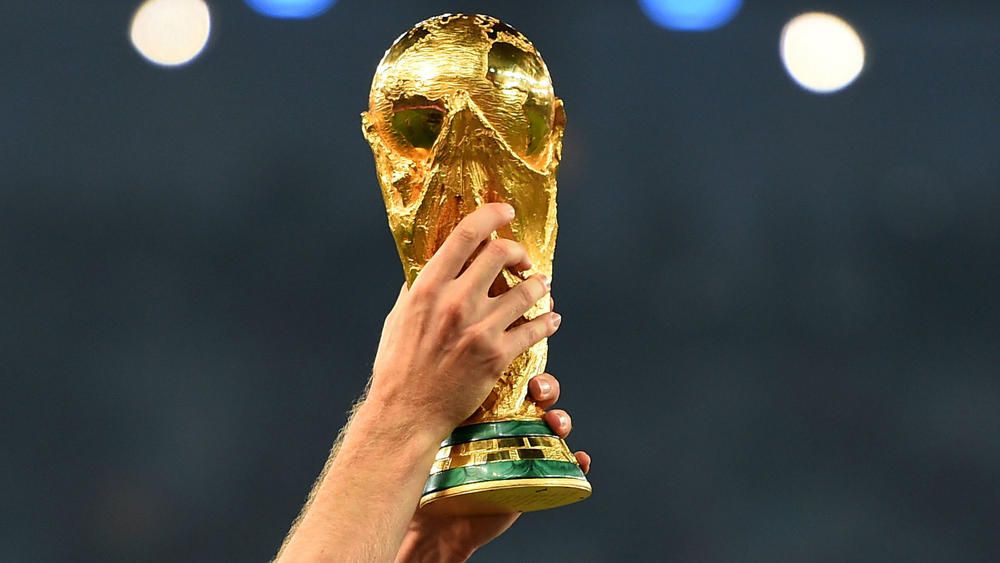
FIFA has officially confirmed the prize money structure for World Cup 2026, with the nation that lifts the trophy in the United States, Canada or Mexico this summer set to receive $50 million — $8 million more than Argentina earned for winning the 2022 edition in Qatar.
All 48 participating nations were awarded $2.5 million in preparation money ahead of the tournament, a $1.5 million increase on the equivalent figure from 2022. Teams that exit at the group stage will collect $9 million, a figure unchanged from Qatar but $1 million higher than the 2018 payout in Russia.
The expanded format introduces a round of 32 for the first time, and sides eliminated at that stage — including Germany, the Netherlands and Cape Verde — will earn $11 million. Last-16 exits, such as those suffered by Brazil and Canada, are worth $11 million as well, up $2 million on the same stage four years ago.
First-time quarter-finalists Norway are among the teams guaranteed at least $19 million for reaching the last eight, another $2 million improvement on the 2022 rate. The semi-final stage introduces a split, with the third-place play-off determining whether a nation takes home $29 million or $27 million.
The runner-up position carries a $33 million payout — the largest single-round increase in the structure at $3 million more than in 2022 — while the champion’s $50 million prize also surpasses the $40 million Chelsea received for winning FIFA’s revamped Club World Cup last year.
Read also
-
 Football ·
Manchester City to argue Abu Dhabi government funded Etihad deals in appeal against 115-charge verdict
-
 Football ·
Man City players could void contracts if guilty verdict survives appeal, barrister warns
-
 Football ·
Ghana sacks Carlos Queiroz after two defeats in Africa Cup of Nations qualifying
-
 Football ·
Ronaldo walks out on Portugal squad after federation president and manager fail airport plea
-
 Football ·
Second Hull City player crashes car on same road near training ground within three weeks
-
 Football ·
Stripped of titles, relegated and fined: what fans want as Man City's punishment
 Congo DR