FIFA hits back at UEFA's 'red line' accusation over suspended Balogun ban
FIFA's Disciplinary Committee has rejected UEFA's claim that it crossed a 'red line' by suspending Folarin Balogun's one-match ban, allowing the USMNT striker to face Belgium in the World Cup last 16. The row intensified after Donald Trump admitted he personally lobbied FIFA president Gianni Infantino to review the decision.
2 min read
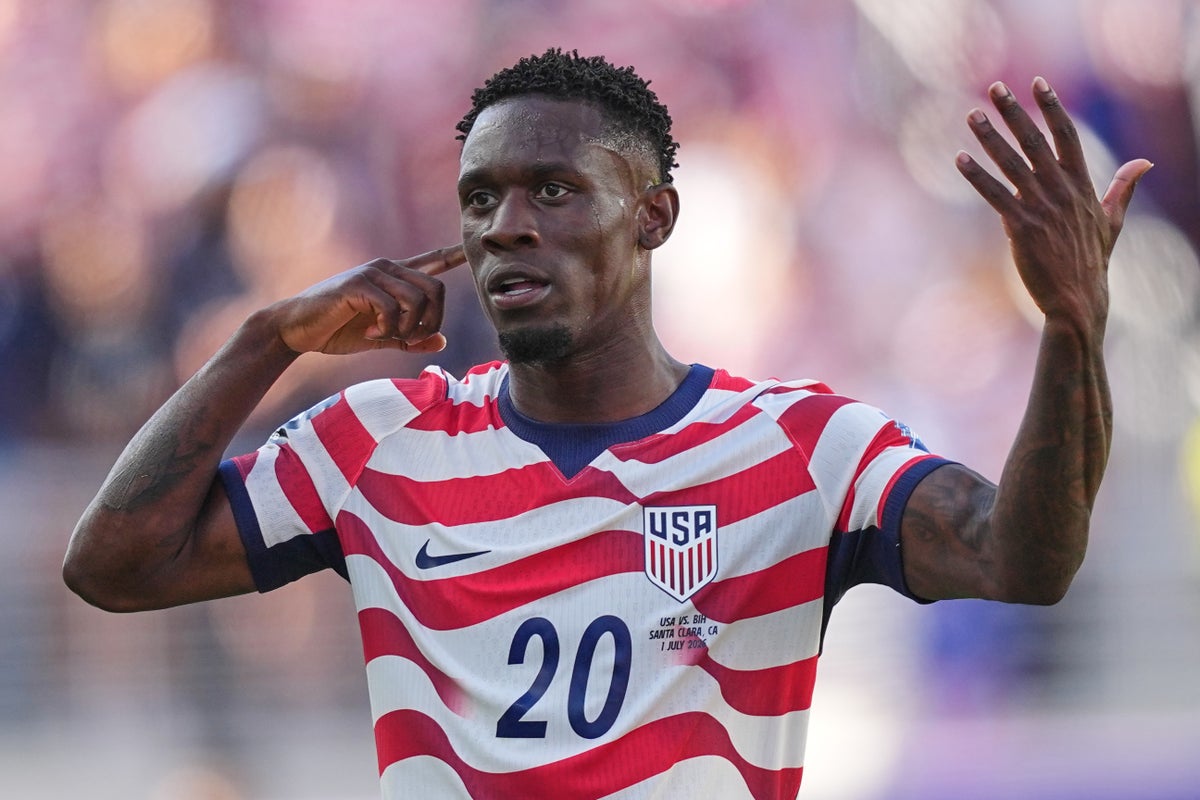
FIFA’s Disciplinary Committee has publicly rebuked UEFA after the European governing body accused it of crossing a ‘red line’ in its handling of Folarin Balogun’s red card suspension, with the world governing body defending its decision to allow the United States striker to play in the World Cup last-16 tie against Belgium.
Balogun received a red card for serious foul play during the USA’s last-32 victory over Bosnia, triggering an automatic one-match ban. The FIFA Disciplinary Committee subsequently suspended the punishment for a probationary period of one year, meaning it will only be activated if Balogun commits another infringement of similar nature and gravity within that period. He was also fined $40,000, with US Soccer jointly liable for half the sum.
The decision drew widespread criticism, including a stinging statement from UEFA, and was further complicated when US President Donald Trump publicly admitted he had intervened, encouraging FIFA president Gianni Infantino to review the incident.
FIFA pushed back firmly, arguing that UEFA’s own affiliated leagues routinely overturn red cards as a disciplinary measure without any objection. “In the majority of top-tier leagues belonging to UEFA-affiliated member associations, the overturning of red cards is a common disciplinary measure,” the FIFA Disciplinary Committee stated. “Yet this has never raised concerns about crossing any ‘red line’. And again, it should be emphasised that in the decision under scrutiny, the red card was not overturned.”
FIFA also cited precedent, noting that similar suspended-ban measures had been applied during World Cup 2026 qualifying and referencing a comparable decision involving Cristiano Ronaldo. The committee stressed that its powers to modify punishment apply to all cases that do not involve match manipulation.
Infantino sought to distance the decision from political pressure, insisting FIFA’s judicial bodies operate independently. “FIFA’s judicial bodies are independent. They operate autonomously,” he said, though his statement in the source material was truncated before completion.
The public dispute between football’s two most powerful governing bodies reflects broader tensions over the governance of the expanded 48-team World Cup, with the Balogun case now a flashpoint for questions about the integrity and consistency of FIFA’s disciplinary process.
Read also
-
 Football ·
Former England youth international James Walker dies at 38, six years after cardiac arrest
-
 Football ·
Bristol Rovers assistant Raynor diagnosed with bowel cancer but vows to stay in dugout
-
 Football ·
Ronaldo slams the door on Portugal and faces a barrage of criticism
-
 Football ·
Zidane on his 2006 headbutt: "I'm not proud, but no regrets"
-
 Football ·
Fernandes named in Portugal squad for Denmark clash after injury scare
-
 Football ·
Dembélé dismisses tension rumours with Mbappé: "We sit next to each other at the table"
 Congo DR