FIA partially restores Boost Mode for wet races after 2026 safety concerns
Formula 1's governing body has reinstated a restricted form of Boost Mode for wet-weather conditions in 2026, limiting it to preventing power reduction rather than increasing output. The FIA World Motor Sport Council also ratified a series of technical changes for 2027 and beyond.
2 min read
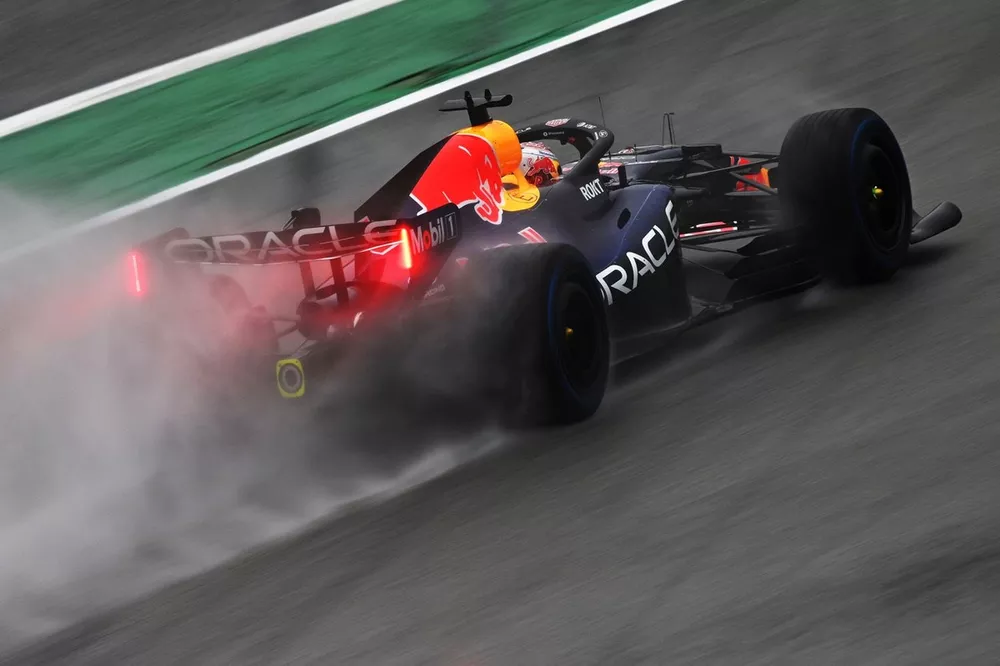
The FIA World Motor Sport Council has partially reinstated Boost Mode for wet-weather racing in the remainder of the 2026 Formula 1 season, reversing an earlier ban while adding strict limits on how the system can be used.
The FIA had originally prohibited drivers from activating Boost Mode in wet conditions after feedback that the sudden, dramatic torque increase posed a safety risk — particularly given that the 2026 cars were already difficult to manage in low-grip situations. The revised rule allows Boost Mode to operate only to prevent power reduction as cars decelerate along straights, without actually increasing output. The overtake function remains disabled.
“In low grip conditions when the track is wet and there is poor visibility, boost mode has been reintroduced but is restricted to preventing power reduction without increasing output, while the overtake function will be disabled,” the FIA stated in its WMSC report. “These changes have been made for safety reasons.”
The council, which convened in Macau, also approved a change to the Heat Hazard declaration system. From now on, the hazard — which requires drivers to wear mandatory cooling vests or carry additional ballast — can be declared separately for sprint races and main races, rather than applying uniformly across an entire race weekend.
Looking further ahead, the WMSC ratified a series of technical and sporting regulation changes for 2027 agreed upon by F1 stakeholders in recent weeks. The most significant adjustment is a shift in the power unit split from the current ratio to 58 percent combustion power and 42 percent electric energy, with a further move to a 60-40 split planned for 2028. The changes are intended to address driver complaints about the current balance of power delivery.
To accommodate those adjustments without requiring wholesale hardware or chassis redesigns, F1 will limit reconnaissance laps at specific high-speed circuits such as Monza and may reduce race distances by one or two laps where necessary.
Pre-season testing ahead of the 2027 campaign has also been extended from three to four days, with the FIA citing “the general complexity of the current generation of cars” as the reason for the additional preparation time.
“As with every major regulatory change, the process does not end when the cars first take to the track,” said FIA president Mohammed Ben Sulayem. “Continuous dialogue and collaboration are essential to ensuring that the regulations meet the needs of the sport, its drivers, and its fans.”
Read also
-
 Formula 1 ·
Antonelli leads Norris by two tenths in red-flag-hit Belgian GP practice
-
 Formula 1 ·
Championship leader Antonelli opens up on fame's pressures ahead of Belgian GP
-
 Formula 1 ·
Ocon reveals Spider-Man helmet to Tom Holland ahead of Belgian and Hungarian GPs
-
 Formula 1 ·
Montoya warns Antonelli that a shrinking points lead is a mental trap
-
 Formula 1 ·
Verstappen edges Hamilton by a tenth to lead Ferrari-Red Bull battle in Belgian GP practice
-
 Formula 1 ·
Championship leader Antonelli reveals Federer's pressure advice ahead of Belgian Grand Prix