FIA explores shorter races as compromise to fix F1's 2027 engine regulations
The FIA is seeking a compromise on planned 2027 power unit changes after Audi, Ferrari and Honda voted against its original proposal. One option under discussion is shortening races on power-hungry circuits to avoid forcing teams into costly chassis redesigns.
2 min read
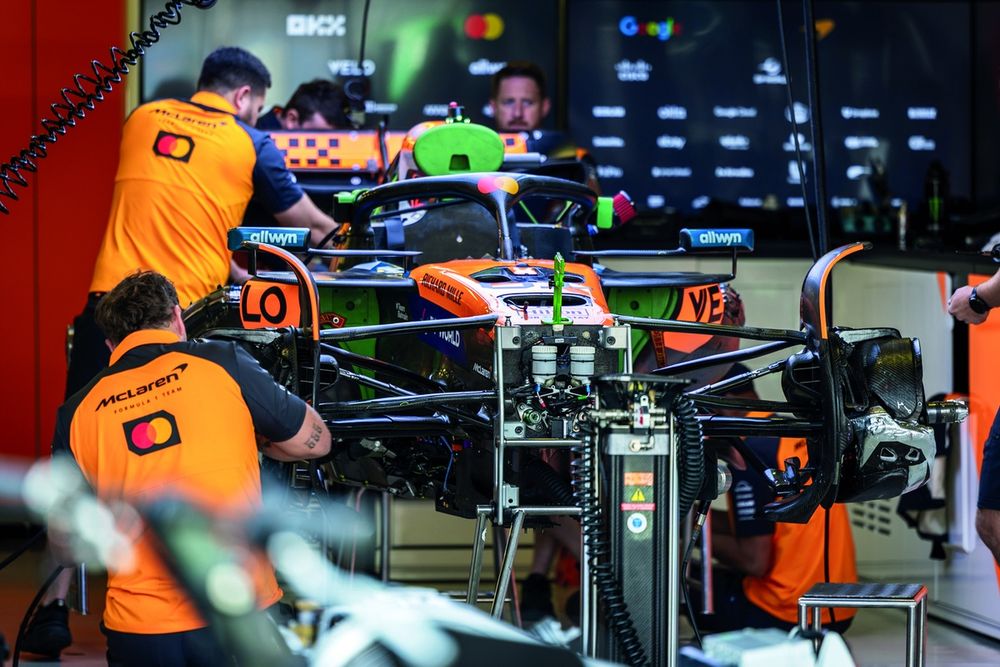
The FIA is in active negotiations over a compromise plan to fix Formula 1’s troubled 2026 power unit regulations ahead of 2027, with one option on the table being a reduction in race distances at certain circuits to ease the strain on power-starved cars.
The 2026 regulations have struggled from the outset, producing cars that rely on an almost equal split between combustion and electrical power — a balance widely regarded as flawed. A first round of fixes was introduced at the Miami Grand Prix, including removing the requirement for drivers to aggressively lift and coast during qualifying laps, but engineers and regulators agree that more fundamental hardware changes are needed.
The FIA had announced an “agreement in principle” earlier this month to shift the power split to a 60-40 ratio in favour of combustion power for 2027, primarily by increasing fuel flow and reducing energy deployment. That plan has since stalled. Audi, Ferrari and Honda all voted against the FIA’s original proposal, leaving it well short of the supermajority required to fast-track hardware changes.
The central dispute is not whether to make the change, but how and when. With 2027 car development already well advanced, an increase in fuel flow would require a larger fuel tank — and therefore a new chassis — for several teams that had planned to carry over their current designs to save costs.
Haas team principal Ayao Komatsu was direct about the financial stakes. “The thing I’d like the FIA and F1 management to hear about the team’s point is about the cost,” he said in the Canadian Grand Prix paddock, where further talks are taking place this weekend. “These PU regulations are already so expensive. If this is going to cost every team an extra 5 or 10 million, that’s certainly not the right direction for us.”
A revised approach is now being explored: introducing more gradual fuel flow increases for 2027 that would not require teams to build new chassis. The FIA has asked power unit manufacturers to assess whether a modest increase in fuel flow is achievable within existing hardware constraints, and whether race distances on the most energy-intensive circuits would need to be trimmed to make the numbers work within those limits.
No final agreement has been reached, and the outcome of this weekend’s discussions in Montreal will be critical to determining whether the 2027 timeline remains viable.
Read also
-
 Formula 1 ·
Vowles hails Madrid's debut F1 race as 'one to watch' despite overtaking concerns
-
 Formula 1 ·
Mercedes shifts focus to 2027 as 145-point F1 lead gives Wolff room to plan ahead
-
 Formula 1 ·
Rosberg calls for VSC pitlane overhaul after Norris loses Spanish GP victory
-
 Formula 1 ·
Vasseur dismisses claims Ferrari split Spanish GP strategy to keep Leclerc and Hamilton apart
-
 Formula 1 ·
Verstappen clears all 100 rivals in 14 laps at Silverstone karting challenge
-
 Formula 1 ·
Wolff backs ADUO rethink as Honda's struggles push Alonso closer to F1 exit