FIA considers third-party engines to end manufacturer control over customer teams from 2031
The FIA is exploring a centralised, third-party engine supply for customer teams from 2031 as Formula 1 moves toward cheaper, naturally aspirated V8 power units — a shift that could effectively end manufacturer leverage over smaller teams.
2 min read
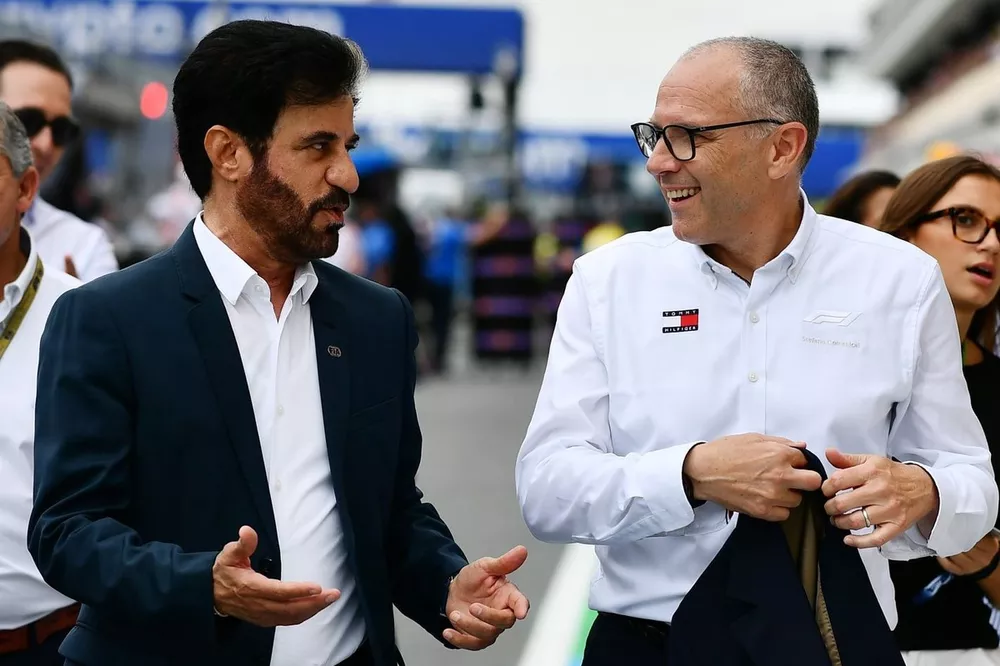
Formula 1’s governing body is weighing a fundamental change to how engines are supplied to smaller teams from 2031, with the FIA considering a third-party power unit option that would sever the commercial ties between manufacturer and customer squads.
FIA president Mohammed Ben Sulayem outlined the thinking to British journalists at Silverstone, saying: “There will be no control over the teams, A-team over the B-team, that’s supplied with their engines. If it is affordable, then we will have one engine for the rest of the B-teams, so nobody can leverage them and tell them to ‘vote this way, or we are not going to give you a good engine’.”
The proposal is linked to the broader push by Ben Sulayem and F1 chief executive Stefano Domenicali to introduce cheaper, lighter and louder power units for the next regulations cycle. The most likely technical direction is a naturally aspirated V8 paired with a smaller electric unit — a significant step back from the complex turbo-hybrid architecture that has defined the sport since 2014.
The move carries a political dimension as much as a technical one. McLaren CEO Zak Brown recently wrote to Ben Sulayem reiterating long-standing concerns about team alliances in the paddock, specifically around Red Bull Austria’s dual ownership of Red Bull Racing and Racing Bulls. The issue of manufacturer influence over customer teams resurfaced again when Mercedes explored acquiring a 24 percent stake in Alpine — talks that ultimately collapsed over valuation disagreements.
By making engines affordable enough for teams to either build their own or purchase from an independent supplier, the FIA would effectively remove the leverage that engine-supplying manufacturers currently hold over their customers.
Third-party engine supply was once a staple of Formula 1 — Cosworth last provided power to Marussia as recently as 2013 — but the arrival of the turbo-hybrid era in 2014 priced independent suppliers out of the market entirely. A return to simpler, less expensive hardware could make that model viable again.
The current landscape sees Mercedes HPP supplying McLaren, Williams and Alpine, though it is understood the manufacturer was already looking to reduce its customer commitments to two teams ahead of 2031. How the proposed third-party framework would interact with existing manufacturer programmes remains to be defined as the FIA continues its consultation process.
Read also
-
 Formula 1 ·
Vettel backs F1 2026 rules to unite sustainability and raw excitement after Monza Ferrari run
-
 Formula 1 ·
Steiner warns Madrid must fix Madring layout after processional 2026 Spanish GP
-
 Formula 1 ·
Ex-Ferrari engineer Smedley calls for augmented steward group to end post-race verdicts
-
 Formula 1 ·
Coulthard demands faster FIA safety car calls after Norris loses Spanish GP win
-
 Formula 1 ·
Coulthard praises Russell for admitting Antonelli is outperforming him as title slips away
-
 Formula 1 ·
Racing Bulls rookie Lindblad nearly flips Guinness-record Fiat Panda in off-season YouTube stunt

 Korea DPR U20 W