FIA admits human error disrupted Singapore GP sprint qualifying after Overtake Mode mishap
The FIA has confirmed a human error in Race Control caused Overtake Mode to be incorrectly activated for 27 seconds during SQ1 at the Singapore Grand Prix, disadvantaging some drivers based on where they were on the lap when it occurred.
2 min read
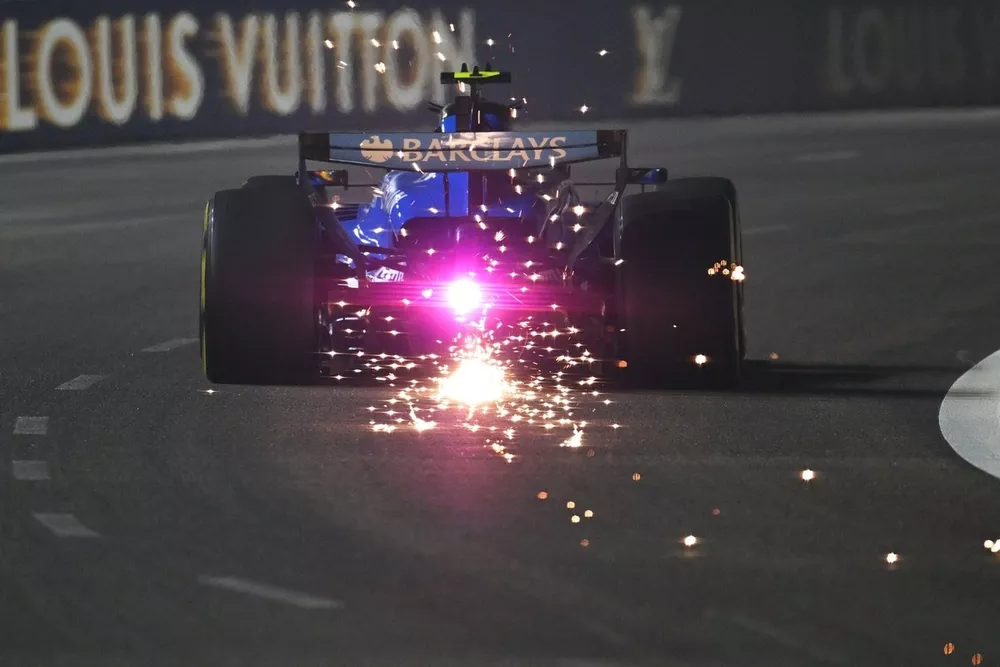
A human error in Race Control left several drivers with less power than rivals during sprint qualifying at the Singapore Grand Prix, the FIA has confirmed, adding a second layer of controversy to a session already disrupted by a timing and scoring system glitch.
The trouble began when Sergio Perez struck the barrier at Turn 5 during SQ1, extracted his car under his own power and returned to the pits, shedding his damaged front wing along the way. Race control halted proceedings while the debris was cleared.
Once the session resumed, drivers reported two distinct problems: some lap times failing to appear on the timing screens, and a noticeable drop in engine performance for a portion of the field. Several drivers were told by their teams that the power deficit was the FIA’s responsibility, leading many to assume it was connected to the software bug that affected the Bahrain Grand Prix the previous weekend.
Carlos Sainz, eliminated in SQ1, was among the most vocal. “Half the cars did the lap with an engine half a second quicker than the others,” the Williams driver said. “There was another software issue this time around and we were on the bad end of it. For whatever reason, the FIA, like Malaysia, didn’t decide to sort it quickly and were happy to do half of the cars in quali with higher power than the other half.”
The FIA, however, pushed back on the software explanation. A spokesperson clarified that the power disparity was caused by a human error related to Overtake Mode — the system that grants drivers access to an additional half-megajoule of energy. According to the governing body, Overtake Mode was not available immediately after the red flag restart, and when officials realised the error, it was activated for 27 seconds before being switched off again.
“The FIA acknowledges that this unfortunate human error had an impact on the performance of certain cars based on the timing of their run and their position around the lap,” the spokesperson said, adding that the second and third periods of sprint qualifying were unaffected.
The consequences of the Overtake Mode error extend beyond raw lap time. The system also influences tyre preparation on out-laps, meaning drivers who happened to be at different points on the circuit during that 27-second window faced varying conditions in ways that are difficult to quantify after the fact.
The incident is the latest in a series of high-profile operational failures in Formula 1, following the chaotic scenes at the Bahrain Grand Prix, where the race was paused after a single formation lap due to a separate technical fault. The FIA has not announced any formal review or corrective measures beyond acknowledging the error.
Read also
-
 Formula 1 ·
Hadjar baffled by 'undriveable' Red Bull after qualifying ninth for Singapore Sprint
-
 Formula 1 ·
Race control error strips power from cars in Singapore sprint qualifying, leaving Aston Martin weighing protest
-
 Formula 1 ·
Antonelli admits upgraded Mercedes 'very unpredictable' after qualifying seventh in Singapore
-
 Formula 1 ·
Singapore Sprint qualifying head-to-head: Piastri edges Norris as Verstappen struggles at Red Bull
-
 Formula 1 ·
Verstappen claims first-ever Singapore pole as championship leader Antonelli slumps to seventh
-
 Formula 1 ·
Verstappen faces stewards' probe for overtaking Hamilton under yellow flags in Singapore SQ1

 Malta W