F1 stakeholders agree phased ICE power boost for 2027 and 2028 amid energy management concerns
Formula 1's governing bodies, teams, and power unit manufacturers have agreed to increase internal combustion engine output in two stages — a 5% fuel flow rise in 2027 and a 13% jump in 2028 — to ease driver workload and energy management demands under the new 2026 regulations.
2 min read
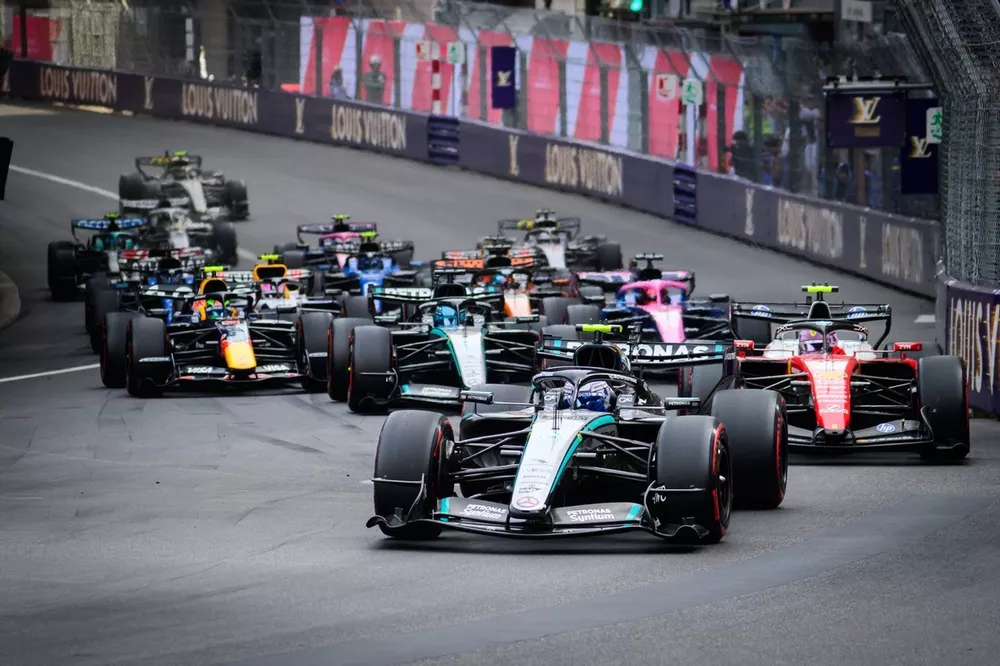
Formula 1’s stakeholders have reached a consensus on a phased increase in internal combustion engine power across 2027 and 2028, the FIA announced on Wednesday, responding to widespread concerns about energy management demands placed on drivers under the sport’s new 2026 power unit regulations.
From 2027, fuel flow will rise by five percent, lifting ICE output from 400kW to 420kW without requiring significant hardware changes. Simultaneously, the maximum electric motor deployment drops from 350kW to 300kW, though Overtake Mode is preserved at 350kW to retain the boost function. The maximum harvesting limit also increases from 250kW to 375kW, shifting the effective power split from 53/47 to 58/42 in favour of the combustion engine.
A more substantial 13% fuel flow increase — pushing ICE power to 450kW and establishing a 60/40 ICE-to-electric split — will follow in 2028. That additional year is intended to give power unit manufacturers sufficient time to prepare for the larger hardware demands. From 2028, the maximum harvest limit will rise again to 400kW, while maximum deployment and Overtake Mode figures remain unchanged.
The FIA confirmed that tweaks to power unit financial regulations will also be made to provide manufacturers with the cost cap headroom necessary to implement the changes. The proposals will be submitted to the FIA’s World Motor Sport Council for ratification at a meeting on 23 June in Macau.
The amendments address complaints that have surfaced since the 2026 rules came into force. Drivers have flagged a heavy cockpit workload and the level of energy conservation required on certain circuits, which has undermined the flat-out nature of qualifying. The new regulations have also raised safety concerns around high closing speeds between cars.
Not all manufacturers were aligned on the pace of change. Mercedes and Red Bull Ford Powertrains pushed for more significant adjustments as early as 2027, while Audi and Ferrari raised concerns about the resources and lead times involved. The agreed framework represents a compromise — a gradual refinement of the 2026 rules rather than a wholesale revision.
The FIA said the amendments “reflect the continuation of this collaboration with all stakeholders working collectively to refine the framework and address identified operational challenges.”
Read also
-
 Formula 1 ·
Formula 1 brings full 2026 grid to Hot Wheels Infinite Rush in first-ever F1 gaming crossover
-
Formula 1 ·
F1 Commission cuts 2027 race distances by 15km to manage new power unit fuel demands
-
 Formula 1 ·
Sainz urges Williams karting prodigy Will Green to embrace risk in single-seater step
-
 Formula 1 ·
Steiner predicts Verstappen will go winless in 2026 as Red Bull struggles persist
-
 Formula 1 ·
F1 Academy champion Doriane Pin targets Mercedes race seat within five years
-
 Formula 1 ·
Bortoleto reveals Alonso is just as sarcastic and straightforward off camera as on it