Domenicali dismisses battery graphics removal as fans 'just want to see overtaking'
F1 CEO Stefano Domenicali has defended the gradual removal of battery state-of-charge data from TV broadcasts, arguing the vast majority of fans are not interested in technical readouts and simply want on-track action.
2 min read
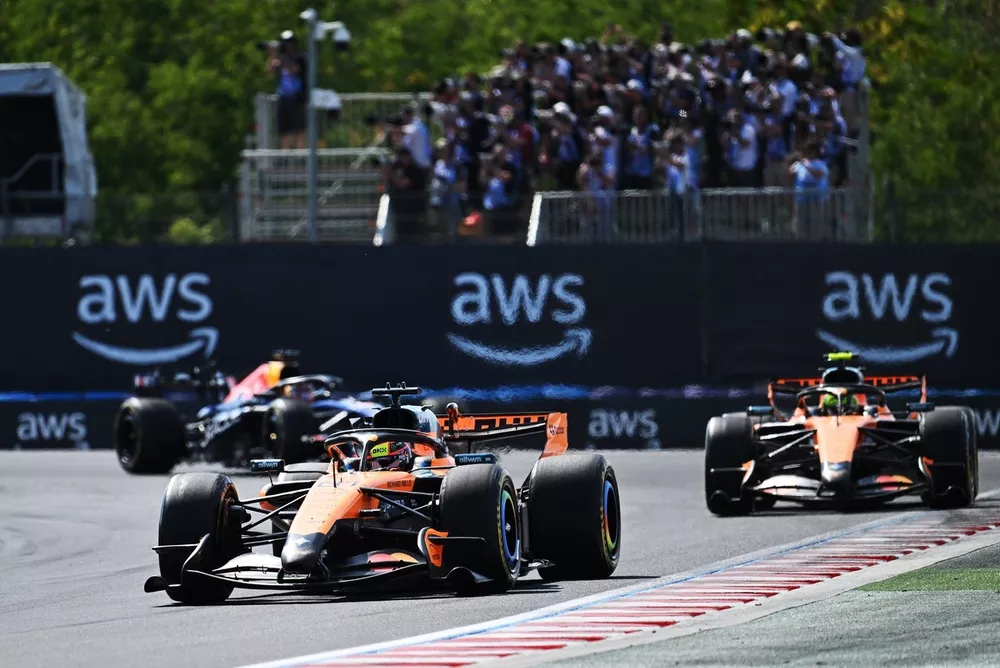
Formula 1 CEO Stefano Domenicali has pushed back against criticism of the sport’s decision to phase out battery status graphics from TV broadcasts, insisting that most fans have no interest in energy management data and care only about what happens on track.
The removal of the information has drawn scrutiny this season as F1’s new power units — which derive 47% of their output from electric power — have made energy management central to both qualifying and race strategy. With drivers frequently lifting off in high-speed corners to conserve charge, and overtaking moves increasingly shaped by energy differentials between cars, critics argue that stripping the data from broadcasts leaves viewers unable to understand what they are watching.
Battery state of charge was visible during the season-opening Australian Grand Prix but has since been quietly dropped from the on-screen graphics package, coinciding with growing complaints about the so-called ‘yo-yo’ style of racing the new regulations have produced.
Asked whether the removal was counterproductive given the clear appetite for data-rich viewing — particularly in the United States — Domenicali was unequivocal in his disagreement.
“I think that the truth is exactly the other way around, because no one is interested in how you drive your car,” the Italian said. “The people are interested if you’re overtaking or not. That’s the vast majority of the people.”
Domenicali drew a comparison with DRS, arguing that fans never needed a graphic to appreciate the effect of the drag-reduction system — though notably, DRS activation was immediately visible to the naked eye in a way that energy deployment is not.
The F1 chief also revealed he had discussed the topic with Star Wars creator George Lucas, who attended the Hungarian Grand Prix and offered his perspective on how newer fans engage with the sport.
“He was giving me an incredible view on how the new fans are watching Formula 1,” Domenicali said. “He gave us incredible clarity to see how we can really simplify things, because the new fans are not understanding what is behind the scenes. They are fascinated by the fact that there is a lot of action.”
Domenicali acknowledged that technically-minded viewers deserve access to the relevant information, but maintained that catering to that audience should not come at the cost of clarity for the broader fanbase. “For the vast majority of the people, trust me, they just want to see what is happening on the track,” he said.
The debate reflects a broader tension within F1 as it attempts to balance its traditional engineering-focused identity with the demands of a rapidly expanding global audience drawn in largely through entertainment-led coverage.
Read also
-
 Formula 1 ·
Verstappen reveals the static sim rig powering his GT3 comeback against Rossi at Portimao
-
 Formula 1 ·
Senna's personal 1991 Honda NSX heads to auction with £800,000 top estimate
-
 Formula 1 ·
Colapinto's ESPN Argentina interview reignites Norris row despite double apology
-
 Formula 1 ·
Piastri dismisses Zak Brown's friendship concerns after drivers' Langkawi getaway
-
 Formula 1 ·
Stroll reveals Honda engine costs Aston Martin two seconds a lap
-
 Formula 1 ·
Verstappen targets first 2026 win at Sepang, the circuit where his F1 career ignited

 Congo DR