Stroll reveals Honda engine costs Aston Martin two seconds a lap
Lance Stroll has put a precise number on Aston Martin's power deficit for the first time, saying the Honda engine leaves the team between one and two seconds per lap slower than the benchmark — a gap he admits there is "not much you can do" about.
2 min read
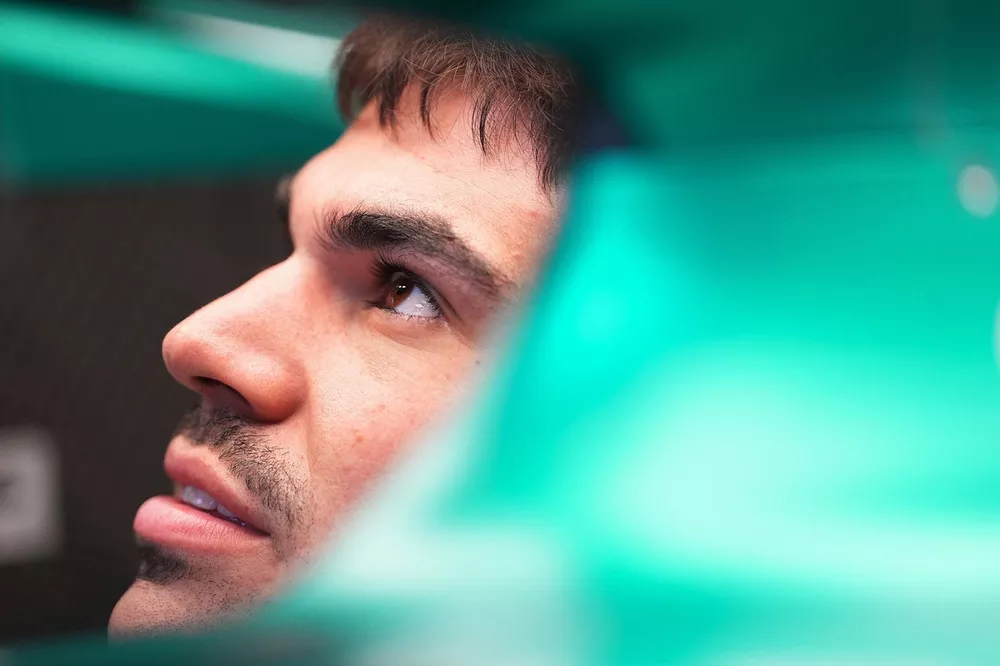
Lance Stroll has publicly quantified Aston Martin’s Honda power unit deficit for the first time, stating the engine is costing the team between one and two seconds per lap depending on the circuit — a frank admission that underlines just how deep the AMR26’s problems run.
Speaking in Malaysia, Stroll was candid about the scale of the challenge. “We’re missing two seconds in engines, so it’s difficult,” he said. “Places like Baku and Monza, when you’re missing two seconds in engine, there’s not much you can do.”
The power deficit has long been an open secret in the paddock, but Aston Martin’s drivers and management had largely avoided attaching a specific figure to it. Stroll’s comments mark the first time either driver has done so on the record.
The team confirmed this week that both Stroll and Fernando Alonso will return for the 2027 season. Alonso’s continuation had been the subject of genuine uncertainty, with the two-time world champion citing concerns about the 2026 technical regulations and the AMR26’s lack of competitiveness. The car remains mired in the lower reaches of the midfield despite a significant upgrade package introduced at the Hungarian Grand Prix.
Adrian Newey, who joined Aston Martin amid considerable fanfare, has been overseeing the car’s development, but results have fallen well short of expectations. Newey has largely stayed away from the media since a press conference at the season-opening Australian Grand Prix in which he appeared to publicly criticise the team’s power unit supplier.
Honda, for its part, has been permitted to accelerate its development programme after its internal combustion engine was measured at more than 4% down on the current benchmark — the Red Bull-Ford unit. That threshold triggered access to additional development and upgrade opportunities under the regulations.
Having initially planned a single upgrade this season before concentrating resources on a revised power unit for 2026, Honda changed course and has now introduced a second upgrade in the form of an improved turbocharger. Turbo lag had been identified as a contributing factor to the driveability issues both Stroll and Alonso have reported throughout the campaign.
Stroll acknowledged that the chassis side of the equation is more encouraging. “We made a big step in Budapest,” he said. “I think we have a clear direction on what we have to do with car development.” But he was equally clear that engine performance remains the team’s primary weakness heading into the second half of the season and beyond.
“We don’t know how we’re going to be in the beginning of ‘27, so we’ll see,” he added, pointing to uncertainty over whether Honda’s revised power unit will close the gap sufficiently when the new regulations come into force.
Read also
-
 Formula 1 ·
Hamilton escapes ban but Ferrari fined €10,000 after Bortoleto impeding scare in Bahrain GP practice
-
 Formula 1 ·
Russell admits Mercedes is 'off the pace' after difficult Friday practice at Sepang
-
 Formula 1 ·
Brundle dismisses Horner-to-Ferrari rumours after speaking directly with the Briton
-
 Formula 1 ·
Verstappen skips soft tyres in Malaysia FP2 and urges caution over Red Bull's progress
-
 Formula 1 ·
Briatore draws line under Colapinto's Baku crash as Alpine chase Racing Bulls
-
 Formula 1 ·
Hadjar returns from wrist fracture with podium, contract and a joke about his couch

 Colombia