Antonio Rattín, whose 1966 World Cup defiance sparked red and yellow cards, dies at 89
Argentine football legend Antonio Rattín has died at 89. The former Boca Juniors captain's infamous dismissal at the 1966 World Cup quarterfinal against England directly led FIFA to introduce the red and yellow card system still used today.
2 min read
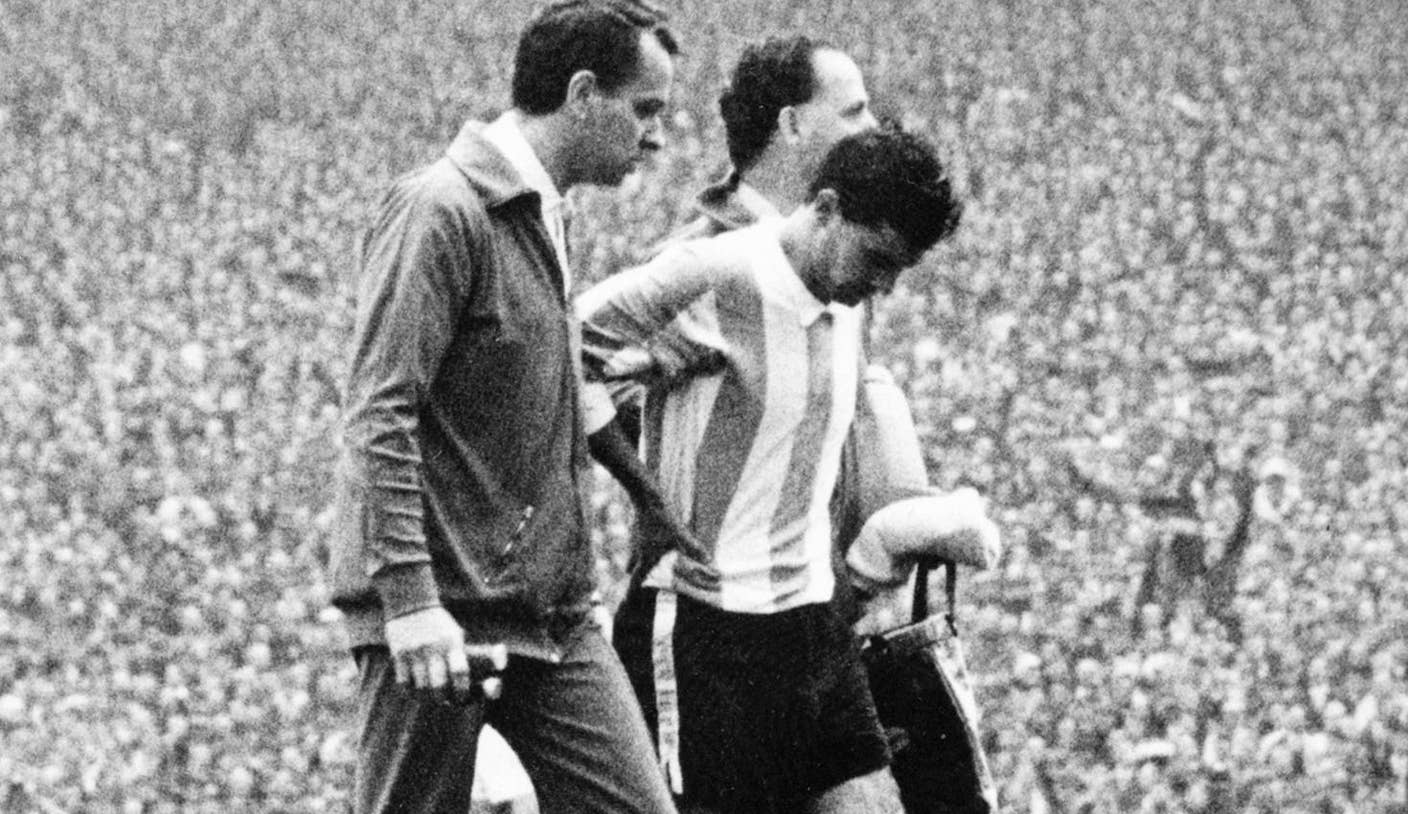
Antonio Rattín, the Argentine midfielder whose act of defiance at the 1966 World Cup quarterfinal against England prompted FIFA to introduce the red and yellow card system, died in Buenos Aires on Saturday at the age of 89. The Argentine Football Association (AFA) confirmed his passing, describing him as “a historic symbol of Boca Juniors and the national team.”
Rattín was a defensive midfielder renowned for his physical, hard-tackling style across a 14-year career spent entirely at Boca Juniors, where he won six Argentine league titles and reached the Copa Libertadores final in 1963. “Rattín was one of us and loved these colours so much that they were the only ones he chose to defend throughout his 14-year career. A leader, an Argentine and forever a Bostero,” the club said in a statement.
His place in football history was secured on 23 July 1966 at Wembley Stadium, when Argentina faced England in the World Cup quarterfinal. In the 36th minute, Rattín protested a foul and was sent off for verbal dissent — at a time when referees communicated dismissals verbally, without any visual signal. His exit was anything but quiet: he crumpled a corner flag bearing the English cross of St George, then sat down on the red carpet reserved for Queen Elizabeth II, drawing a barrage of objects from the crowd.
The confusion and controversy surrounding the incident convinced FIFA’s refereeing authorities that a universally understood system was urgently needed. Kenneth George Aston, who chaired FIFA’s refereeing committee, drew inspiration from traffic lights and introduced yellow and red cards in 1967 — a system that has governed the game ever since.
Beyond the cards, Rattín’s dismissal is widely credited with igniting the fierce football rivalry between Argentina and England, a tension that reached its most celebrated — and contentious — peak two decades later. In the 1986 World Cup quarterfinal in Mexico City, Diego Maradona scored twice to eliminate England: once with his hand in a goal the referee failed to spot, and once after a solo run widely regarded as the greatest individual goal in the sport’s history.
Rattín represented Argentina at two World Cups — Chile in 1962 and England in 1966 — and was twice a runner-up in the Copa América. He was 89.
Read also
-
 Football ·
Howe's backroom demand could complicate Manchester United's managerial search
-
 Football ·
Nico Williams confirms he rejected Arsenal, Barcelona and PSG to stay at Athletic Club
-
 Football ·
Kane, Mbappé and Yamal lead 30-man shortlist as Ballon d'Or 2026 heads to London
-
 Football ·
Injured knee rules out Kvaratskhelia from 2026 Ballon d'Or ceremony on eve of event
-
 Football ·
CIES crowns Lamine Yamal, Mbappé excluded from top 5 ahead of Ballon d'Or
-
 Football ·
Howe's backroom demand could define whether Man Utd job offer succeeds where Celtic failed