92.8% pass accuracy in opponent's half: Zidane's France break 20-year record
Victorious in Belgium (0-1) in the second matchday of the Nations League, France displayed 92.8% pass accuracy in the opponent's half, an absolute record over twenty years according to Opta. France now leads their group outright with six points.
1 min read
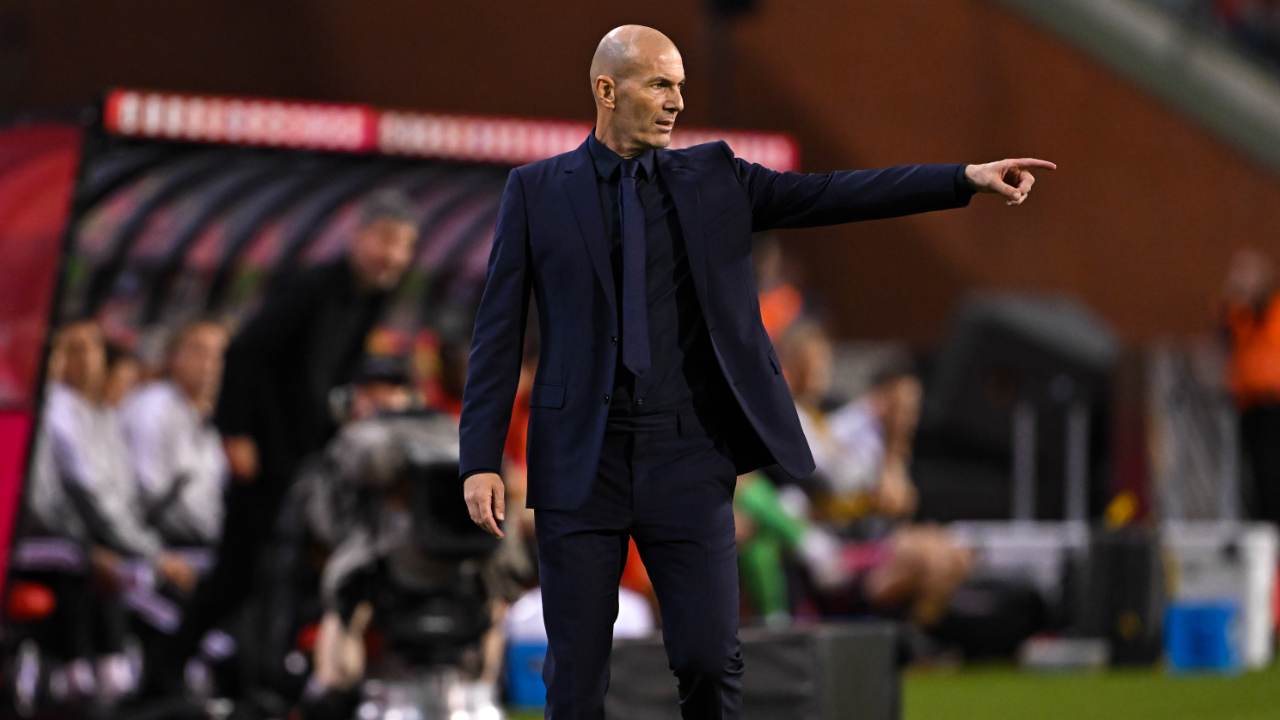
Zinédine Zidane’s France beat Belgium 0-1 on Monday evening at the Roi-Baudouin stadium in Brussels for the second matchday of the Nations League. Beyond the result, it was a statistical figure that caught attention: 92.8% pass accuracy in the opponent’s half, an absolute record over twenty years for the French team according to sports data specialist Opta.
This level of precision is all the more remarkable given that Zidane made nine changes compared to the eleven fielded three days earlier in Turkey (0-1 victory). Despite this extensive squad rotation, the Tricolores displayed immediate collective fluidity, imposing their tempo, combining in tight spaces and keeping the ball under pressure without ever giving in to rushing.
« We weren’t afraid to go into the opponent’s half, that’s what I like, » Zinédine Zidane said after the match. « What’s great is that everyone is involved. We were dominant and it’s quite logical over the whole match, we deserved it and in the end we manage to score that goal. We really controlled this match well. »
With this second consecutive victory, France takes sole leadership of their group with six points, ahead of Belgium and Italy, who each have three. Zidane’s men will host the Squadra Azzurra on Friday at the Stade de France, a clash that could allow them to firmly establish their position as group leaders.
Read also
-
 Football ·
Manchester United arrange secret friendly with Lausanne-Sport as both Ratcliffe clubs struggle
-
 Football ·
Gakpo returns to Liverpool for scans after ankle injury scare on Netherlands duty
-
 Football ·
Lamb scores twice on EDS debut as Parker targets first-team breakthrough at Man City
-
 Football ·
Injury-delayed Baleba set to make Manchester United debut after international break
-
 Football ·
United confirm academy signing from Liverpool as Agbonlahor urges Carrick to raid City for £142m duo
-
 Football ·
Ben Arfa Nearly Returned to Nice at 39, but Puel Vetoed the Move

 Tajikistan