Zidane breaks with Deschamps from his first squad list: 4-3-3 and the end of the attacking quartet
For his first matches in charge of France in the Nations League, Zinédine Zidane has named a squad that abandons his predecessor's 4-2-3-1 and signals three defensive midfielders, pushing Mbappé and Dembélé out to the wings.
1 min read
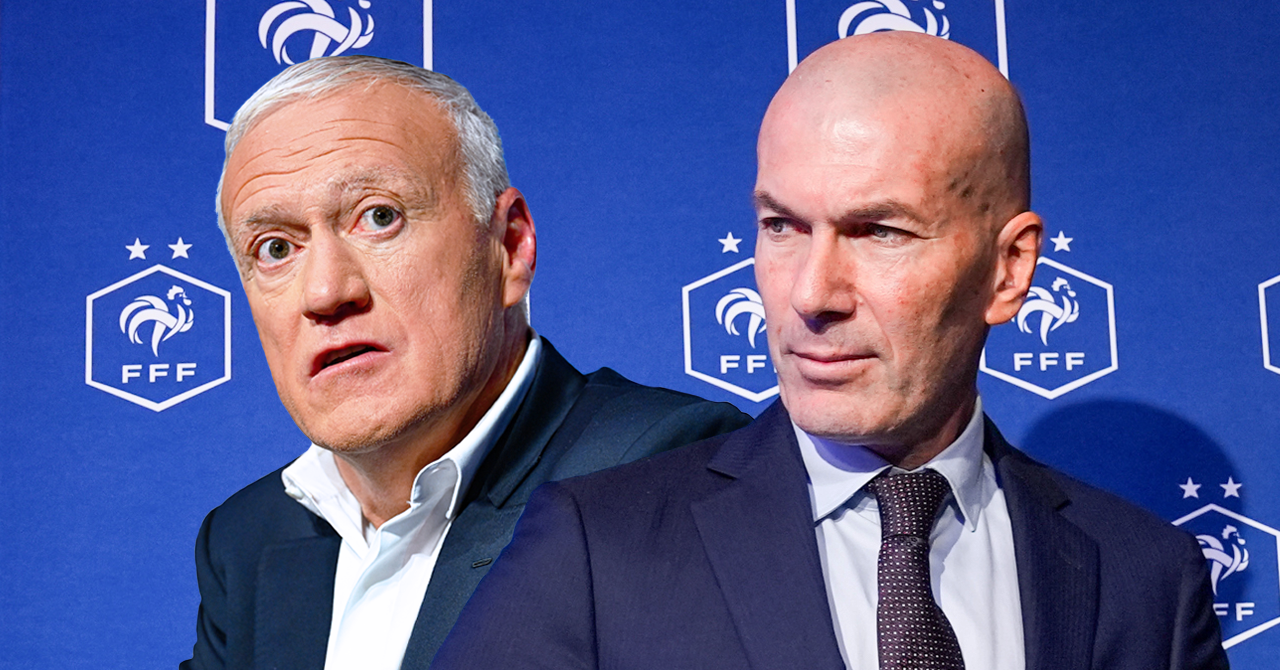
Zinédine Zidane unveiled his first squad as France manager on Friday, and the composition of the group — eight defenders, six midfielders, six forwards — clearly outlines a 4-3-3 that breaks with the 4-2-3-1 that Didier Deschamps used up until the 2026 World Cup.
The most revealing statement came from Zidane himself in his press conference: “Four forwards, we’re not going to overdo it…” A comment that appears to condemn the Olise-Dembélé-Mbappé-Doué or Barcola quartet experimented with this summer by his predecessor, whose limitations were exposed at the last World Cup.
In midfield, three of the six players selected are defensive midfielders. The trio Adrien Rabiot-Warren Zaïre-Emery-Manu Koné is expected to occupy the centre of the park, with the stated objective of greater defensive solidity and better ball retention. The only alternative to this setup would be a more attacking system incorporating Rayan Cherki in a number ten role.
Upfront, Michael Olise should retain his status as a key player, but positioned out wide. Kylian Mbappé, still captain, would also be repositioned as a winger, freeing up the centre for Ousmane Dembélé as the main striker. A symbolic reversal of hierarchy for France’s all-time leading goalscorer.
“I am driven by the game,” Zidane declared. “What drives me is scoring goals, but there must be balance.” That balance will face its first test next Friday in Turkey, in the Nations League, before facing Belgium twice and Italy.
Read also
-
 Football ·
De Zerbi brands Tottenham most fragile team he has coached in 14-year career
-
 Football ·
No wins in five matches, De Zerbi targets Palhinha and sees his job under threat
-
 Football ·
Willock and Hall's electric start seals Newcastle victory over Hull despite late scare
-
 Football ·
Gerrard warns 15-year-old Gabriel that Real Madrid move carries same risks as Man United exit
-
 Football ·
Brighton demolish Arsenal 3-0 as BBC Radio 5 Live apologises for pitchside language
-
 Football ·
Arteta admits Arsenal 'didn't do the basics' as Brighton end Gunners' unbeaten run