Verstappen says 2026 cars are easier to drive as Stella pushes back at Zandvoort
Max Verstappen believes smaller qualifying gaps between team-mates in 2026 reflect a more forgiving generation of cars, a view McLaren boss Andrea Stella disputes, arguing the new power unit regulations make this season's machinery harder to master.
2 min read
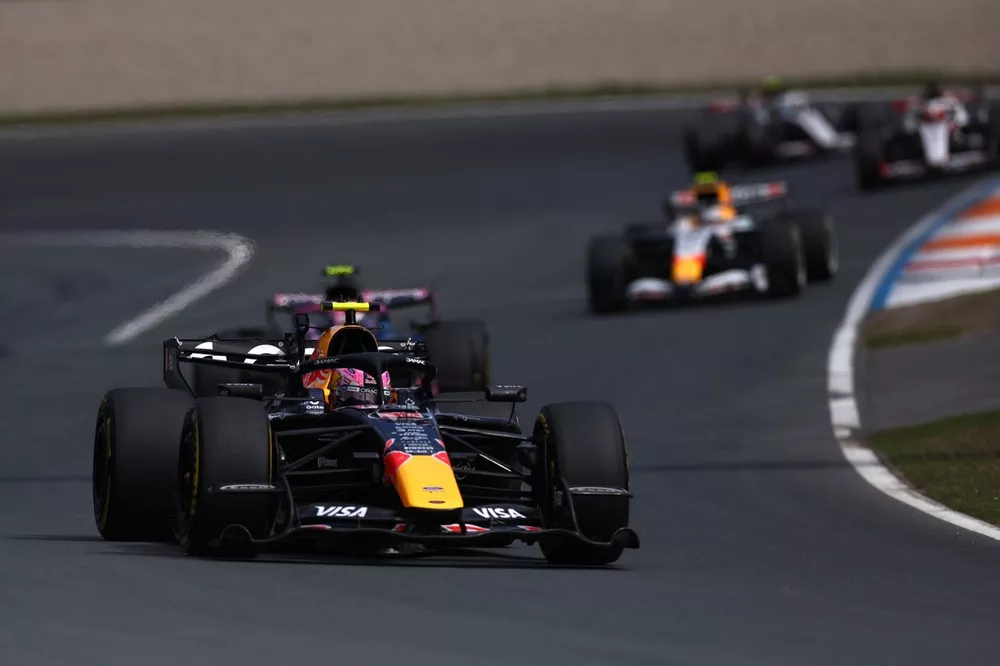
Max Verstappen sparked a paddock debate at the Dutch Grand Prix after suggesting the 2026 Formula 1 cars are easier to drive on the limit, a claim McLaren team principal Andrea Stella was quick to challenge at Zandvoort.
The discussion was prompted by two eye-catching one-off performances at Circuit Zandvoort. Liam Lawson qualified eighth for Red Bull, just one tenth of a second behind Verstappen, standing in for the injured Isack Hadjar. Simultaneously, reserve driver Yuki Tsunoda slotted into Lawson’s Racing Bulls seat and finished qualifying within a similarly narrow margin of regular driver Arvid Lindblad on his first race weekend of the 2026 season.
For Verstappen, the results were confirmation of a trend he had been watching all year. “Especially in qualifying, I think. It’s a lot easier nowadays with these cars to find the limit, because in quite a few places you’re also a bit down on battery. Everything becomes a bit easier to line up,” the Dutchman said. “I think that demonstrated it quite well this weekend compared to the previous cars. For me, that’s not a surprise.”
Verstappen was careful not to undercut his stand-in team-mate, saying Lawson had done “a very solid job this weekend”, and Lawson himself noted the current Red Bull felt considerably less on a knife-edge than its troubled 2025 predecessor. But Verstappen maintained the tight margins were a structural feature of the new regulations rather than a reflection of any individual brilliance. “You can also see that with Yuki, he’s right there straight away,” he added.
Stella offered a sharply different reading. The McLaren boss argued that the 2026 power unit regulations — which introduced new hybrid deployment systems — had added a fresh layer of complexity on top of the usual physical demands of driving a Formula 1 car at the limit.
“I don’t know about others, but these cars are classified by both our drivers as difficult cars to drive,” Stella said. “They are difficult cars to drive for several reasons. At the start of the season, it was in the corners and then in the straights — in the corners because of the low grip, much less downforce, smaller tyres, and in the straights because of the inconsistencies of the deployment or the fact that you may have a sudden superclip before braking and now you’ve lost your braking reference.”
Stella also pointed to McLaren’s own internal data as evidence, noting that the scatter between his two drivers had been noticeably larger in 2026 than in the previous season, suggesting the cars punish any driver who falls slightly off the pace more severely, not less.
The exchange highlights a broader question heading into the second half of the 2026 season: whether the new technical regulations have genuinely levelled the playing field between elite drivers and their team-mates, or whether the complexity of the machinery simply creates different kinds of variance.
Read also
-
 Formula 1 ·
Schiff warns Red Bull's knife-edge car is costing Verstappen and Hadjar at crucial stage
-
 Formula 1 ·
Vasseur pinpoints Q3 collapse and Bottas VSC as Ferrari's twin US GP regrets
-
 Formula 1 ·
Debris on lap eight cost Verstappen second place at the US Grand Prix, says Mekies
-
 Formula 1 ·
Hinchcliffe suggests Russell may weigh Mercedes exit as Antonelli leads championship
-
 Formula 1 ·
Ratcliffe puts Lausanne-Sport up for sale as INEOS retreats from sports empire
-
 Formula 1 ·
Mercedes mocks championship leader Antonelli after he reverses into a fence in Austin