Two journalists come to blows during France-Morocco World Cup press conference
In Boston, on the eve of the 2026 World Cup quarter-final between France and Morocco, two journalists exchanged blows during the Moroccan team's press conference, interrupting Brahim Diaz and forcing FIFA officials to intervene.
1 min read
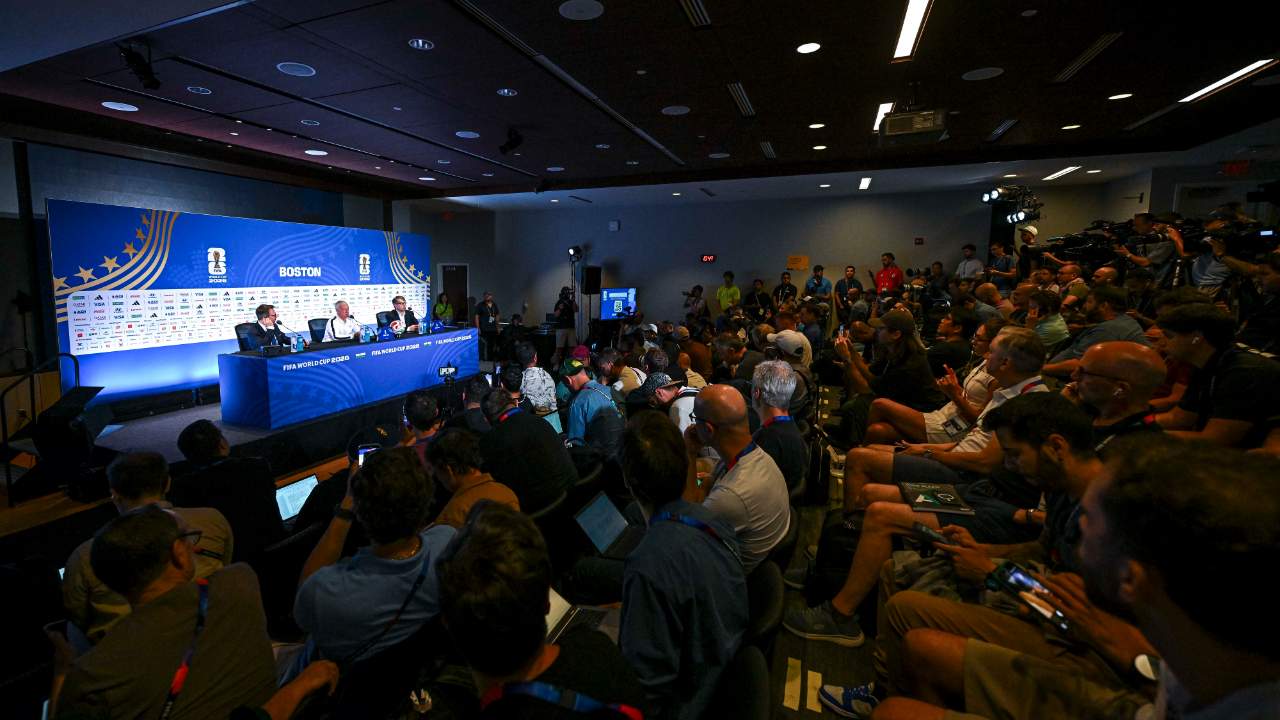
In Boston, on the eve of the 2026 World Cup quarter-final between France and Morocco, the official press conferences turned into an incident on Wednesday. Two journalists came to blows during the Moroccan national team’s remarks, forcing Brahim Diaz to stop speaking and FIFA to intervene to restore order.
Tension had already begun to rise during Didier Deschamps’ appearance. Several Moroccan reporters loudly expressed their frustration as the French manager was about to leave the podium without being able to answer all questions. Called out, Deschamps chose to sit back down: “If there are 50 of you raising your hand, I’m not going to answer 50 questions. I have a drive ahead and a training session to prepare,” he said before accepting one final question.
The breaking point came shortly after, during the Moroccan press conference. Two journalists began to hurl insults at each other and then struck each other, in front of a visibly stunned Brahim Diaz. “Why are you hitting me? Why are you hitting me?” one of them shouted, the other retorting “you hit me first.” The two men continued to blame each other in a loop despite calls for calm from their colleagues and the Moroccan press officer.
It ultimately took direct intervention by FIFA officials to restore calm in the room. Mohamed Ouahbi, Morocco’s manager, concluded the episode with a smile: “We’re separating you like at school.”
Read also
-
 Football ·
Kane unaware of Man City guilty verdict until after England's win over Czechia
-
 Football ·
Gibbs-White calls viral England call-up clip with fiancée 'just banter' after Tuchel dig
-
 Football ·
Kane brushes off Man City guilty verdict as England focus shifts to Croatia
-
 Football ·
Bellamy backs Haaland to stay focused as Man City guilty verdict looms over Norway camp
-
 Football ·
CAS designates panel to rule on Senegal-Morocco CAN 2025 dispute on October 8
-
 Football ·
Laporta and Gil Marín embrace in Copenhagen as Julián Álvarez dispute fades
 Panama