Spain, Portugal and Morocco to host 2030 World Cup across three continents in centenary tournament
The 2030 FIFA World Cup will run from June 8 to July 21 across six countries and three continents, with Spain, Portugal and Morocco as the primary hosts and special centenary matches held in Argentina, Paraguay and Uruguay.
2 min read
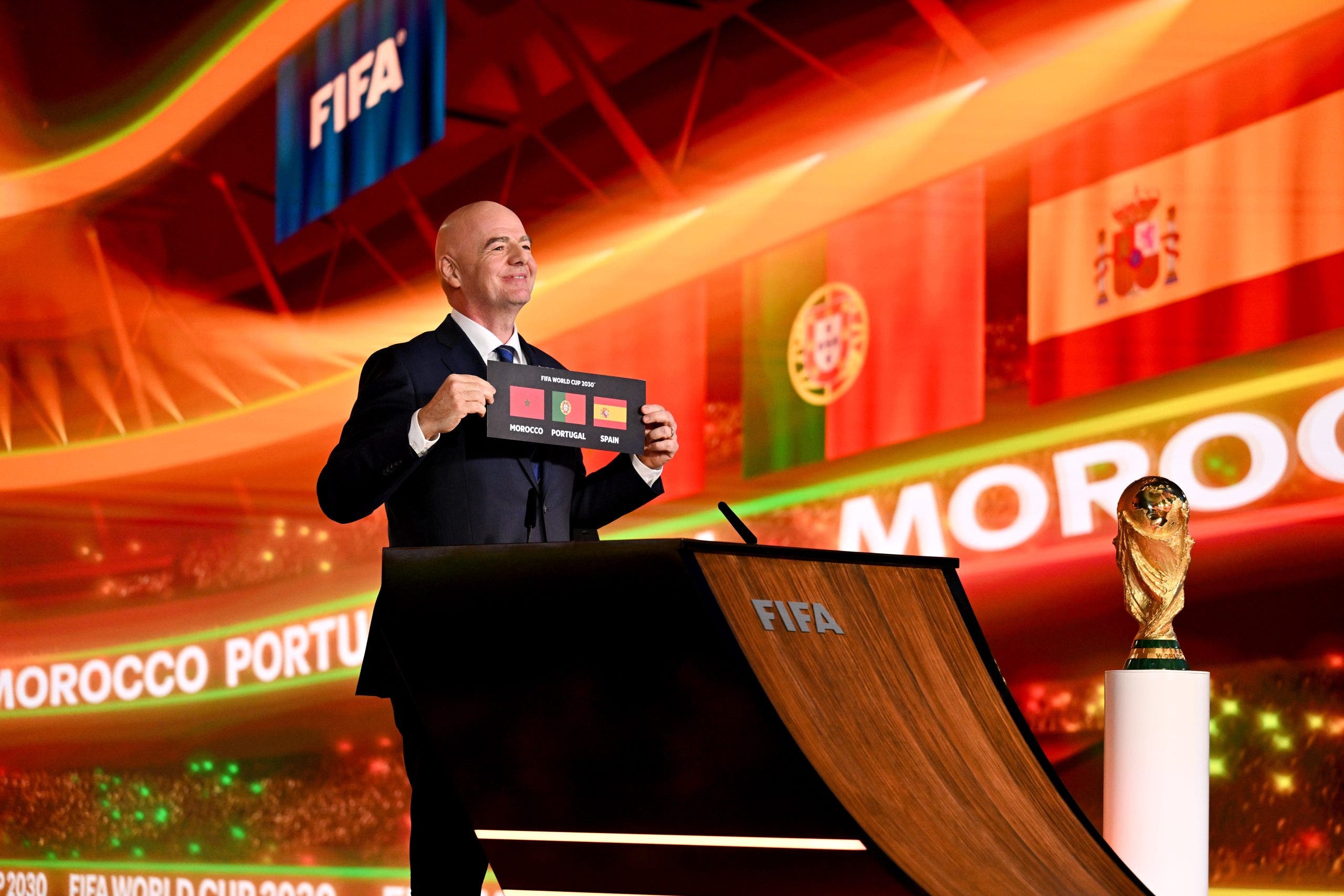
Spain, Portugal and Morocco will co-host the 2030 FIFA World Cup — a 44-day tournament spanning six countries and three continents — marking the most expansive edition in the competition’s 100-year history.
The Hosts
Morocco, Portugal and Spain were officially ratified as co-hosts on December 11, 2024, following a bidding process that began in October 2020 and concluded in October 2023 with the three nations as the sole bidder. Morocco was not originally part of the joint bid, having initially sought to host the tournament alone, before joining the consortium in March 2023.
The arrangement makes 2030 only the second World Cup to be co-hosted by three nations, after the 2026 edition shared between Canada, Mexico and the United States — and the first to span multiple continents.
Dates and Duration
The tournament runs from June 8 to July 21, 2030. At 44 days, it will be the longest World Cup on record, surpassing the 39-day window of the 2026 edition. The extended schedule reflects the logistical demands of multi-continental travel built into the centenary celebrations.
Centenary Matches in South America
To mark the tournament’s 100th anniversary, FIFA awarded three special opening matches to Argentina, Paraguay and Uruguay — a tribute to the inaugural 1930 World Cup, which was hosted and won by Uruguay.
Uruguay’s celebratory fixture will be played at Estadio Centenario in Montevideo, the same stadium constructed for the 1930 tournament. Argentina, runners-up in 1930, will host a match at Estadio Monumental in Buenos Aires, while Paraguay will stage a game at Estadio Osvaldo Domínguez Dibb in Asunción, home to CONMEBOL’s headquarters.
Stadiums and Cities
The 2030 World Cup is expected to be played across 21 stadiums in 18 cities. Official host sites are subject to formal approval ahead of a December 2026 deadline, but a list of finalist venues has been confirmed.
In Uruguay, Estadio Centenario in Montevideo is the sole venue. Argentina contributes Estadio Monumental in Buenos Aires, and Paraguay provides Estadio Osvaldo Domínguez Dibb in Asunción.
Portugal has three stadiums across two cities: Estádio da Luz and Estádio José Alvalade in Lisbon, and Estádio do Dragão in Porto.
Morocco fields six stadiums across six cities, including the Hassan II Stadium in Casablanca, Prince Moulay Abdellah Stadium in Rabat, and the Grand Stade in Marrakesh, among others still to be formally confirmed.
Spain’s finalist cities and stadiums are yet to be detailed in the confirmed list but form the largest single-country component of the European hosting bloc.
Read also
-
 Football ·
Bellingham's hat-trick of assists drives England to Croatia's worst ever defeat
-
 Football ·
Rebuilt Camp Nou's 105,000-seat scale puts it ahead of Bernabéu in 2030 World Cup final race
-
 Football ·
De Jong edges closer to Barcelona return after knee injury kept him out all season
-
 Football ·
Leaker who predicted three Ballon d'Or winners announces Lamine Yamal as 2026 laureate
-
 Football ·
Defoe reveals Sir Alex Ferguson wanted him at United — but the move never happened
-
 Football ·
17-year-old Cavan Sullivan becomes youngest USMNT scorer in 3-0 rout of Mexico
 Comoros