Olise, an essential but discreet France player at odds with Cherki
Michael Olise scored a decisive free kick against Italy (1-1) and is establishing himself as a key France player. However, according to L'Équipe, the Bayern Munich star has tense relations with Rayan Cherki and remains a difficult figure to read in the dressing room.
1 min read
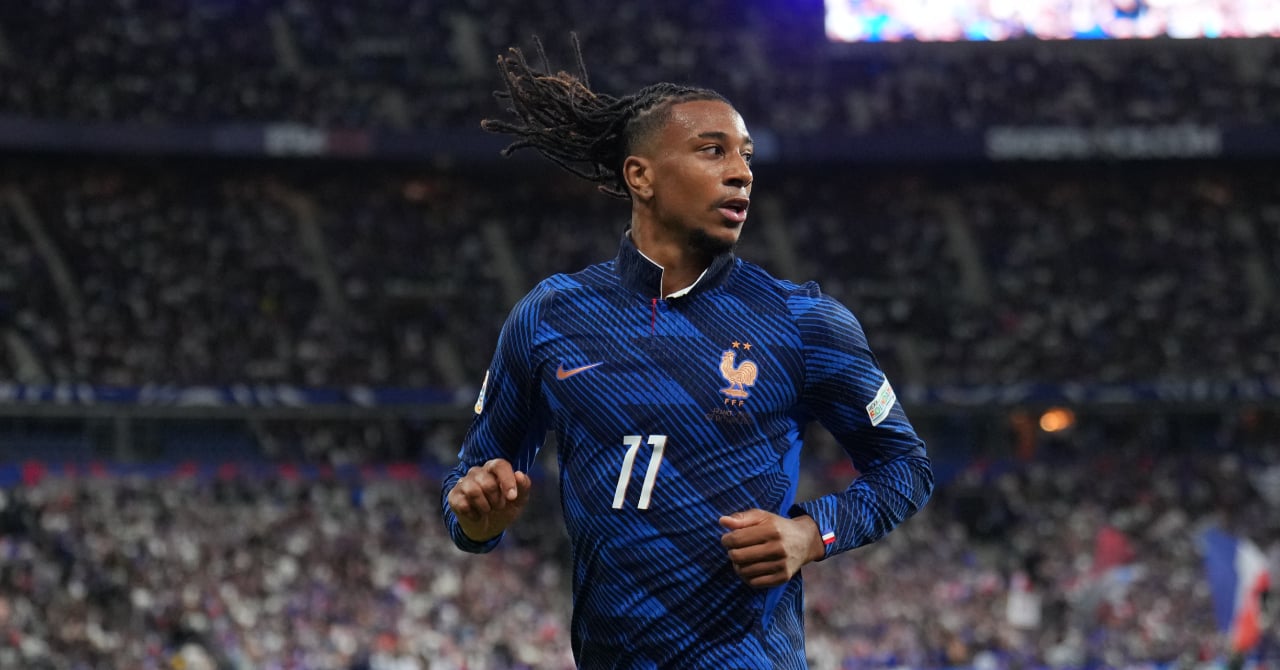
Michael Olise once again shaped France’s destiny on Friday night at Stade de France, scoring a free kick that allowed France to equalize against Italy (1-1). A goal that confirms the growing influence of the Bayern Munich player in the France squad, even if his place in the dressing room is more nuanced.
An introverted character, Olise is described by L’Équipe as “a man sometimes difficult to fathom”, operating in a world “sometimes not very accessible to others”. It is with Kylian Mbappé that he maintains the closest relationship within the French group. The two men spent much of the first days of the gathering together, linked notably by shared tastes for American culture and fashion.
With Rayan Cherki, however, things are decidedly less smooth. The former Crystal Palace player apparently did not appreciate certain jokes from the Manchester City midfielder during training sessions in the lead-up to the 2026 World Cup, seeing in him “a player and a character he doesn’t always understand”, according to the sports daily.
This distance is explained in part by Olise’s very demanding conception of football. “If there is one area where he makes no compromises, it is on the pitch. Olise has a very precise vision of what the game demands. And he doesn’t like those who hinder it”, L’Équipe notes. A rigor that makes him a formidable competitor, but not necessarily the easiest teammate to tame.
Read also
-
 Football ·
Gyokeres eyes Leeds start after Havertz injury opens Arsenal door
-
 Football ·
Ferguson reveals 20% survival odds after 2018 brain hemorrhage
-
 Football ·
Comoros challenge Senegal in friendly at Marseille's Vélodrome on Sunday
-
 Football ·
Endrick set for second loan in a year, AC Milan and Roma circle
-
 Football ·
Ronaldo rejects reconciliation talks and flies back to Riyadh amid Portugal rift
-
 Football ·
Modric declares himself 'ashamed for first time in 20 years' after Croatia's 7-0 collapse against England