New wheel rims and hidden floor tweak fuelled McLaren's back-to-back Dutch GP surge
McLaren's consecutive victories in Budapest and Zandvoort were underpinned by a subtle but significant upgrade package — including new front wheel rims designed to generate tyre temperature — that exceeded the team's own internal performance expectations.
2 min read
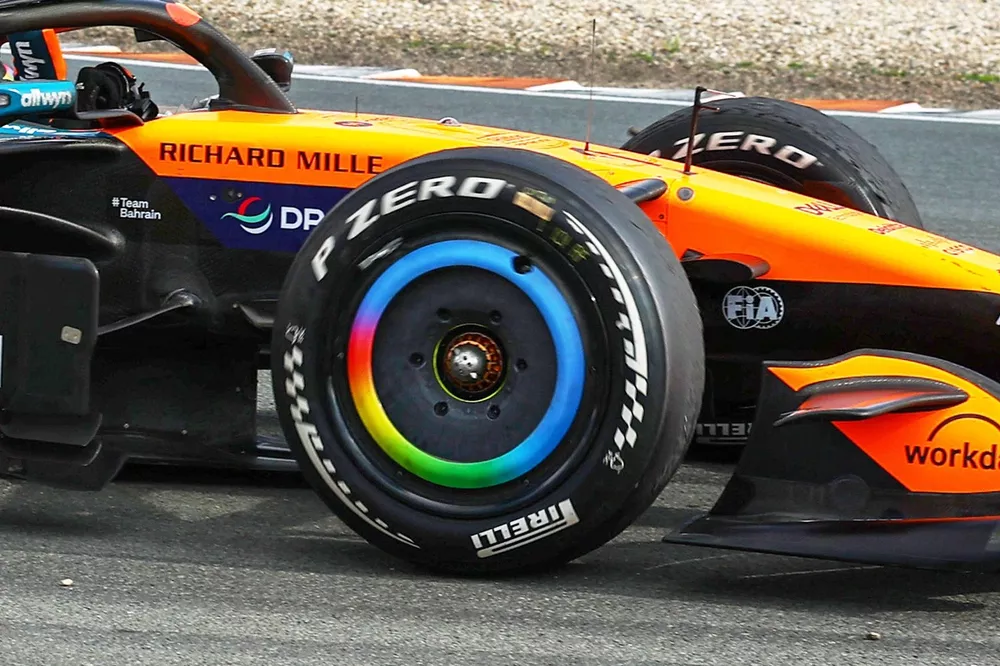
McLaren’s back-to-back victories in Budapest and at Zandvoort’s Dutch Grand Prix were driven not just by circuits that suited the car, but by an upgrade package introduced around the summer break that outperformed the team’s own projections.
The updates did more than restore the aerodynamic load the MCL40 had been lacking. They delivered enough additional downforce to make the car the benchmark through high-speed, long-radius corners — the kind of sections where raw straight-line speed matters less than sustained lateral grip. McLaren technical director of engineering Neil Houldey confirmed the scope of the changes ahead of the Dutch GP weekend.
“We introduced a small change to the rear section of the floor to generate a bit of extra load, along with some minor tweaks to the rear brake ducts,” Houldey said. “We also have new front wheel rims, which will help us build more temperature in the tyres. These updates are not significant in terms of lap time, but they do make us slightly more competitive.”
The wheel rim detail is more consequential than it might appear. Team principal Andrea Stella acknowledged after Zandvoort that both Budapest and the Dutch circuit are high-downforce venues that naturally complement the car’s characteristics. But that framing also points to a vulnerability: at circuits where those conditions do not apply, McLaren has struggled.
Monaco was the clearest example. Despite hopes of repeating their 2024 success in Monte Carlo, the team finished outside the podium positions. The issue was not purely about corner speeds. The car suffered from insufficient downforce and, critically, an inability to generate adequate front-tyre temperature — reducing overall grip and limiting performance. Similar problems had surfaced earlier in the season in Australia and China, where pronounced front-tyre graining cost the team lap time.
The contrast with Japan was instructive. At Suzuka, where graining was not a factor and freshly laid asphalt improved grip levels across the board, the MCL40 claimed its first podium of the 2025 season.
Heading into Zandvoort, front-axle graining was identified as a potential concern, though it ultimately proved minimal for all teams. The more pressing challenge was getting the front tyres into the correct temperature window quickly enough to matter over a single qualifying lap — precisely the area the new wheel rims were engineered to address.
The effectiveness of the broader upgrade package surprised even McLaren internally. The performance gains in high-speed sections came in ahead of what the team had modelled, suggesting the development direction is sound. Whether that advantage holds at circuits less sympathetic to the car’s profile — street circuits, low-grip venues, tracks with shorter, tighter corners — will define how serious a championship threat McLaren can sustain across the remainder of the season.
Read also
-
 Formula 1 ·
Williams branded 'overpromisers' as Sainz's snub of Audi factory seat looks costly in 2026
-
 Formula 1 ·
Alonso's one-stop masterclass rescued Aston Martin at a dismal Dutch GP, says Steiner
-
 Formula 1 ·
Norris signs four-year McLaren extension and vows to make it a career-long home
-
 Formula 1 ·
Lawson's strong Red Bull return at Zandvoort may have rescued his F1 career
-
 Formula 1 ·
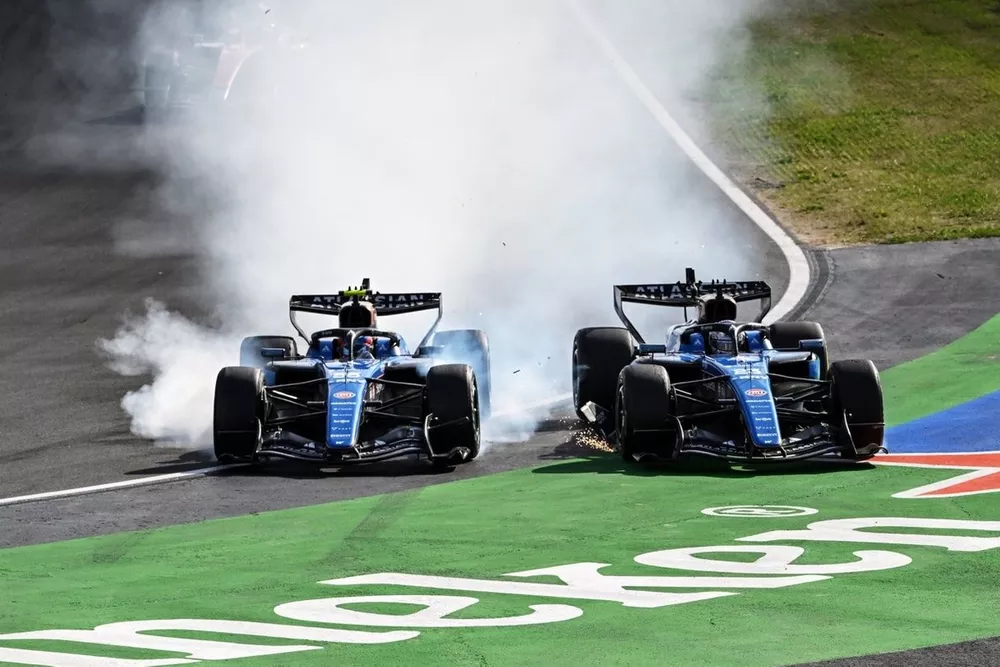
Williams cannot afford Sainz-Albon Dutch GP crash damage, analyst Bernie Collins warns
-
 Formula 1 ·
Antonelli leads 2026 championship by 59 points and credits rookie struggles for mental edge