Messi Stuns Egypt and Breaks His Own World Cup Goal Record
Trailing 0-2 until the 79th minute, Argentina staged a remarkable comeback against Egypt (3-2, 92nd minute) in the 2026 World Cup, with Lionel Messi delivering decisive contributions late in the match. Messi became the first player over 30 years old to score eight goals in a single World Cup tournament.
1 min read
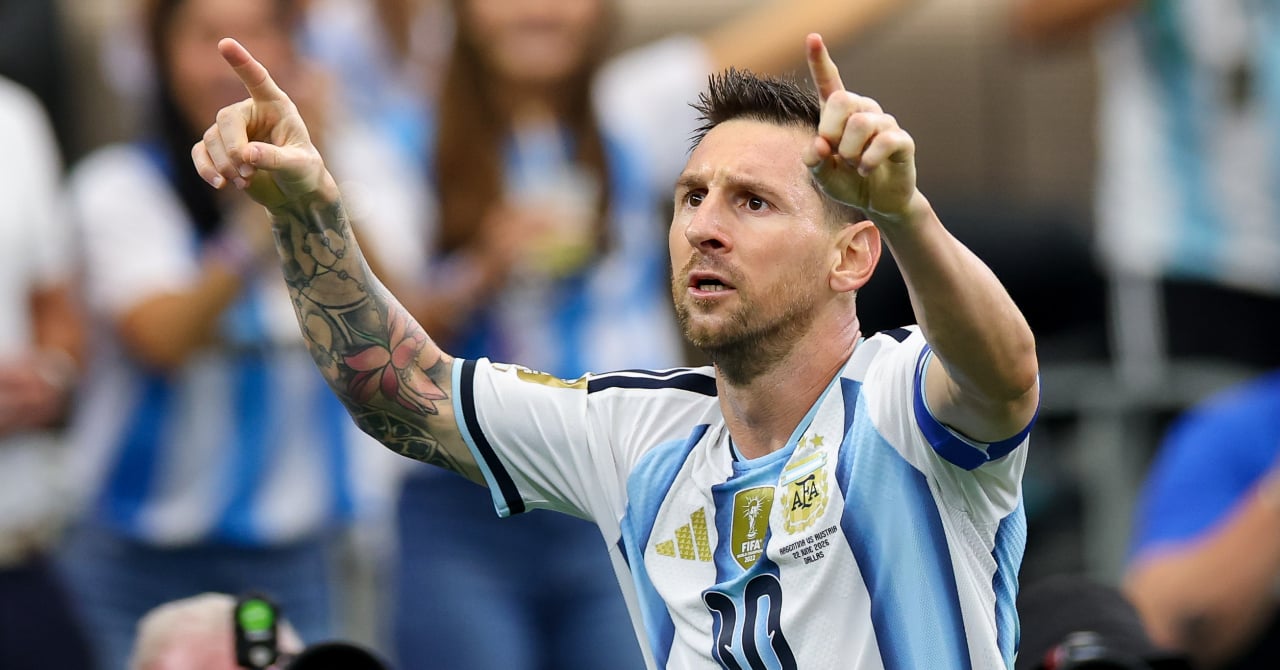
Trailing 0-2 until the 79th minute, Argentina overturned Egypt (3-2, 92nd minute) on Tuesday in the 2026 World Cup, driven by Lionel Messi’s two decisive interventions in the closing stages. Enzo Fernandez sealed qualification with a well-taken header in added time.
Messi first provided an assist for Cristian Romero’s header that brought Argentina back to 1-2 (79th minute), before equalizing himself with a powerful strike from an action he had initiated (2-2, 83rd minute). It was ultimately Fernandez who confirmed qualification with a finish from Lautaro Martinez’s cross (3-2, 92nd minute).
With this eighth goal at the 2026 World Cup, Messi takes sole possession of the top of the scoring chart and sets a new record: according to Opta Joe, no player over 30 years old had reached this total in a single World Cup edition. The previous record was seven goals — set by Messi himself at the 2022 World Cup won by Argentina.
Argentina’s comeback is itself a historic first. According to the same Opta data, no team had previously managed to win after being two goals down so late in a World Cup match.
As against Cape Verde in the round of 16, Argentina came close to elimination before relying on their captain to survive. Two comebacks in two knockout matches that paint a trajectory as fragile as it is formidable for the defending world champions.
Read also
-
 Football ·
Guimaraes hands Vinicius penalty to lift spirits as Arsenal chase £40m Brazilian
-
 Football ·
Kane unaware of Man City guilty verdict until after England's win over Czechia
-
 Football ·
Gibbs-White calls viral England call-up clip with fiancée 'just banter' after Tuchel dig
-
 Football ·
Kane brushes off Man City guilty verdict as England focus shifts to Croatia
-
 Football ·
Bellamy backs Haaland to stay focused as Man City guilty verdict looms over Norway camp
-
 Football ·
CAS designates panel to rule on Senegal-Morocco CAN 2025 dispute on October 8
 Venezuela U17