Messi breaks record to score in seven straight World Cup games with 19th career goal
Lionel Messi became the first player in history to score in seven consecutive World Cup matches, netting a trademark free kick in the 80th minute as Argentina closed out Group J against Jordan.
1 min read
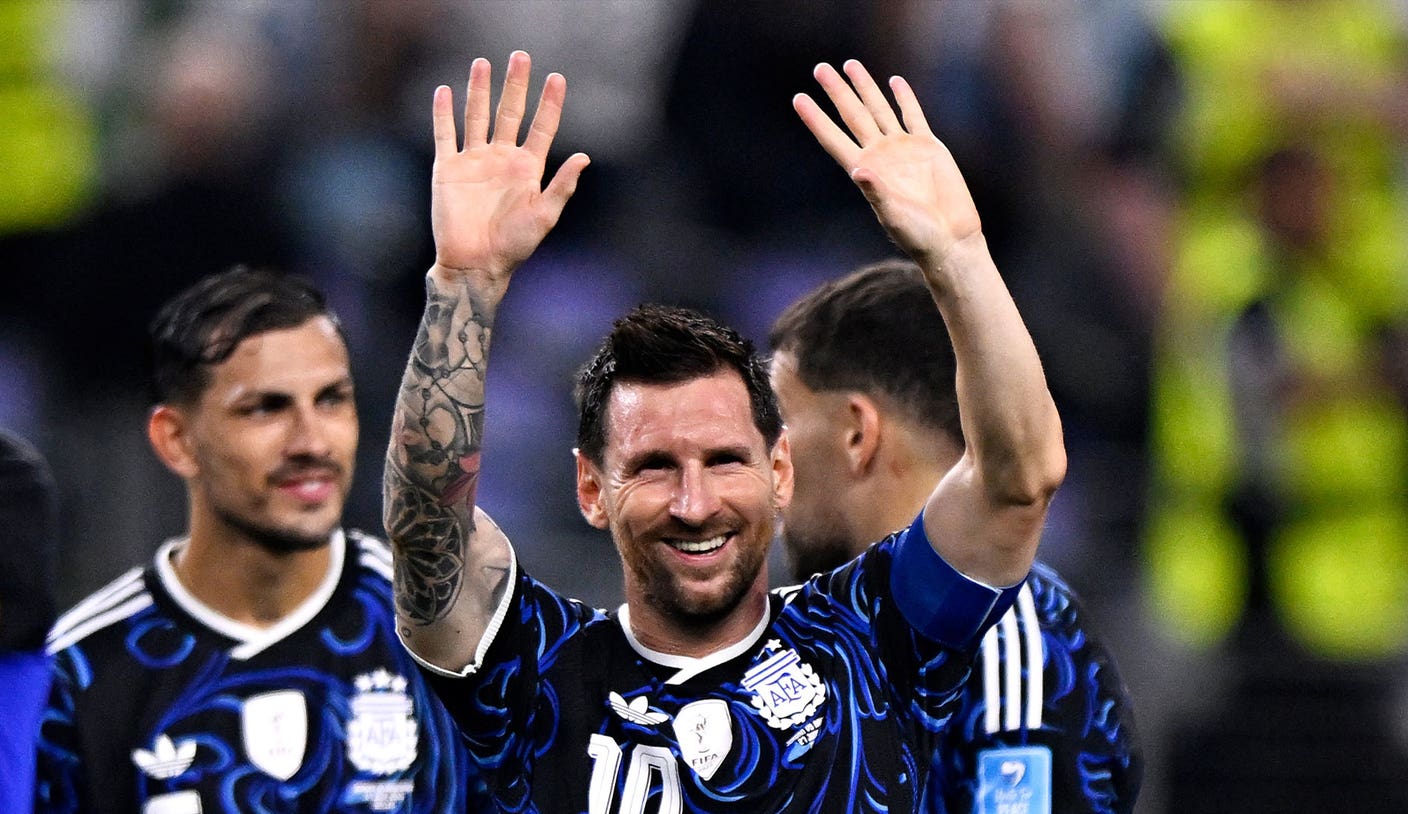
Lionel Messi etched his name further into World Cup history on Saturday, scoring in seven consecutive matches across the tournament’s history — a record no player has ever achieved — as Argentina defeated Jordan in their Group J finale.
Messi, introduced from the bench in the 60th minute for Lautaro Martínez, needed just 20 minutes to make his mark. After being fouled just outside the penalty area, the 39-year-old drove a low free kick above the grass and into the left corner of the net in the 80th minute, his 19th World Cup goal in total.
The strike was his 72nd career free-kick goal and his 12th for Argentina, taking his international tally to 123 goals in 202 appearances — second all-time behind Cristiano Ronaldo’s 145.
Messi had previously shared the record of six consecutive World Cup scoring appearances with France’s Just Fontaine and Brazil’s Jairzinho. He now stands alone.
Argentina had already secured top spot in Group J heading into the match, while Jordan had been eliminated from knockout contention, which is why Messi was held back at kick-off. Martínez, who started in his place, had given Argentina the lead from the penalty spot in the first half before Messi’s late cameo sealed the record.
The milestone adds another chapter to one of football’s most decorated careers, with Messi continuing to rewrite the sport’s record books deep into his late thirties.
Read also
-
 Football ·
Anthony Gordon stuns Spanish media with goal and assist in England's 7-0 demolition of Croatia
-
 Football ·
Diego Leon seizes rare first-team chance as United's left-back crisis deepens
-
 Football ·
Yamal strikes inside six minutes again as Spain edge past Czechia to sit one point from quarters
-
 Football ·
Bellingham's hat-trick of assists drives England to Croatia's worst ever defeat
-
 Football ·
Rebuilt Camp Nou's 105,000-seat scale puts it ahead of Bernabéu in 2030 World Cup final race
-
 Football ·
De Jong edges closer to Barcelona return after knee injury kept him out all season

 Comoros